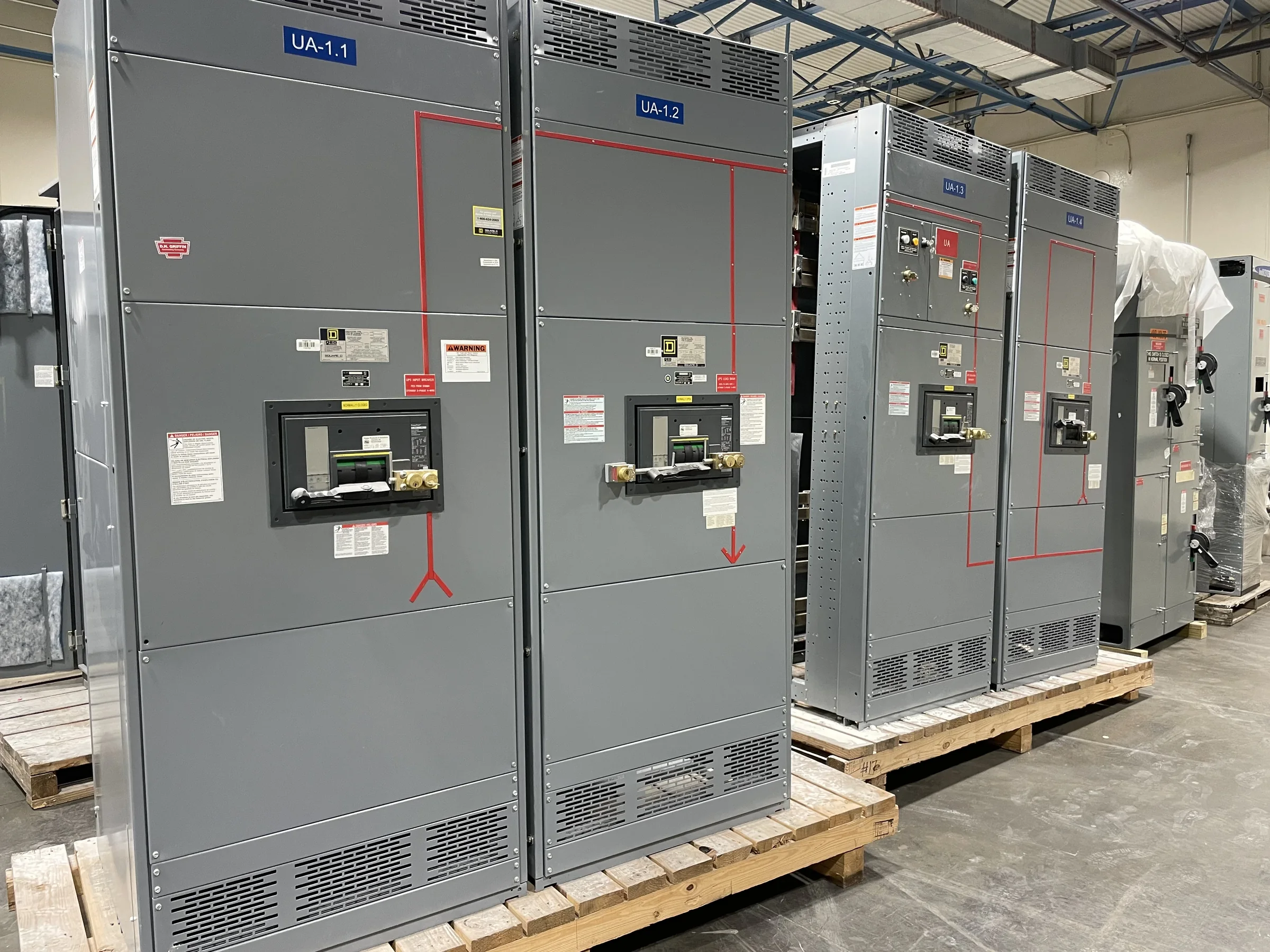
Define the Equipment Before Requesting a Quote
A useful switchgear quote starts with the electrical duty, not a preferred catalog name. Identify whether the project calls for a low-voltage switchboard, medium-voltage switchgear, or replacement sections within an existing lineup; these serve different voltage ranges and have different design and evaluation requirements. Share the system voltage, phase, frequency, available fault-current information, main and feeder arrangement, and anticipated load. Include the one-line diagram and note whether the equipment serves a utility service, generator, transformer, or process distribution point. These details help the manufacturer assess the intended application and identify missing information before pricing. For low-voltage switchboard assemblies, UL 891 may be relevant when the proposed assembly is appropriately evaluated; it is not a blanket designation for medium- or high-voltage equipment.
Resolve Ratings and Existing-System Compatibility
Ratings must work together as a system. Request review of continuous current, interrupting or withstand requirements, bus arrangement, enclosure, and protective-device coordination against the project documents and site conditions. An incomplete fault-current study or an outdated one-line can affect breaker selection and equipment suitability, so flag assumptions rather than treating them as confirmed values. For a replacement or expansion, provide the existing manufacturer and lineup identification, photographs of nameplates and connection points, available drawings, and measurements of the installation space. Similar-looking sections are not necessarily interchangeable: bus geometry, control wiring, mounting, and tested assembly arrangements can differ. Ask which interfaces the proposed equipment is designed to match and which field verification remains necessary. Final ratings, compatibility, standards, and listing applicability are project-specific.


Coordinate Schedule With Submittal Reviews
A short quoted lead time is useful only if the project can release an accurate design promptly. Map the decision dates for drawings, engineering review, approved submittals, equipment release, shutdown planning, and installation access. Identify who can approve substitutions and how quickly review comments will be returned; unresolved breaker or metering selections can hold up a build even when the basic lineup is defined. Ask the manufacturer to state the schedule assumptions and what events may change the estimated timing, rather than treating an early estimate as a delivery guarantee. If construction sequencing is phased, clarify whether the complete lineup or coordinated sections are being quoted and how partial shipment would affect storage, installation, and commissioning. Confirm current availability and timing for the specific scope before committing the project schedule.
Account for Humble Site and Delivery Conditions
For a Humble project, delivery planning should connect the equipment route to the actual facility, not just the destination city. Confirm the receiving address, truck access, turning and staging space, unloading equipment, dock or door dimensions, and any limits on delivery hours. Verify the route from the receiving point to the electrical room, including corridors, elevators, thresholds, and overhead clearance; a lineup that fits the room may still be difficult to move into it. Gulf Coast heat, humidity, and heavy rain can also make protected staging important, particularly if construction is not ready when equipment arrives. Agree in advance on packaging, weather protection, receiving responsibility, and inspection for transit damage. Nationwide shipping can be arranged, but freight method, delivery timing, unloading scope, and site readiness must be confirmed for each order.
Prepare Drawings and Procurement Records
A clear quote package reduces ambiguity between engineering intent and what purchasing releases. Include the latest one-line diagram, panel or switchgear schedules, load data, site plan, room layout, relevant specifications, and any approved equipment schedule. Mark drawings with revision dates and identify documents that are preliminary; mismatched revisions can lead to pricing against obsolete feeder counts or room dimensions. Ask the quote to separate the proposed scope, stated assumptions, exclusions, options, and information still required. Procurement teams should compare equivalent configurations rather than headline price alone, including protective devices, metering, control power, transition sections, and shipping responsibilities where applicable. Keep the approved submittal, final equipment schedule, and change record together so field teams can verify what was released. Confirmed scope and acceptance criteria should be documented before authorization to build.
Plan Installation Around Safe Commissioning
Before ordering, check that the installation and commissioning plan matches the equipment configuration and the facility’s operating constraints. Identify who is responsible for foundations, conduit entry, cable terminations, grounding, protection settings, inspections, and startup coordination; unclear boundaries can create costly gaps after delivery. Confirm working space, access for maintenance, ventilation, environmental conditions, and any required separation from water or process hazards against applicable project requirements. For an occupied facility, document the outage window, affected loads, temporary power needs, and approval process well before installation. Installation, inspection, testing, and maintenance must be performed by qualified personnel under applicable requirements, with equipment de-energized for work unless a specific permitted task requires otherwise and appropriate controls are established. Ask what product and project documentation will be supplied, and verify final acceptance criteria with the engineer and authority having jurisdiction.