Confirm What the Replacement Must Serve
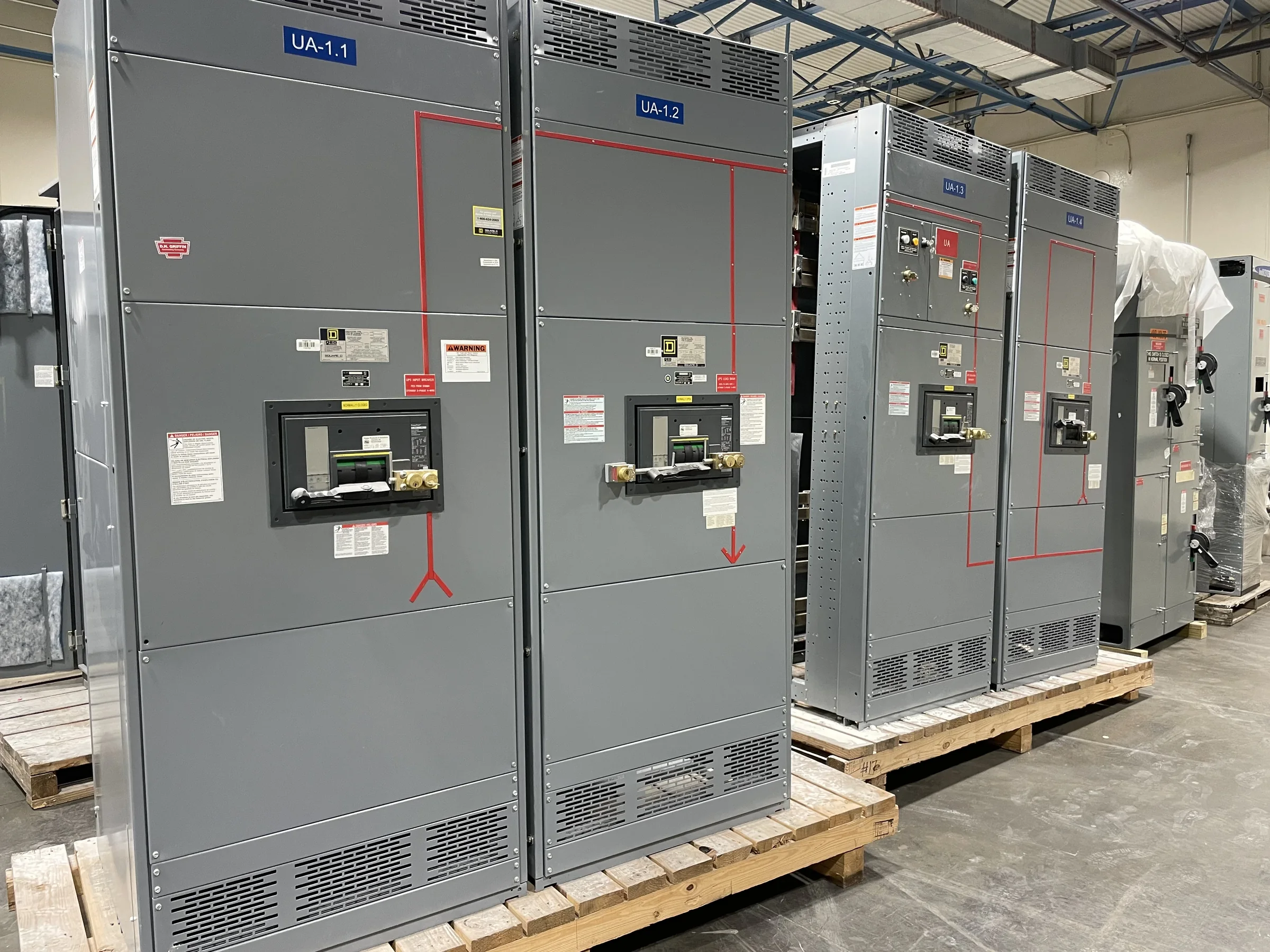
A replacement project in Cypress should begin with the equipment’s actual role in the distribution system, not its appearance or catalog description. Record the circuits served, upstream protective device, connected loads, available fault-current information, and operating voltage and phase where known. Then compare those details with existing one-line diagrams, panel schedules, nameplates, and maintenance records; mismatches can reveal undocumented changes that affect the new design. Identify whether the scope is a low-voltage switchboard, switchgear, or another assembly, since those terms do not establish interchangeable construction or ratings. A U.S. manufacturer can discuss a new custom build against the project requirements, but final ratings, construction, and applicable evaluation depend on verified site information and the intended application.
Resolve Electrical and Mechanical Compatibility
The most consequential fit question is often whether new equipment can connect safely and practically to the existing installation. Document bus arrangement, cable or busway entry, conductor quantities and sizes, termination space, grounding provisions, and the location of incoming and outgoing feeds. Measure available width, height, depth, working space, access routes, and any overhead or floor obstructions; a lineup that meets electrical needs may still be impossible to move into the electrical room. Photos and dimensioned drawings help expose conflicts before fabrication, while field verification remains important when records are incomplete. Do not assume an existing enclosure, breaker, or bus connection can be reused. Compatibility, required modifications, and replacement boundaries must be reviewed for the specific project.


Build the Specification Around the Application
A useful request for quotation describes the electrical environment and operating duties as well as the desired equipment. Provide system voltage, frequency, phase, main and feeder requirements, available fault current, load information, and any required metering, control, or communications interfaces. Clarify whether the installation serves a process, commercial building, data room, or other critical load, because continuity expectations and coordination with upstream and downstream devices differ. Include applicable project specifications and requested standards, then ask which details need engineering confirmation. UL 891 applies to appropriately evaluated low-voltage switchboard assemblies; it is not a blanket certification for all switchgear or medium- and high-voltage equipment. The exact product construction, ratings, evaluation, and labeling must be confirmed for the specified assembly.
Plan Outage, Removal, and Installation Scope
A sound procurement plan separates equipment delivery from the work needed to put it into service. Identify who will verify field dimensions, prepare the room, disconnect and remove existing equipment, provide rigging, make terminations, perform testing, and authorize energization. Electrical replacement work requires a planned outage and de-energized work practices; the outage window should account for isolation, verification, installation, inspection, and commissioning rather than only the physical swap. If loads cannot be interrupted together, the facility team and qualified electrical contractors should determine whether temporary power or a staged changeover is feasible for this system. These decisions affect the equipment arrangement, connection details, schedule, and cost. Define responsibilities and acceptance documentation in the purchase and installation scope to reduce gaps between supplier and field teams.
Coordinate Delivery for a Cypress Jobsite
Cypress projects may involve delivery to an operating facility, a constrained electrical room, or a site where trucks and lifting equipment must share space with routine operations. Confirm the ship-to address, receiving hours, truck access, unloading method, laydown area, and route from the drop point to the final room before approving a shipping plan. Check door, corridor, turning, elevator, and floor-load constraints against the proposed shipping sections and handling approach; assumptions here can lead to costly rescheduling or difficult rehandling. A U.S. manufacturer offering nationwide shipping can discuss delivery coordination, but freight arrangements and timing depend on the project, equipment configuration, and site readiness. State any gate procedures, advance notice, weather exposure concerns, or restricted delivery windows when requesting a quote.
Align Schedule and Submittals Before Release
Custom equipment timing is shaped by the completeness of the specification, engineering review, approved drawings, component selection, and required project documentation. Ask for a project-specific schedule and identify the information needed before design can proceed, rather than relying on a generic lead-time estimate. Submittals may need to show general arrangement, elevations, wiring or connection details, ratings, and the selected components, as applicable to the assembly and contract. Assign reviewers and return consolidated comments promptly; unresolved dimensions or protection requirements can delay release and create downstream installation changes. For a Cypress replacement, coordinate the proposed delivery window with outage approval, contractor availability, and room readiness. Before placing the order, document the final scope, approved deviations, shipping destination, and any required closeout records so purchasing and engineering work from the same baseline.