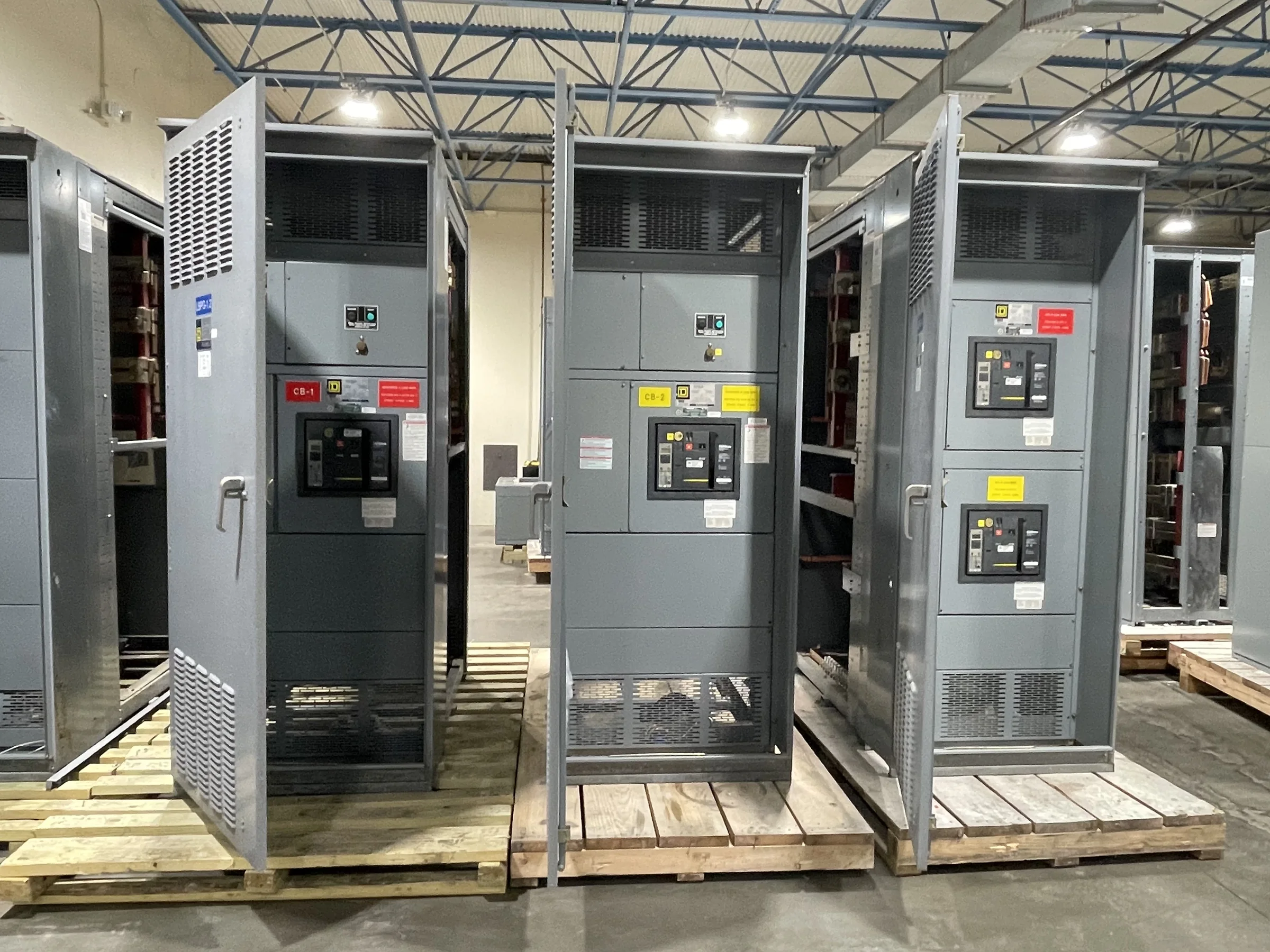
Define the Replacement Scope Before Selecting Equipment
A switchgear replacement in Humble should begin with the existing system’s function, not simply the dimensions of the old gear. Confirm whether the equipment serves a service entrance, generator connection, process line, pump station, or building distribution, and document its voltage, phase, ampacity, interrupting requirements, bus arrangement, and grounding method. Those details affect the replacement configuration and determine which existing loads can be retained. Gather nameplate photographs, one-line diagrams, protective-device information, and records of later modifications; older drawings may not reflect field changes. Identify the project boundary as well: replacement of an entire lineup differs from replacing a section or coordinating new equipment with retained components. A complete scope helps the manufacturer evaluate fit, interfaces, and project-specific requirements before a quote is finalized.
Verify Electrical Compatibility and Protection Requirements
Matching nominal voltage alone does not establish that new gear is suitable for an existing distribution system. The engineering review should consider available fault current, required withstand or interrupting ratings, system grounding, conductor entry, bus connections, and the protective devices upstream and downstream. Where fault-current or coordination data are incomplete, the project team may need to obtain utility information or perform an engineering study before equipment requirements are settled. Confirm whether the replacement must accommodate existing feeders, control circuits, metering, transfer equipment, or a particular operating sequence. These interfaces can drive compartment layout and device selection. UL 891 applies to appropriately evaluated low-voltage switchboard assemblies; it is not a blanket certification for medium- or high-voltage equipment. Applicable standards and evaluation depend on the specified assembly and project.


Plan Around Humble Site Access and Installation Conditions
In Humble, delivery planning should account for the actual facility route rather than assuming a truck can reach the electrical room directly. Review gate hours, security check-in, turning space, overhead obstructions, dock or curb access, and the path from unloading point to final position. Houston-area heat, humidity, and heavy rain can also complicate staging, so establish a protected receiving area and coordinate how equipment will remain dry and secure before installation. Measure doorways, corridors, floor openings, and clearances around the lineup; shipping sections may need to be handled individually, subject to the equipment design and approved lifting method. Confirm floor capacity and any rigging restrictions with the site team. Early checks reduce the risk of blocked access, weather exposure, or a delivery that cannot be moved into place.
Coordinate Schedule, Outage, and Delivery Decisions
A short manufacturing lead time can support a replacement project, but it should not be treated as a guaranteed delivery date until the approved configuration, components, and schedule are confirmed. Ask what information is needed to begin engineering, when submittals are expected, and which decisions could affect production, such as custom dimensions, control requirements, or retained-device interfaces. In parallel, facility operations should define outage windows, temporary power needs, load-transfer constraints, and the sequence for removing existing equipment and setting the replacement. Nationwide shipping requires practical coordination among the manufacturer, carrier, site contact, and installation contractor; confirm receiving hours, unloading responsibility, shipment access, and damage-inspection procedures. Aligning these steps early helps the project team connect equipment arrival to a feasible, safely planned installation window.
Prepare Clear Documents for Engineering and Procurement
A useful quote package gives the manufacturer enough information to price the intended equipment without turning assumptions into commitments. Include the current one-line diagram, equipment schedules, site measurements, nameplate data, required ratings, conductor entry direction, device preferences, control schematics, and any owner or engineer specifications. Mark known field conditions and clearly label items that still need verification. Request drawings and submittal details suitable for checking footprint, access, connections, device functions, and interfaces with retained equipment before release for manufacture. Procurement teams should compare scope inclusions, exclusions, component selections, freight responsibilities, and schedule assumptions—not just the total price. If American components are a project preference, state the requirement and request confirmation for the proposed configuration. Clear documentation supports a more useful comparison and reduces avoidable revisions.
Protect Operations Through Installation and Acceptance Planning
The replacement plan should identify who is responsible for engineering review, electrical installation, testing, and owner acceptance before equipment ships. Installation must be performed by qualified personnel under an approved outage and safety plan; equipment must be de-energized before work, and applicable lockout and verification procedures must be followed. Confirm whether the project requires field testing, settings review, labeling, updated one-line diagrams, operating instructions, or maintenance documentation, and assign each deliverable to the appropriate party. For facilities with critical loads, determine how production, life-safety systems, pumps, or backup generation will be maintained during the outage and restored afterward. New equipment is only one part of a successful replacement: verified interfaces and complete handover records help operators understand the installed configuration and support future troubleshooting and maintenance.