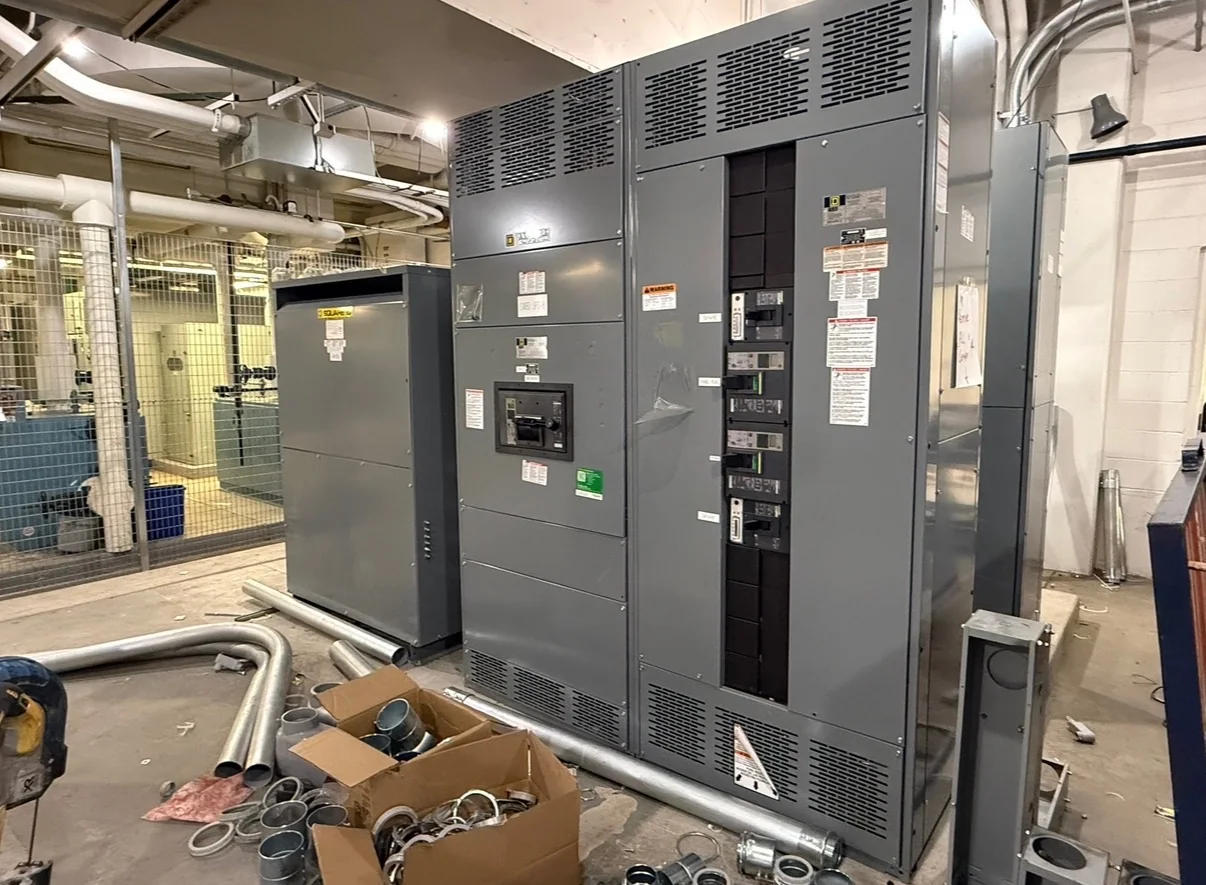
Start With the Failure, Not the Equipment Label
A replacement and a retrofit solve different problems, so begin by defining the condition that prompted the project. Document failed components, recurring maintenance issues, obsolete protective devices, capacity concerns, and planned load changes. A damaged breaker compartment may call for a targeted solution, while deteriorated bus, inadequate space for future loads, or widespread obsolescence can favor a new assembly. The distinction matters because a retrofit depends on the condition and geometry of equipment that will remain in service; a replacement creates a new interface that must match the facility’s electrical and physical requirements. Gather one-line diagrams, equipment nameplates, maintenance records, and fault or incident findings. Have qualified engineering personnel verify field conditions and establish the project scope before requesting a proposal.
Check Electrical Compatibility Before Comparing Cost
A retrofit may appear less disruptive, but compatibility is not established by matching a manufacturer name or nominal voltage alone. The engineering review should compare system voltage, continuous and short-circuit ratings, bus arrangement, grounding, protective-device characteristics, control wiring, and the intended coordination scheme. Existing enclosures and connection points also need inspection; aging insulation, corrosion, heat damage, or undocumented modifications can undermine an otherwise plausible retrofit. For a new assembly, specify the system conditions and required functions so the manufacturer can evaluate an appropriate design rather than assume existing equipment details. Provide available fault-current information, protective-device settings, load data, and applicable project standards when available. Final ratings, configuration, evaluation requirements, and compatibility are project-specific and should be confirmed by the responsible design professionals.


Compare Outage Scope and Installation Work
The schedule depends on more than how quickly equipment can be built. A retrofit may reduce demolition, yet still require an outage for inspection, component installation, testing, and commissioning. Replacement can add removal, rigging, new anchorage, feeder reconnection, and control-integration work, but may avoid repeated modifications to an aging structure. Map which loads can be interrupted, whether temporary power is feasible, and how long each affected process can tolerate an outage. Identify required permits, switching coordination, hazardous-area restrictions, and the facility’s approval process early. All electrical work must follow applicable safety procedures, including establishing an electrically safe work condition where required. Ask bidders to identify scope assumptions, customer responsibilities, engineering submittals, and schedule dependencies rather than treating an estimated production period as the complete installation timeline.
Use Drawings and Field Measurements to Reduce Rework
Incomplete records can turn either option into a costly fit-up problem. Assemble current one-line and control diagrams, equipment elevations, cable schedules, available floor plans, and photographs of nameplates and connection points. Then verify dimensions in the field, including enclosure footprint, working clearances, door swing, overhead obstructions, conduit entry locations, cable bending space, and access to lifting points. Record the path from receiving area to final location: door widths, turns, floor loading, elevators, and rigging constraints can limit the equipment that can be delivered as a single section. Mark discrepancies between drawings and installed conditions for review before design approval. Accurate documentation helps the manufacturer develop a practical new-equipment configuration and lets installers plan connections, while avoiding unsupported assumptions about what will fit.
Evaluate Lifecycle Needs and Procurement Scope
Initial price is only one part of the decision. Compare the remaining condition and expected service life of retained equipment against the scope of a new assembly, including installation, testing, spare parts, maintenance access, and future expansion needs. A retrofit may preserve a sound structure, but retained components can constrain later upgrades or require specialized replacement parts. New equipment can offer a cleaner basis for future planning, although it may call for more extensive site changes and coordination. Ask the manufacturer to identify included and excluded work, required customer-furnished information, submittal stages, and any assumptions about existing cables or protection settings. Specify American components if they are required for the project, and confirm selection and availability during procurement. Treat quoted timing, configuration, and compliance details as proposal-specific, not guaranteed across every application.
Plan Delivery, Receiving, and Commissioning Together
A delivery date has little value if the site cannot receive, move, or install the assembly. Confirm shipping access, unloading equipment, indoor storage conditions, receiving hours, and who will inspect and document delivered sections. Coordinate delivery with outage approvals, contractor availability, foundation or anchorage readiness, and any required utility or owner reviews. For multi-section equipment, verify the planned shipping arrangement and sequence against the route into the electrical room; packaging and section dimensions should be reviewed against field measurements before release. Before energization, the project team should complete installation inspections, applicable testing, protection-setting verification, and commissioning documentation under the responsible engineering and safety procedures. A U.S. manufacturer can discuss custom-built equipment and nationwide shipping, but project-specific design, UL 891 applicability for appropriately evaluated low-voltage switchboards, and delivery timing must be confirmed for the actual scope.