Start With the Shutdown’s Electrical Scope
A shutdown window is only useful if the work that must occur without power is clearly defined. Identify the equipment being replaced, the loads it serves, the normal and alternate sources, and any interconnections that could keep part of the system energized. Have the facility’s qualified electrical personnel determine the required isolation boundaries and switching sequence; actual procedures must follow site rules and applicable requirements. For the new equipment, document the intended system voltage, available fault-current information, ampacity needs, feeder arrangement, grounding method, and required protective-device functions. These inputs affect the assembly configuration and the time needed for engineering review. Incomplete source or load information can delay submittal approval, while an unclear scope can leave critical work outside the outage plan.
Match Procurement Milestones to Approval Dates
Work backward from the approved outage window, not from an assumed delivery date. Build a schedule that includes design confirmation, quotation review, purchase authorization, submittal preparation, engineer or owner review, comment resolution, release for production, shipment, and site readiness. Ask the manufacturer to discuss current project-specific timing and identify which milestones depend on complete information or approved drawings. A short lead time may be an available offering, but it is not a substitute for confirming the scope, component selections, and production schedule. Assign an owner and due date to each decision, especially for protective devices, metering, control power, and enclosure details. If approval or purchasing slips, promptly reassess the outage plan rather than relying on an unverified delivery assumption.


Resolve Existing-System Compatibility Before Release
Replacement equipment must fit the electrical system and the physical space, but compatibility cannot be established from a product label alone. Provide the existing one-line diagram, equipment nameplates, breaker or fuse information, bus and cable connection details, and available fault-current study when available. Record enclosure dimensions, access clearances, conduit entry locations, floor openings, and any required cable bending space. The design team should review whether the proposed arrangement supports the intended system function and can connect to existing conductors and protective schemes. Where records are incomplete, arrange a qualified field survey before finalizing the purchase. Confirm assumptions and unresolved items in writing during submittal review. A mismatch discovered after delivery can consume scarce outage hours and may require design changes or additional site work.
Plan Site Access, Receiving, and Staging
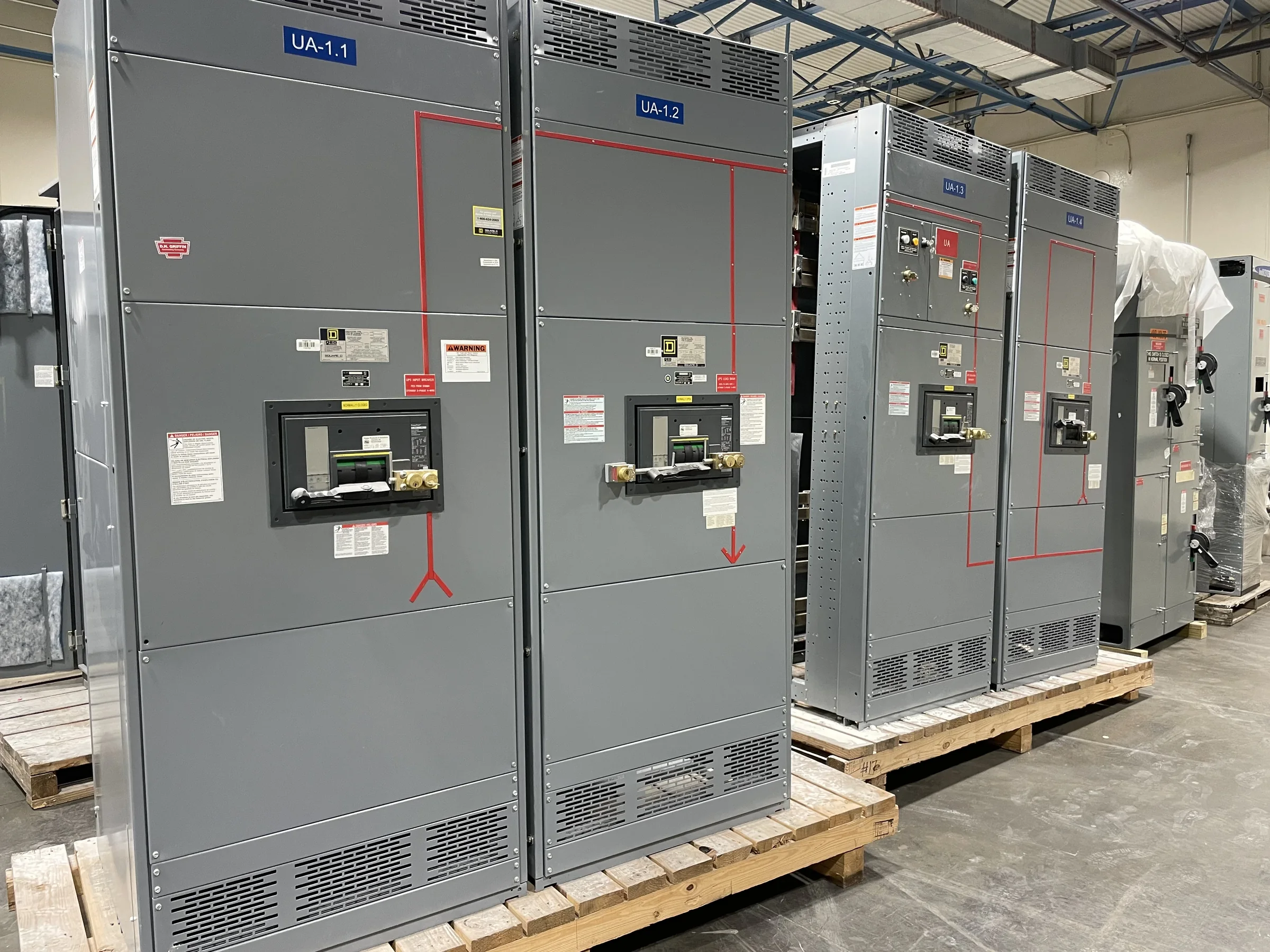
Delivery coordination is part of shutdown planning because equipment that cannot reach its installation location is not ready for the outage. Confirm the route from the unloading point to the electrical room, including door and corridor clearances, turns, floor capacity, elevation changes, and restrictions on lifting equipment. Determine who will receive the shipment, where it can be protected and staged, and whether the site permits delivery outside normal operating hours. Share these constraints with the manufacturer before the configuration and shipment plan are finalized; nationwide shipping does not remove site-specific handling requirements. Verify the shipping configuration, package dimensions, unloading responsibilities, and inspection process for the actual order. Keep equipment dry and protected as directed by its documentation, and coordinate storage conditions with the responsible site team.
Coordinate Outage Tasks and Contingencies
Set the outage duration only after the facility team and installation contractor have reviewed the full work sequence. Account for isolation, verification of an electrically safe work condition, removal, positioning, anchoring, connections, inspection, testing, and return-to-service activities. The exact steps and duration depend on the equipment, site procedures, labor plan, and conditions uncovered after access is gained. Identify dependencies such as utility coordination, backup generation, temporary power, permits, fire protection impacts, and operations approval. Agree in advance on decision authority, communication channels, and criteria for pausing or extending the outage. A contingency plan should address unexpected field conditions without assuming energized work or bypassing required safety controls. Rehearsing responsibilities before the shutdown reduces confusion when multiple teams are working against a limited window.
Use Submittals to Protect the Schedule
Treat project documentation as a schedule-control tool, not simply a purchasing attachment. Maintain the approved one-line diagram, equipment schedule, specifications, interface drawings, connection information, and a record of accepted deviations in a controlled revision set. Review submitted dimensions and terminations against verified site conditions, and confirm that protective-device functions and control requirements match the project design. If the assembly is a low-voltage switchboard, determine whether UL 891 evaluation is specified and applicable to the proposed assembly; do not assume that the standard applies to medium- or high-voltage equipment or guarantees a label on every product. Before shipment, confirm open comments, receiving arrangements, and required installation documents. After installation, preserve inspection, test, and as-built records so future maintenance teams can understand the final configuration.