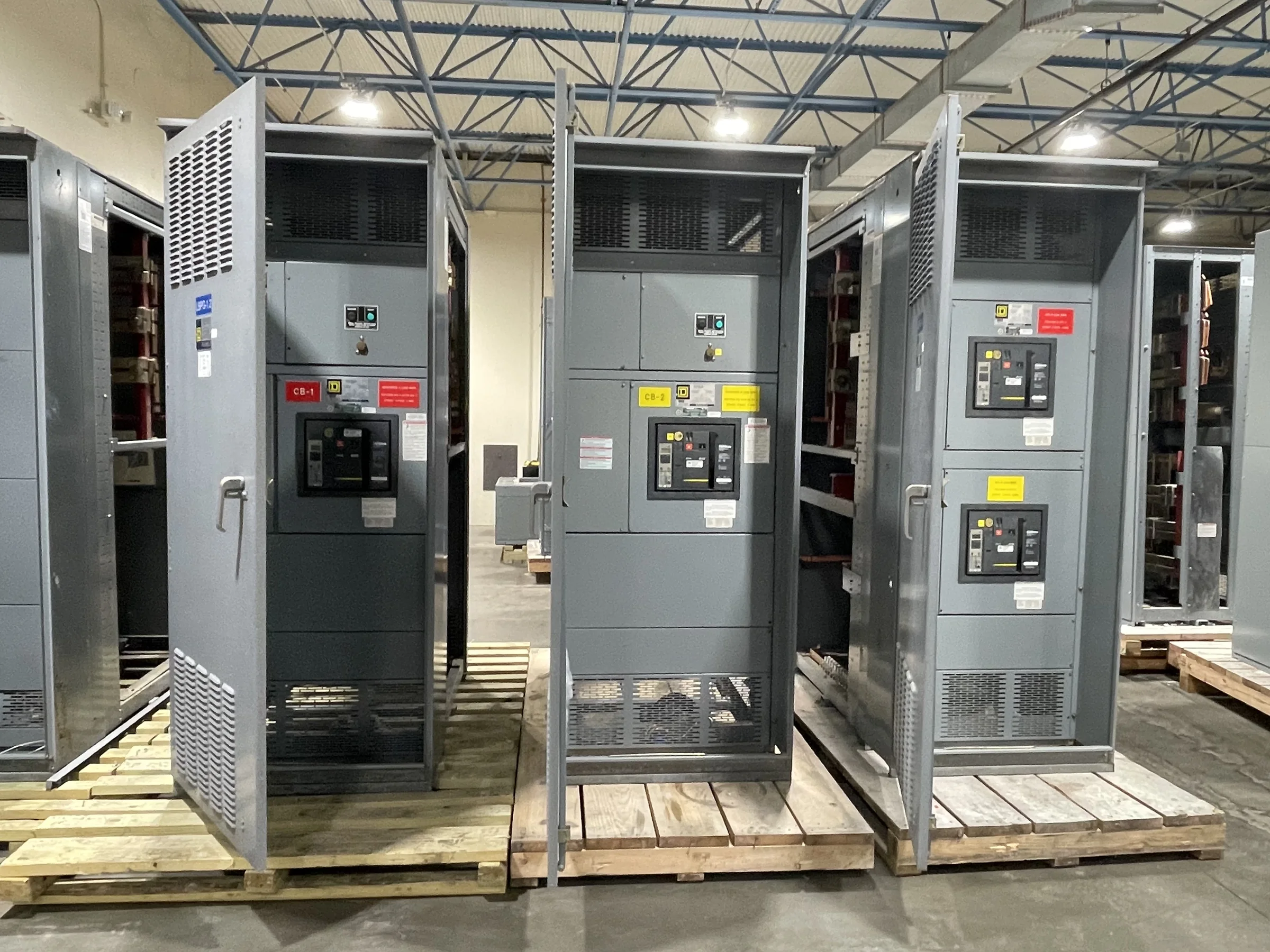
Define What a 400 Amp Rating Means for the Project
A 400 amp designation is a starting point for equipment selection, not a complete description of a switchboard or switchgear assembly. The design team should confirm the system voltage, phase and wire configuration, available fault current, service conditions, and the loads the equipment must serve. Continuous demand, motor starting, future expansion, and the way loads are grouped can all affect the required arrangement. A 400 amp main device does not by itself establish the rating of every feeder, bus section, or connected panel. For procurement, put the intended function and electrical basis of design in the inquiry, along with any governing project specifications. Reviewing those details early helps prevent quote comparisons that appear equivalent by amperage but differ in essential performance or scope.
Choose the Assembly Around Its Distribution Role
The right equipment depends on what the 400 amp assembly needs to do: serve as service equipment, distribute power downstream, support a process area, or replace an existing lineup. A low-voltage switchboard and a switchgear arrangement are not interchangeable terms; construction, device layout, access, and project requirements guide the choice. Identify incoming and outgoing circuit needs, preferred protective-device types, metering, and any required control or communication provisions. If the equipment connects to a transformer, generator, UPS, or another source, document the interface and operating sequence rather than assuming a standard configuration. These decisions matter because they shape the enclosure, bus arrangement, drawings, and coordination review. Final applicability and configuration must be confirmed against the project documents and equipment evaluation.


Coordinate Protection, Fault Duty, and System Interfaces
Protection cannot be selected from the 400 amp label alone. The engineer or responsible design professional should establish available fault current at the installation point and coordinate the proposed assembly and protective devices with the upstream and downstream system. Breaker interrupting ratings, short-circuit withstand considerations, selective coordination, and any specified arc-energy objectives may affect the device schedule and construction. Provide the source information, one-line diagram, transformer data when applicable, and existing protective-device details for review. Where multiple sources or transfer equipment are involved, show normal and alternate operating conditions. This information matters for equipment suitability and system behavior; assumptions can create costly drawing revisions or field conflicts. Final ratings and coordination remain project-specific and require approval through the applicable engineering process.
Resolve Dimensions, Access, and Installation Conditions
A compact 400 amp lineup still needs a verified path from receiving to its final position. Before approving a layout, compare overall dimensions and section arrangement with door openings, corridors, turning space, elevators, loading limits, and the available electrical-room footprint. Confirm working space and access requirements with the project’s electrical design and applicable codes; do not treat enclosure dimensions as a substitute for installation clearances. Also document conduit entry direction, cable bend space, termination access, floor or housekeeping-pad conditions, and any restrictions on lifting or moving sections. These practical checks matter because a unit that fits on a drawing may not pass through the building or allow safe maintenance access once installed. Resolve site measurements and handling responsibilities before release for manufacture.
Prepare Submittals and Purchasing Information Before Release
A complete request for quotation helps the manufacturer price the intended scope rather than a generic 400 amp assembly. Include the one-line diagram, load or feeder schedule, equipment specification, site conditions, required options, and preferred delivery destination. Identify whether the project calls for metering, specific protective devices, spare provisions, special enclosure features, or integration with existing controls. Ask how deviations will be identified and what drawings, bills of material, and review submittals are included for the proposed scope. Procurement teams should compare exceptions and assumptions alongside price, because omitted features can affect both technical acceptance and installed cost. Confirm the required standards and any requested evaluation or labeling in the specification; UL 891 applies to appropriately evaluated low-voltage switchboard assemblies, not automatically to every product.
Plan Schedule, Shipment, and Replacement Work
Custom equipment requires coordination among design review, approval, manufacturing, site readiness, and delivery. Discuss current schedule expectations with the U.S. manufacturer when requesting a quote, and confirm timing against the project’s submittal turnaround, construction sequence, and receiving capacity. A stated short lead time is an offering, not a guaranteed date; the final schedule depends on the approved configuration and project-specific availability. Nationwide shipping can support projects in different regions, but the delivery plan should still account for unloading equipment, access restrictions, staging, weather exposure, and responsibility for moving assemblies into the electrical room. For replacement work, verify existing dimensions, termination locations, circuit requirements, and outage planning before specifying the new equipment. Installation and connection require qualified personnel and appropriate de-energized work procedures.