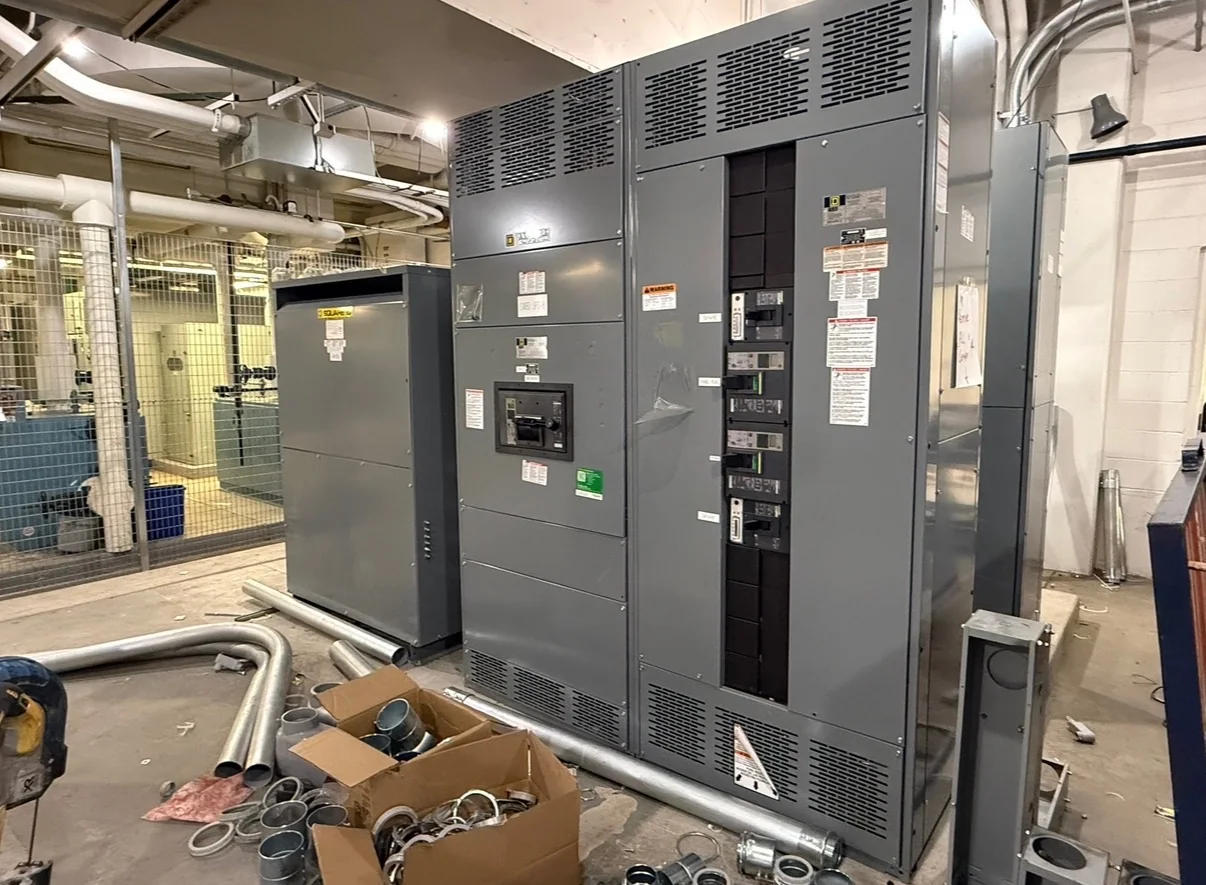
What BIL Means in Switchgear Specifications
BIL stands for Basic Insulation Level, a standardized measure of the impulse-voltage withstand capability of electrical insulation. It is commonly expressed in kilovolts peak and relates to a specified lightning-impulse waveform—not to the equipment’s continuous operating voltage or normal load capacity. In a switchgear specification, BIL helps engineers assess whether insulation can withstand transient overvoltages expected at that point in the power system. The required level depends on factors such as system voltage, grounding, surge protection, installation conditions, and the applicable equipment standard. It is therefore not a value to select from voltage alone. Confirm the required BIL with the responsible engineer and identify it clearly in the project’s equipment schedule and procurement documents.
Why BIL Matters to Equipment Selection
An inadequate insulation withstand level can leave equipment vulnerable to flashover or insulation failure during a transient, while specifying a higher level without engineering need may affect equipment selection, clearances, and cost. BIL must be considered alongside rated maximum voltage, insulation type, switching duties, and the system’s overvoltage environment. For metal-enclosed switchgear, the relevant construction and evaluation requirements also depend on whether the equipment is low-, medium-, or high-voltage. Do not assume that two lineups with the same nominal voltage have interchangeable insulation ratings. During bid review, compare the offered equipment’s documented impulse withstand rating against the project requirement and applicable standard. Resolve discrepancies before release for manufacture, rather than relying on a catalog description or informal equivalency.


Coordinate BIL With the Power System
BIL selection is a system-coordination decision, not just a switchgear catalog choice. The engineer should review the utility service characteristics, transformer insulation level, grounding method, surge-arrester protective level, cable exposure, and any overhead-line connection that could carry lightning surges into the installation. Protective devices can limit voltage stress, but their location, connection, and coordination with equipment insulation matter. Long cable runs, transitions between overhead and underground circuits, and unusual site exposure may change the assessment. The one-line diagram and coordination study should present a consistent design basis; unresolved differences can delay submittal approval or result in incompatible equipment interfaces. Engage the utility and project engineer where service data or protection responsibilities are uncertain, and record assumptions for review.
Distinguish BIL From Other Ratings
BIL does not describe every electrical withstand or operating characteristic. It is distinct from power-frequency withstand, continuous voltage rating, short-circuit current rating, interrupting rating, and momentary withstand duty. A switchgear package can meet one requirement and still fail another, so procurement documents should list these ratings separately rather than use “insulation rating” as a catchall. For low-voltage switchboards, including assemblies evaluated to UL 891 where applicable, confirm the correct product category and project-specific ratings; UL 891 is not a blanket BIL certification for all switchgear. Medium- and high-voltage equipment follows different application and evaluation requirements. Ask the manufacturer to identify the offered equipment’s applicable standards and documented ratings, and have the engineer assess them against the design.
Specify BIL Clearly in Procurement Documents
A useful request for quotation identifies the system voltage, required BIL, equipment type, service conditions, and applicable standards, while distinguishing mandatory requirements from preferences. Include the one-line diagram, equipment schedule, transformer and surge-protection data, site altitude if relevant to the design, and required control or cable interfaces. Ask bidders to state the offered BIL and provide supporting submittal information, rather than leaving the value implied. If replacement or retrofit work is involved, share existing nameplates, dimensions, bus arrangement, cable-entry details, and available outage constraints; a matching BIL alone does not establish physical or electrical compatibility. Have deviations identified in writing before approval. Final ratings, construction, standards, and availability remain subject to engineering review and the specific equipment configuration.
Review Submittals, Schedule, and Delivery Conditions
During submittal review, verify that the BIL shown on the equipment data matches the approved schedule and that associated transformers, arresters, terminations, and system documents use compatible assumptions. Check the equipment outline and shipping configuration against doorways, corridors, lifting capacity, floor loading, access routes, and the planned setting sequence. Delivery coordination matters because a lineup may arrive in sections, and site access or storage limitations can affect when each section can be received and protected. A U.S. manufacturer can discuss custom equipment, American components, timing, and nationwide shipping, but configuration, availability, and delivery dates are project-specific—not guaranteed by a general lead-time statement. Confirm logistics and submittal milestones early, then ensure installation, inspection, and testing follow approved documents and are performed by qualified personnel with required de-energization and safety controls.