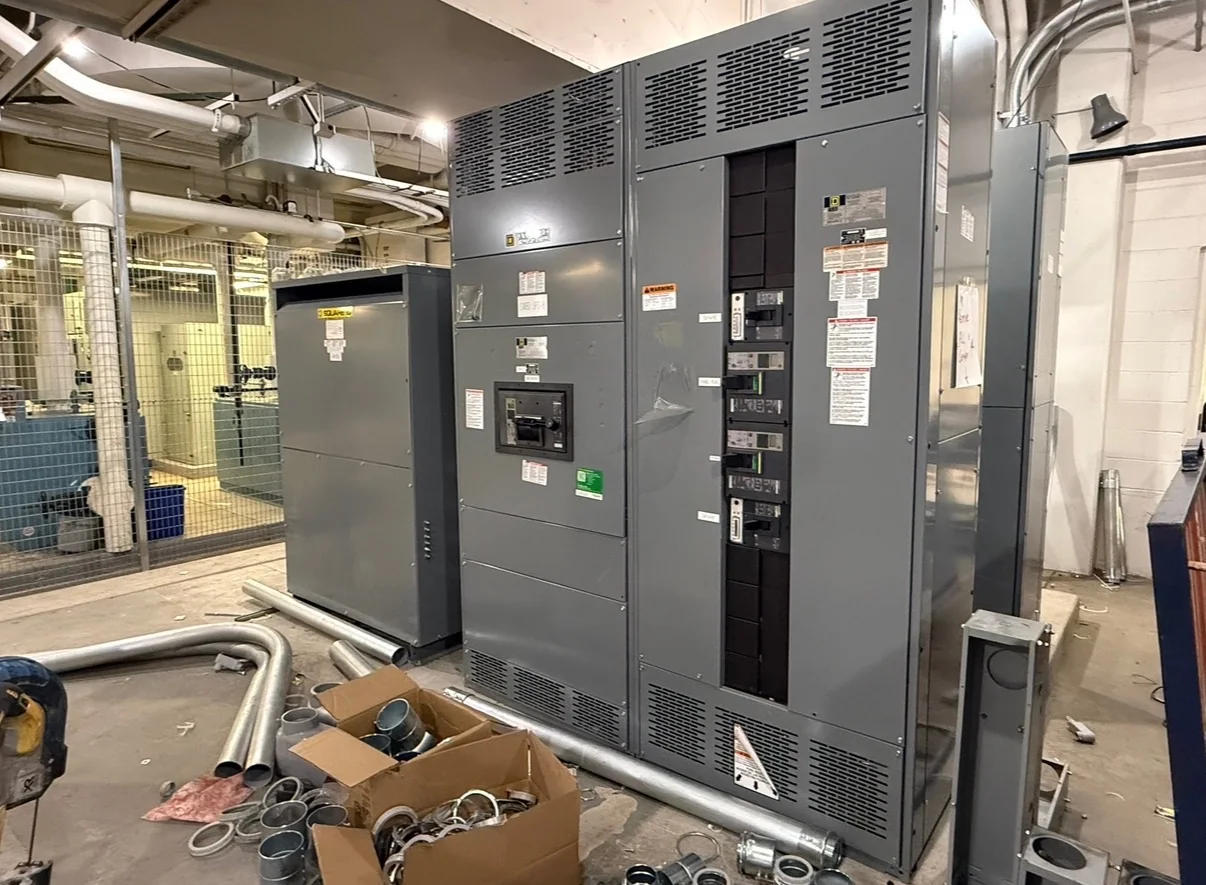
Define the Distribution Scope Before Selecting an Assembly
For a La Porte project, begin with the electrical one-line diagram, load schedule, and description of how the equipment will operate—not a general request for a “custom switchgear” package. Identify the service source, system voltage, phase and wire configuration, available fault-current information, connected loads, and planned future additions. These inputs affect bus ratings, protective-device selection, compartment arrangement, and whether a low-voltage switchboard or another equipment class is appropriate. Clarify whether the assembly serves process equipment, buildings, utility interfaces, or a combination, since operating priorities and switching needs differ. A U.S. manufacturer can develop a new assembly around defined project requirements, but final ratings and compatibility depend on verified system data and engineering review. Flagging missing or preliminary inputs early helps prevent a quote based on assumptions that later force redesign.
Turn Electrical Requirements Into a Reviewable Specification
A useful specification distinguishes mandatory requirements from preferences. State the required electrical ratings, enclosure and installation conditions, incoming and outgoing connections, protective functions, metering needs, and any control or communications interfaces. Identify the governing project standards and the authority having jurisdiction, then confirm which apply to the proposed equipment; UL 891 concerns appropriately evaluated low-voltage switchboard assemblies and should not be treated as a blanket certification for medium- or high-voltage gear. Include the intended access direction, cable-entry approach, and coordination requirements with upstream and downstream devices. These details matter because a lineup that fits electrically may still conflict with site wiring or maintenance access. During quotation, request a written list of assumptions, exclusions, and unresolved items. That record gives engineering, procurement, and the facility team a common basis for reviewing scope before release.


Coordinate Lead Time With Design and Procurement Milestones
Short lead times may be an offering, but a project schedule should not rely on an unconfirmed delivery promise. Ask the manufacturer to identify the expected sequence for drawing development, customer review, approved-for-production release, fabrication, inspection, and shipment, with timing confirmed for the actual design and component requirements. Long-lead protective devices, special metering, control components, or late changes can affect the schedule. Procurement teams can reduce uncertainty by freezing the one-line diagram and device schedule early, assigning reviewers, and setting a clear turnaround target for submittals. If construction dates are fixed, distinguish the date equipment must arrive from the date it is needed for energization; receiving, setting, interconnection, inspection, and commissioning also require time. Written schedule updates and documented approval status help the project team respond before a missed decision becomes a site delay.
Check La Porte Site Conditions Before Finalizing the Layout
Industrial work around La Porte can involve constrained electrical rooms, active process areas, outdoor exposure, and deliveries that must be coordinated with facility operations. Verify the installation location rather than assuming a standard indoor environment: document available floor space, working clearances, access routes, door and ceiling dimensions, ambient and environmental conditions, and any exposure to moisture, corrosive agents, dust, or vibration. These conditions influence enclosure selection, lineup dimensions, service access, and handling arrangements. Confirm how the equipment will reach its final position, including turns, thresholds, lifting points, and any limits on truck access or unloading time. Nationwide shipping does not establish that a particular shipment can enter a site or be placed without additional planning. Share site drawings and receiving restrictions with the manufacturer and installer so transport, rigging, and installation responsibilities are clear.
Use Submittals to Resolve Interfaces Before Fabrication
Review drawings and technical submittals against the project’s actual interfaces before authorizing production. Check lineup dimensions, section sequence, cable landing space, bus connections, device designations, control power, metering, communications, and the relationship to upstream and downstream equipment. Confirm that the proposed protective-device characteristics can be coordinated with the system study and that any arc-flash or short-circuit analysis assumptions match the equipment being specified. If those studies are incomplete, record the dependency rather than treating coordination as settled. Ask the design team to identify who approves drawings and who supplies field wiring, terminations, conduits, and network connections. A missed interface can leave a physically complete assembly difficult to connect or operate. Maintain a controlled revision record, circulate marked-up drawings to responsible reviewers, and obtain written resolution of exceptions before the fabrication release.
Plan Delivery, Installation, and Acceptance as One Handoff
Before shipment, align the receiving plan with the equipment configuration and the site’s construction sequence. Confirm the destination, delivery contact, unloading capability, receiving hours, storage conditions, and whether the site requires advance notice or specific vehicle arrangements. For a La Porte facility with ongoing operations, coordinate arrival with plant access rules and nearby work so a truck or rigging crew does not obstruct critical activity. Compare delivered sections and documentation with the approved submittals, and promptly record shipping damage or discrepancies through the agreed process. Installation and testing must follow the manufacturer’s instructions, project requirements, and applicable code; electrical work must be performed by qualified personnel with equipment de-energized under an appropriate safety program. Include drawings, device information, operating instructions, and approved test documentation in the turnover package. Clear acceptance criteria make it easier to close procurement and prepare for commissioning.