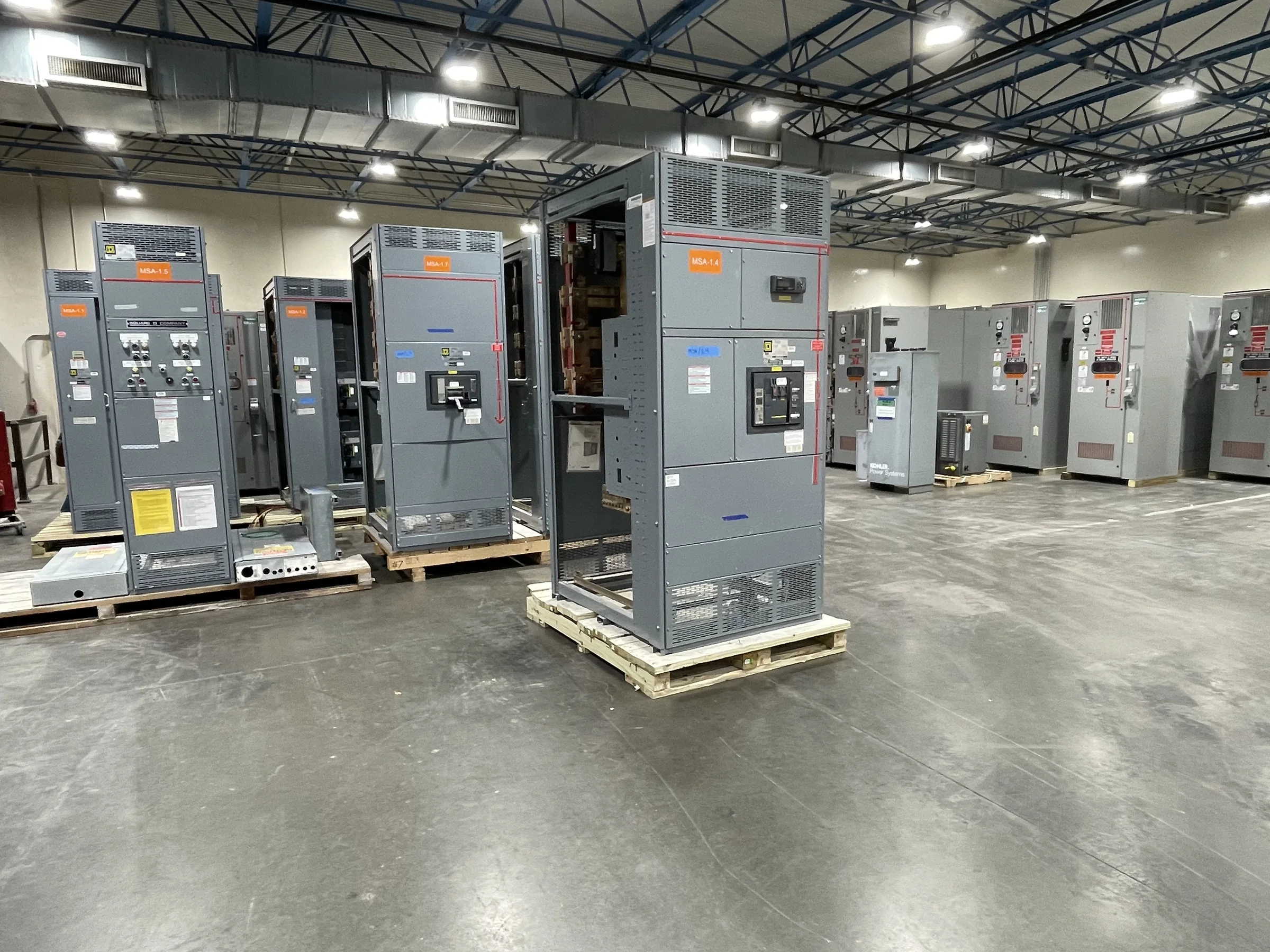
Select a Switchboard That Fits the Distribution Plan
For a facility in The Woodlands, begin with the electrical one-line diagram and the loads the switchboard must serve—not a catalog frame size. Confirm system voltage, phase, wire configuration, service entrance or downstream use, available fault current, and the ratings required by the design. These details affect the bus, protective devices, enclosure arrangement, and whether the equipment is appropriately evaluated as a UL 891 low-voltage switchboard assembly. UL 891 is not a blanket designation for every distribution product, and a rating or label should never be assumed before the design is reviewed. Share the latest drawings and load information with the manufacturer so proposed equipment can be checked against project requirements before procurement.
Coordinate Ratings and Protective Devices Early
Interrupting ratings and protective-device coordination can shape a switchboard lineup as much as its physical dimensions. Ask the engineer of record to confirm available fault current at the equipment and document the required short-circuit ratings and coordination approach. If the project includes a generator, transfer equipment, parallel sources, or future capacity, those conditions may change the device selection or arrangement; they should be resolved before the order is released. A manufacturer can build to approved project documents, but should not substitute for the project engineer’s system study or field verification. In The Woodlands, where a project may combine offices, laboratories, commercial space, or light industrial loads, clear load schedules help prevent incompatible assumptions between the switchboard, upstream protection, and connected equipment.


Check Room Layout, Access, and Environmental Conditions
A switchboard that meets electrical ratings still has to fit the room and the route to it. Provide the equipment-room plan, door and corridor widths, ceiling height, housekeeping-pad details, required working space, cable-entry direction, and conduit locations. Verify the delivery path, turning points, floor loading, and available staging area before settling on shipping sections or lineup dimensions; a unit that cannot be moved into place can delay installation even when its footprint fits. The Woodlands’ humid subtropical climate also makes indoor placement, moisture control, and protection during transport and storage worth reviewing with the project team. Confirm enclosure and environmental requirements from the actual location and specifications rather than assuming a standard enclosure suits every site.
Build a Complete, Reviewable Submittal Package
A useful quotation and submittal review starts with complete documents: one-line diagram, panel or load schedules, specifications, fault-current data, device requirements, enclosure details, and the planned cable arrangement. Include the project name, installation address, required delivery point, and any owner or consultant forms so the equipment scope and shipping assumptions are visible. Review the manufacturer’s drawings for bus arrangement, device positions, dimensions, access, and incoming and outgoing connections before approval. Changes after approval can affect configuration, pricing, and schedule, so route comments through the engineer and purchasing team and return consolidated revisions. For projects in The Woodlands, identify site delivery rules, receiving hours, unloading responsibility, and any limits on truck access early; these are practical procurement details, not merely carrier notes.
Discuss Schedule Against Design and Procurement Milestones
Lead time is project-specific, so compare quoted timing with the actual procurement milestones rather than relying on a general promise. Clarify when the schedule begins, what approvals or customer-furnished information are prerequisites, and whether revisions, selected components, or incomplete drawings could affect the planned ship date. Ask for timing to be discussed alongside the required submittal, approval, release, and delivery dates, then coordinate those dates with construction sequencing and planned outages. A U.S. manufacturer offering custom builds and short lead times can discuss options, but availability and delivery timing must be confirmed for the equipment and project in question. For Houston-area work, align the requested delivery window with site readiness and receiving capacity; arriving before the room, access route, or installation crew is ready can create storage and handling problems.
Plan Delivery, Installation, and Replacement Work
Before placing an order, define whether the scope is new distribution or replacement equipment and document the interface with existing gear. For replacement work, compare dimensions, bus connections, cable termination space, control wiring, grounding, and protective-device functions against verified field conditions; a drawing alone may not capture undocumented changes. Plan an outage and safe work sequence with the facility’s qualified electrical contractor and responsible engineer. Electrical installation, inspection, and any required system changes must be coordinated before energization; do not treat de-energized work as optional. For delivery to The Woodlands, confirm the exact site address, appointment process, unloading equipment, staging location, and who inspects the shipment on arrival. Nationwide shipping supports project delivery, but the purchaser and site team should agree on receiving responsibilities and any access constraints in advance.