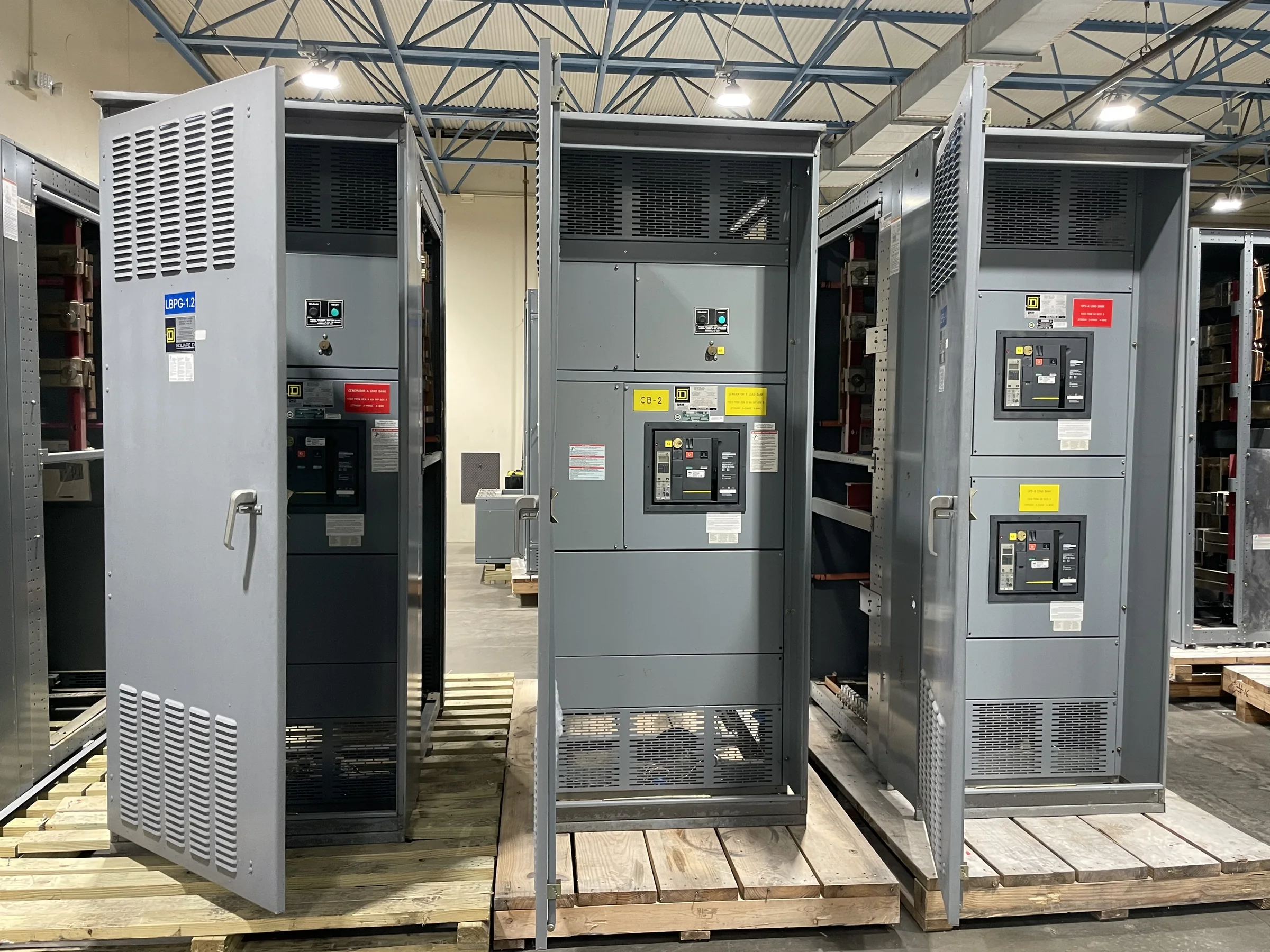
Specify the Equipment Around the Distribution Study
Start a Deer Park switchgear request with the electrical one-line diagram and the study information that establishes how the equipment must perform. Identify system voltage, frequency, phase, available fault current, main and feeder arrangements, grounding method, and the intended source and load connections. These details affect bus design, protective-device selection, interrupting ratings, and the equipment’s relationship to upstream and downstream systems; assumptions can create costly redesign or coordination problems. Include the latest short-circuit, coordination, and arc-flash studies when available, and flag any study still in progress. If replacement equipment must fit an existing installation, provide existing nameplate data and connection details rather than relying on the old lineup’s general description. Final ratings and compatibility require project-specific review.
Choose an Assembly That Matches the Application
The right equipment category depends on the distribution function, operating conditions, and project scope—not simply the facility’s preferred product name. A low-voltage switchboard, medium-voltage metal-enclosed switchgear lineup, and service entrance assembly have different construction and application requirements. For low-voltage switchboard work, UL 891 may be relevant when the assembly is appropriately evaluated; it does not establish a blanket listing for medium- or high-voltage equipment. Clarify whether the project requires service entrance provisions, drawout breakers, metering, control power, communications, or integration with existing protective devices. Also identify environmental conditions, enclosure requirements, and applicable project standards. Confirm the exact configuration and evaluation requirements for the specified assembly before approval, because equipment suitability is application-specific.


Resolve Existing-System Interfaces Before Approval
Replacement and expansion work often turns on interface details that are easy to miss in an early equipment schedule. Document the available room, lineup orientation, access and working-space constraints, cable entry direction, conductor material and size, termination locations, and bus connections. For an existing installation, confirm whether the project calls for a complete replacement, an adjacent new section, or a defined retrofit scope; do not assume new gear will connect to existing equipment without engineering review. Accurate photographs, dimensions, drawings, and field-verified information help the manufacturer identify conflicts before fabrication. This matters in operating industrial facilities, where a mismatch can affect shutdown planning, conduit routing, structural supports, or installation sequencing. Verify all final dimensions and interfaces against approved project documents.
Build the Submittal Package for a Clear Review
A useful submittal package lets engineers, owners, and contractors review the same proposed configuration against the project requirements. Request equipment schedules, arrangement drawings, elementary and connection diagrams where applicable, device data, and a bill of material appropriate to the scope. Compare the proposed lineup with the one-line diagram, specifications, cable plan, and control narratives; resolve discrepancies in writing rather than leaving them for installation. Identify required communications protocols, metering points, alarms, interlocks, and control interfaces, since these can affect component selection and wiring. Mark any approved deviations and track revisions so procurement does not release equipment against superseded documents. Review procedures and deliverables should be agreed for the project; document availability and final content depend on the equipment and contract scope.
Coordinate Schedule, Approval, and Release
Discuss schedule early, but treat timing as a project-specific item rather than a fixed promise. The manufacturer offers custom builds and short lead times, while actual production timing can depend on the approved design, component selection, document review, and material availability. Establish when the contractor needs approved drawings, when the customer expects release for fabrication, and whether phased delivery is workable. Changes to breaker types, metering, enclosure details, or control requirements after approval may affect both scope and schedule. Procurement teams should also clarify the quotation basis, exclusions, freight assumptions, required submittals, and who is responsible for final field verification. This creates a more dependable plan for procurement and construction, particularly when equipment delivery must align with a planned outage or a sequence of facility modifications.
Plan Delivery and Installation at the Deer Park Site
Delivery planning matters in Deer Park, where industrial sites may have controlled access, designated receiving points, contractor check-in requirements, and limited routes for large equipment. Confirm the delivery address and receiving contact directly with the project team, then review truck access, turning and unloading space, crane or forklift arrangements, and any restrictions on delivery hours. Houston-area heat, humidity, and heavy rain can also make staging and protection important; coordinate a suitable storage location and follow the manufacturer’s handling and storage instructions. Check shipping dimensions and weights against the route and unloading plan before dispatch, since a lineup that reaches the gate may still be difficult to position. Coordinate installation, inspection, and energization with qualified personnel, approved drawings, site procedures, and required de-energized work.