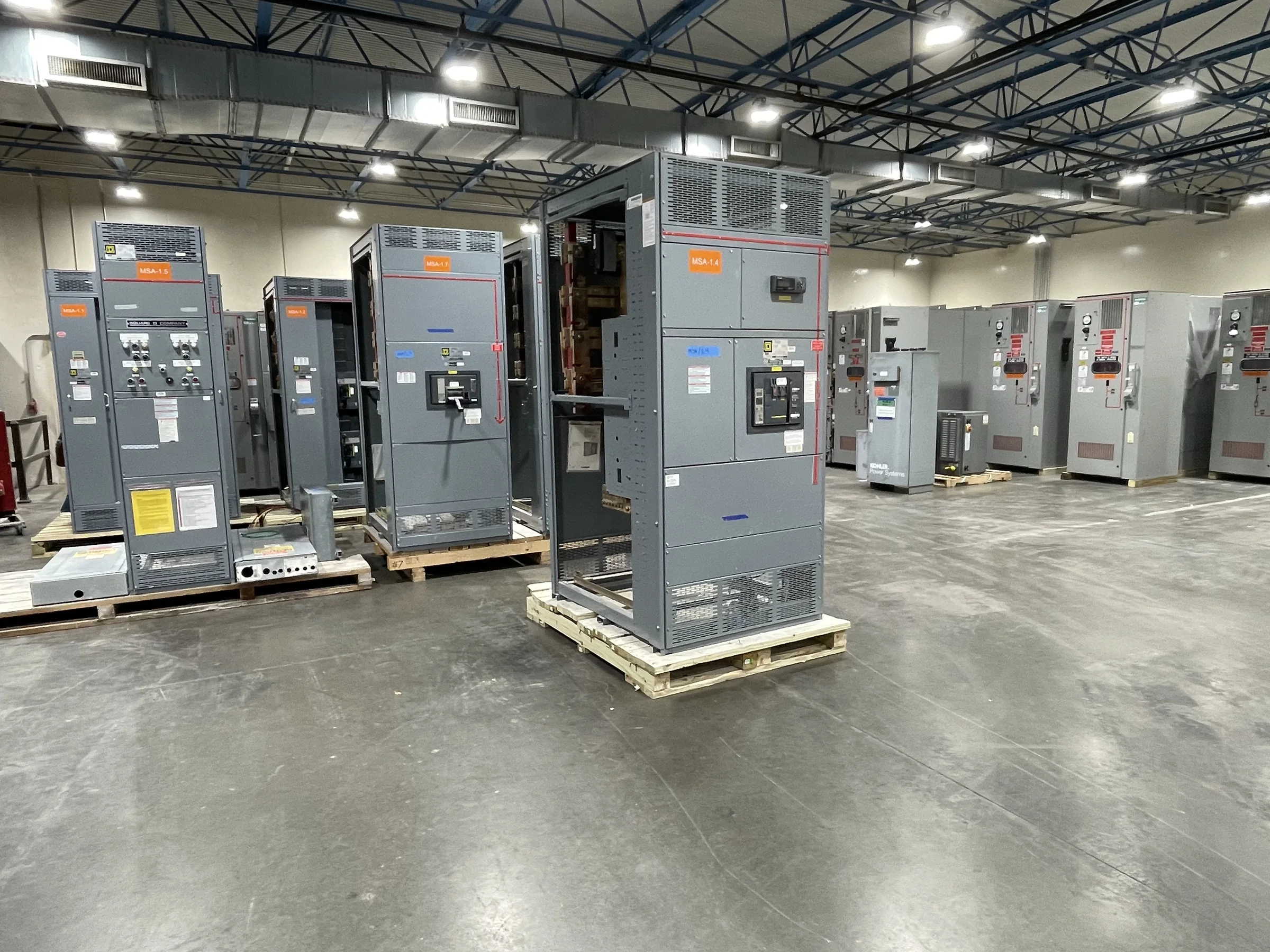
Define the Electrical Duty Before Selecting Equipment
Industrial loads rarely behave like a single, steady demand. Motors, compressors, process heaters, welders and variable-frequency drives can produce different starting currents, operating patterns and power-quality concerns. Before requesting a switchgear proposal, assemble the available one-line diagram, load schedule, system voltage, available fault-current information and details of major loads. These inputs help the engineering team evaluate the intended distribution arrangement and identify missing data that could affect equipment selection. Also describe planned expansion, standby sources, tie breakers and any load-shedding or transfer requirements. A rating should not be assumed from the existing equipment nameplate alone: utility conditions, upstream protection and system changes may have altered the design basis. Confirming the duty early reduces redesign risk and gives procurement a clearer basis for comparing proposals.
Match the Arrangement to Plant Operations
The physical arrangement should reflect how the facility is operated, maintained and expanded—not just how equipment fits on a drawing. Consider where incoming power enters, which loads need separate distribution sections and whether operators require a means to isolate portions of the system for planned maintenance. A bus-tie arrangement, multiple mains or a future section may be appropriate in some projects, but each choice depends on the electrical study, operating philosophy and applicable requirements. Discuss normal and alternate operating states with the design team so protective-device coordination and switching procedures can be reviewed together. In a process plant, an outage affecting one production line may have different consequences from a full-facility shutdown. Making those priorities explicit helps align the proposed lineup with practical continuity needs.


Resolve Retrofit and Room Constraints Early
Replacing aging switchgear inside an operating plant can involve more than matching its electrical ratings. Existing room dimensions, door and aisle clearances, ceiling height, cable-entry locations, equipment access routes and foundation conditions can limit what can be installed. Gather field measurements and photographs, and verify cable sizes, lug arrangements, conduit positions and bus connections against the available drawings. Identify whether the project requires a new lineup, a replacement section or a defined interface with retained equipment; compatibility should be established from project-specific information, not assumed from appearance or manufacturer name. Include demolition, rigging access and planned outage windows in early discussions. An overlooked obstruction or mismatched termination can require field changes, extend an outage or complicate safe installation, so site verification is a procurement and schedule concern.
Build a Submittal Package That Supports Review
A useful submittal package lets engineering, operations, safety and procurement review the same proposed configuration. Depending on project scope, request drawings showing the lineup, elevations, dimensions, bus arrangement, cable access and equipment identification, along with applicable electrical data and device schedules. Compare the proposal with the project one-line diagram and specification, then route deviations and unanswered items to the responsible engineer before approval. Identify required documentation for installation, operation and maintenance, as well as any project-specific inspection, labeling or testing requirements. UL 891 applies to appropriately evaluated low-voltage switchboard assemblies; it is not a blanket certification for medium- or high-voltage equipment. Confirm the intended equipment classification and any required listing or evaluation for the actual assembly, rather than relying on a broad product description.
Plan Timing Around Decisions, Not Assumptions
A realistic procurement schedule depends on the completeness of the design, the approval cycle and the details of the required build. Custom configurations, unresolved interfaces, late changes to protective devices and pending site information can all affect when a release-ready package is possible. Share the required in-service date, decision milestones, review contacts and known outage constraints when requesting a quote. Ask which selections or approvals are needed to confirm the proposed configuration and what information remains open. A stated short lead time should not be treated as a guaranteed delivery date unless the manufacturer confirms it for the specific scope and conditions. Separating engineering review, drawing approval, production planning, shipment and site readiness helps teams identify schedule risk early and coordinate realistic commitments across departments.
Coordinate Delivery With Installation Readiness
Nationwide shipping does not remove the need to plan for receiving and moving large electrical equipment at the facility. Confirm the delivery address, receiving hours, unloading responsibility, access restrictions, laydown space and route from the truck to the electrical room before shipment is arranged. Door openings, floor capacity, turning space, overhead obstructions and restrictions on delivery vehicles may affect how a lineup reaches its final position. Coordinate the shipment sequence with the installation contractor and site team, especially when equipment will arrive in multiple sections or an outage window is fixed. Verify that the room, supports, conduits and connections will be ready before delivery, and document any handling or storage requirements provided for the equipment. Clear responsibilities reduce delays, avoid unnecessary handling and help protect the installation schedule.