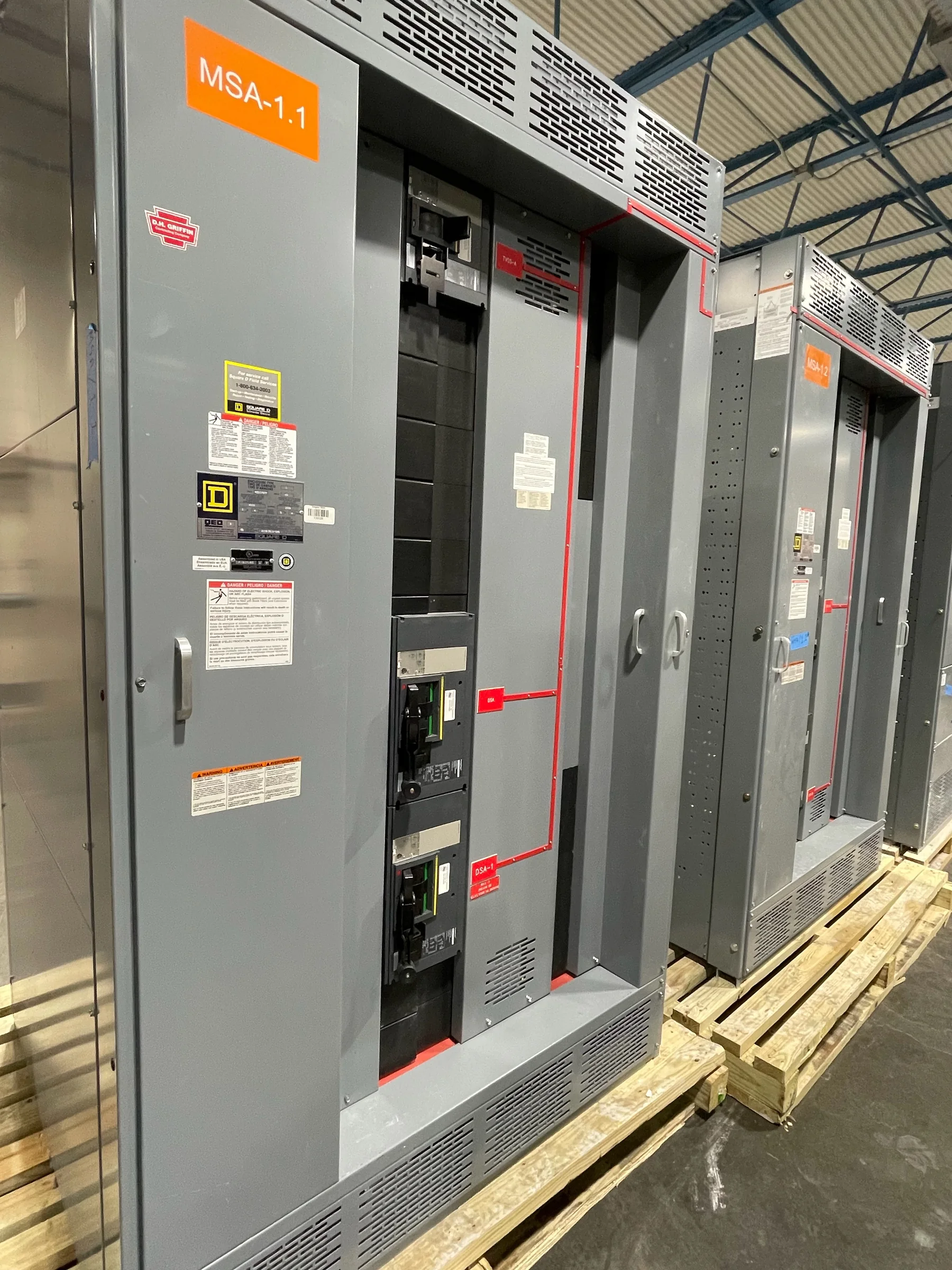
Modernization Starts with the Existing Distribution System
A switchgear modernization project in Deer Park begins with the equipment that must remain in service, not just the lineup being replaced. Map the source, main and feeder connections, downstream loads, protective devices, and any ties to generators or other utility sources. Confirm whether the scope is a full replacement, a phased changeover, or new equipment integrated with retained gear; each approach changes outage planning and interface requirements. Existing drawings may not reflect field conditions, so compare them with nameplates, cable routes, enclosure dimensions, and verified site information. This review helps identify incompatible bus arrangements, unexpected control wiring, and loads that need continuity planning. Share available records with the manufacturer early so proposed equipment can be developed around documented project conditions rather than assumptions.
Define Ratings, Protection, and Operating Requirements
A useful specification captures how the system must perform, while leaving final selections subject to engineering review. Provide the system voltage, frequency, available fault-current information, required continuous current, bus configuration, source arrangement, and intended feeder functions when known. Protection requirements should identify coordination objectives and any project-approved settings or studies; do not assume that existing trip settings transfer unchanged to new equipment. Where motors, process loads, transformers, or alternate sources are involved, describe their operating and starting conditions because these affect equipment application and protection. Also identify metering, communications, interlocking, and future space expectations. Exact ratings, device compatibility, standards, and assembly evaluation are project-specific. For low-voltage switchboard assemblies, UL 891 may be relevant when applicable and appropriately evaluated; it is not a blanket designation for medium- or high-voltage equipment.


Plan the Changeover Around Plant Operations
In an industrial facility near Deer Park’s petrochemical and port-related operations, an electrical outage may affect interdependent processes, contracted work windows, and access controls. Build a sequence that states which equipment will be isolated, what loads need temporary or alternate supply, who approves switching, and how restoration will be verified. The facility’s qualified electrical personnel and project engineer should determine safe work practices, boundaries, and required de-energized conditions; energized work should never be presumed as a schedule shortcut. Check whether the replacement can be installed in stages, whether cable terminations can be prepared in advance, and what dependencies rely on shutdown access. A written outage plan clarifies responsibilities for the owner, installer, and equipment supplier. It also reveals schedule conflicts before procurement commitments or site mobilization.
Check Physical Fit, Connections, and Environmental Conditions
A replacement lineup can meet electrical requirements and still fail to fit the room or connect cleanly. Record the available footprint, doorway and corridor clearances, floor or housekeeping-pad conditions, overhead obstructions, cable-entry direction, and working space required by the project design. Verify whether existing conductors can reach the proposed terminals and whether terminations, conduit, bus connections, or grounding interfaces need redesign. Deer Park-area industrial sites may also have site-specific environmental controls, restricted access, or operating-area requirements; document the actual installation location and applicable owner criteria rather than relying on a generic outdoor or indoor assumption. Confirm handling access for unloading and movement to the installation point. These details influence enclosure selection, layout, shipping sections, and field work, but final configuration depends on verified conditions and engineering review.
Make Procurement Documents Buildable and Reviewable
A clear request for quotation gives the manufacturer enough context to identify open decisions without implying that an unverified design is complete. Include the single-line diagram, equipment schedules, applicable specifications, fault-current or coordination documents, room layout, cable and termination information, control schematics, and requested submittal requirements when available. Mark revisions and distinguish firm requirements from preferences, alternates, and items awaiting owner or engineer confirmation. State who will review drawings, how comments will be resolved, and which interfaces are by others. Ask for proposed scope boundaries, exclusions, and any assumptions affecting compatibility or field modifications. This documentation helps procurement compare offers on equivalent equipment and responsibilities. It also gives engineering and operations a practical chance to catch mismatched ratings, missing controls, or unresolved installation details before release for manufacture.
Coordinate Manufacturing Schedule, Delivery, and Site Readiness
Discuss schedule and delivery with the U.S. manufacturer using the project’s actual approval milestones, required ship window, and receiving constraints. Short lead times may be available, but timing depends on the confirmed design, component availability, drawing review, and order details; request a project-specific schedule rather than treating a general estimate as a commitment. American components can be considered as an offering, with exact selections and availability confirmed for the build. For delivery to Deer Park, identify site access rules, delivery hours, truck restrictions, unloading equipment, laydown space, and the route from receiving to the electrical room. Agree on packaging, shipment configuration, and who checks for damage or missing items. Before arrival, confirm foundations, access clearances, approved drawings, and installation responsibilities so equipment does not reach a site that is not ready.