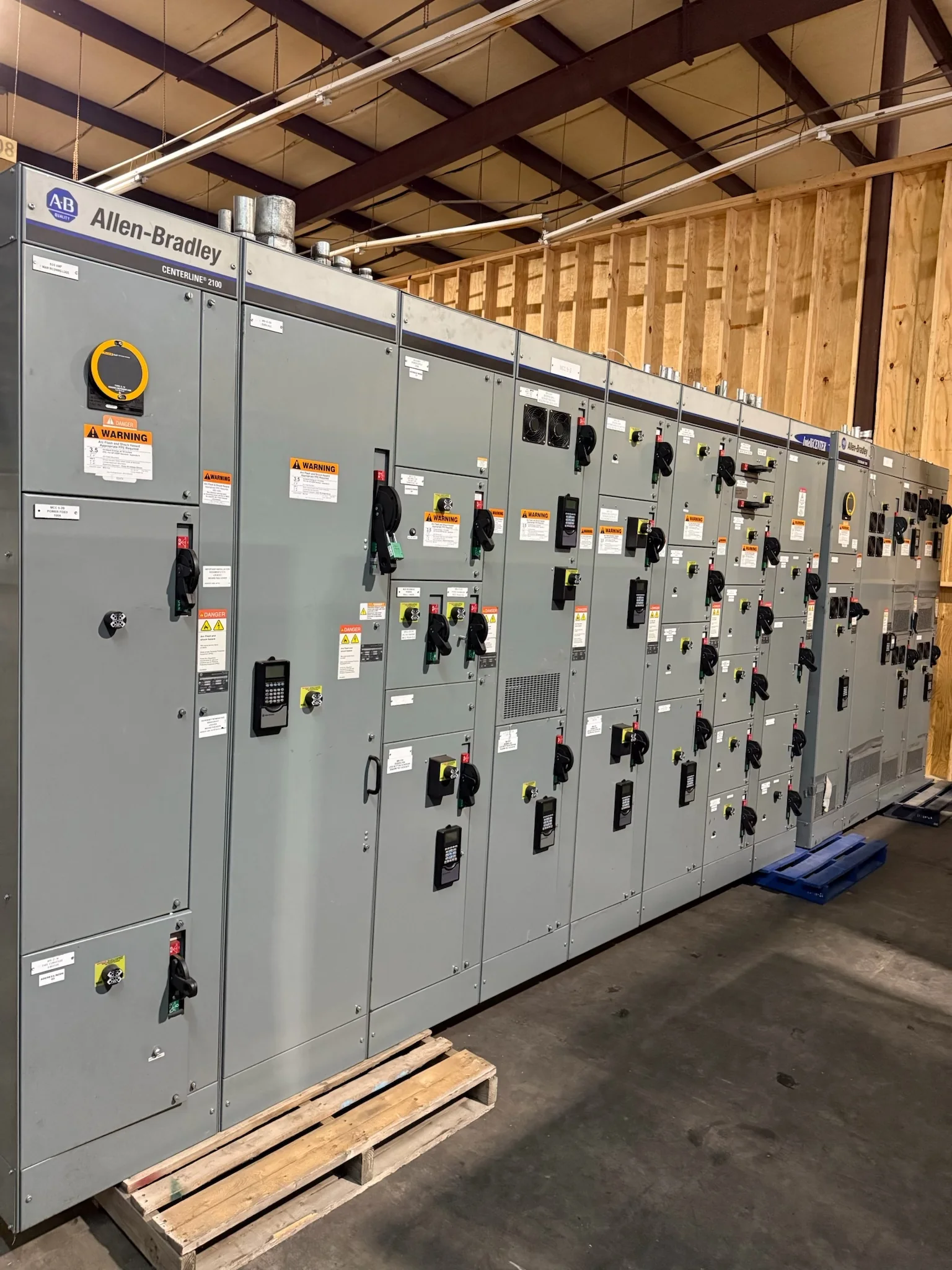
Define the Baytown Distribution Need Before Selecting Equipment
For a Baytown facility, begin with the electrical duty the switchgear must perform—not a nominal voltage or cabinet footprint alone. Document the system voltage, phase and frequency, available fault current, main and feeder requirements, load types, and the operating arrangement, including any tie or alternate source. These details affect bus design, protective-device selection, interrupting ratings, and how the assembly fits into the distribution system. Account for motors, process loads, future circuits, and any planned capacity changes; spare space and spare electrical capacity are different decisions. Share the one-line diagram and known utility or transformer data early. If fault-current information is incomplete, flag the gap for engineering review rather than assuming a rating. Confirmed inputs make quote comparisons more meaningful and reduce late design changes.
Coordinate Protection, Controls, and System Interfaces
Protection and control details should be reviewed alongside the lineup layout. Specify the intended protective-device functions, trip-unit features, metering, control power, interlocks, alarms, and communications interfaces, while identifying which functions belong to the switchgear and which are supplied by other equipment. A breaker that fits mechanically is not automatically suitable for the system’s duty or coordination plan. Provide the latest available coordination study, arc-flash study inputs, and upstream and downstream device information when applicable; final settings and study conclusions must be established for the actual installation. For process facilities around Baytown, continuity may depend on how a failure or maintenance outage affects connected operations. Clarifying normal, emergency, and tie-breaker operating sequences helps reviewers check that the proposed arrangement supports the intended procedure without assuming an unverified control scheme.


Plan the Physical Layout Around the Actual Electrical Room
A switchgear lineup must fit the route to its final position as well as the room where it operates. Measure door and corridor clearances, floor openings, overhead obstructions, turning space, equipment access, and the available footprint. Confirm whether the assembly will arrive as one lineup or in shipping sections, and identify where sections can be staged and joined. In industrial Baytown sites, planned access may share gates, internal roads, or crane areas with ongoing plant activity, so receiving arrangements deserve early attention. Check working clearances and access requirements against the applicable project documents and governing rules; do not treat a dimension on an old floor plan as proof of field conditions. Resolving these constraints before release can prevent avoidable redesign, handling complications, or interference with adjacent equipment.
Build a Quote Package That Supports an Accurate Review
A useful request for quotation gives the manufacturer enough information to price a defined assembly and identify unresolved engineering items. Include the one-line diagram, equipment schedule, preliminary layout, bus and enclosure requirements, breaker quantities and functions, metering or controls scope, and applicable project specifications. State the required submittal format and any project standards, including whether a low-voltage switchboard is expected to meet UL 891 and what evaluation or labeling the project requires. UL 891 applies to appropriately evaluated low-voltage switchboard assemblies; it should not be read as a blanket certification for all switchgear or for medium- and high-voltage equipment. Mark deviations and alternates clearly. If documents conflict or a key value is unknown, ask for clarification in the quote stage. A written scope makes technical exceptions, pricing assumptions, and later comparisons easier to track.
Discuss Schedule, Submittals, and Release Milestones Early
Lead time depends on the specific design, component selection, engineering review, approvals, and current material availability, so request a project-specific schedule rather than relying on a general promise. Identify when approved-for-construction information is needed, when the room and connected equipment will be ready, and whether the project has a fixed outage or commissioning window. Agree on submittal contents, review responsibility, revision control, and the documents required before production release. A change to breaker functions, dimensions, control wiring, or finish after approval may affect both engineering and manufacturing sequence. For Baytown work, tie the equipment delivery plan to the site’s construction phases and receiving availability, not just the electrical contractor’s preferred arrival date. Recording assumptions and decision deadlines helps procurement, engineering, and construction teams spot schedule risks while changes remain manageable.
Coordinate Delivery, Receiving, and Installation Records
Nationwide shipment does not remove the need for site-specific delivery planning. Confirm the receiving contact, delivery hours, truck access, unloading responsibility, lifting equipment, staging location, and protection from weather or construction traffic before the shipment is dispatched. Share any gate instructions or restrictions through the project’s approved logistics process, and verify that the unloading path can handle the shipping sections’ documented dimensions and weight. On receipt, compare the shipment against its packing list and purchase documents, record visible damage, and preserve the manufacturer’s handling and storage instructions for the installation team. Keep approved drawings, wiring diagrams, device schedules, and revision records available for field coordination. Installation, inspection, and energization must follow the project requirements and be performed by qualified personnel using required de-energization and safety procedures; the equipment package alone does not establish safe operating conditions.