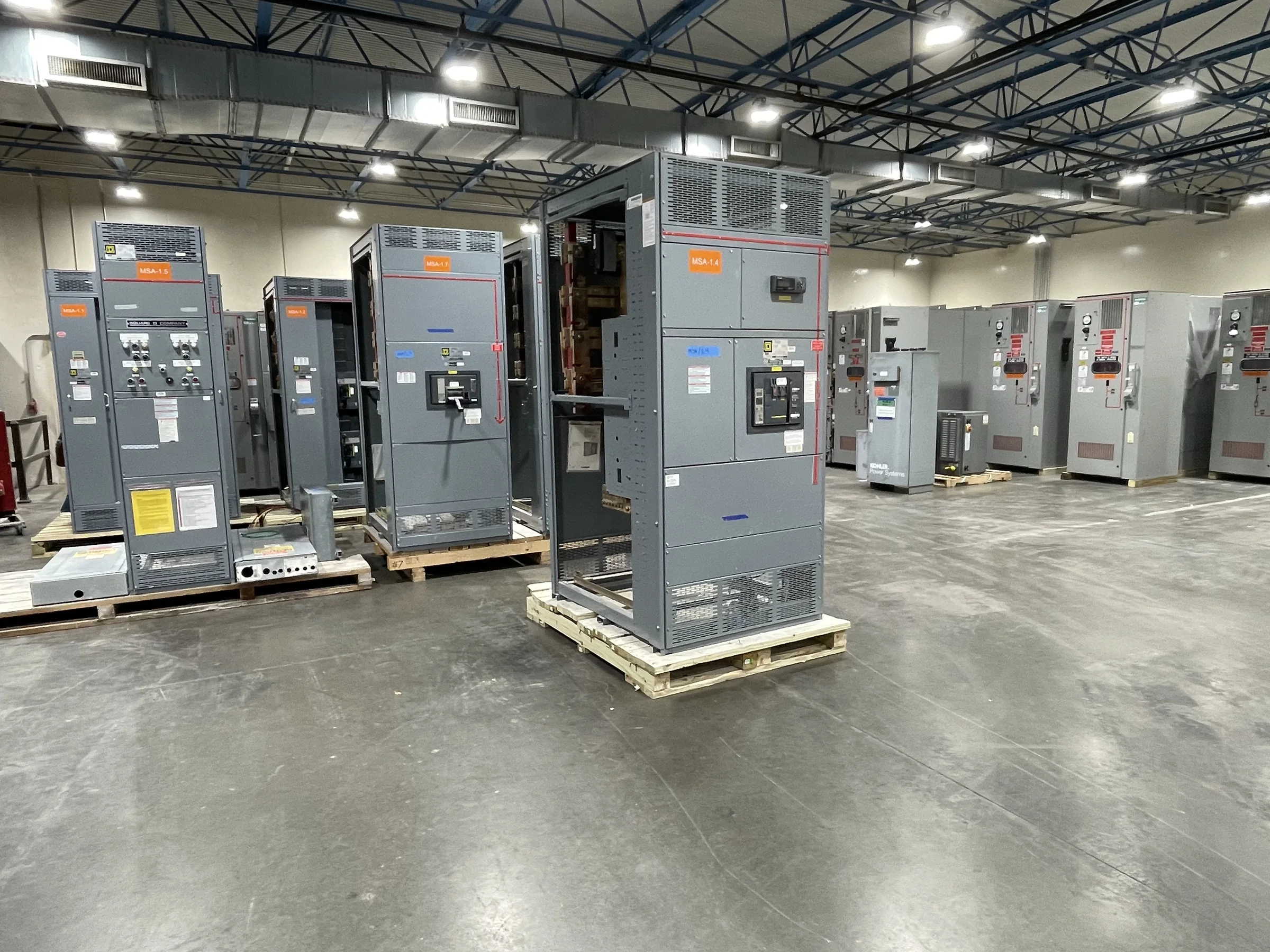
Define the MCC Around the Loads It Serves
For a Conroe facility, start the motor control center (MCC) specification with the equipment schedule, not a preferred lineup arrangement. List each motor’s nameplate data, duty, starting method, operating frequency, and control requirements; identify spare circuits separately from installed loads. Pumps, fans, compressors, and process equipment can have very different starting and coordination needs, even when their horsepower appears similar. That distinction affects starter selection, protection, control interfaces, and available space. Document the source voltage and grounding arrangement, prospective fault current, and upstream protective device information so the manufacturer can review the assembly in its intended system context. If any of these inputs are preliminary, mark them as assumptions for review rather than treating them as confirmed design values.
Choose Starters and Controls for the Operating Sequence
The right combination of across-the-line starters, reduced-voltage starting, or adjustable-speed drives depends on how the process operates—not simply on motor size. Consider whether motors start together, run continuously, reverse, or respond to pressure, flow, or temperature signals. Starting behavior can influence voltage drop and coordination with upstream equipment; drive selection can bring additional questions about harmonics, motor cables, bypass needs, and heat dissipation. Describe the sequence of operation and identify which functions belong in the MCC versus a plant control system. Provide control voltage, communication protocol, required status and alarm points, and any interlocks. Clear requirements help prevent late changes to components, wiring, and layout, while leaving final selection subject to engineering review and project-specific compatibility.


Coordinate the Lineup With Conroe Site Conditions
Conroe-area delivery planning should account for the actual destination, route, receiving hours, and equipment movement path—not just the shipping address. Confirm whether the MCC will enter through a dock, overhead door, or temporary opening, and check turning space, floor capacity, stair or ramp constraints, and the planned handling equipment. Houston-region heat, humidity, and heavy rain make protected staging and a dry, suitable indoor installation area important considerations; they do not replace the enclosure and environmental requirements established by the project. Share room dimensions, ceiling obstructions, aisle clearances, access-door locations, and any installation sequence constraints before layout approval. These details matter because a lineup that fits on a drawing may still be difficult to receive, set, connect, or maintain in the field.
Resolve Electrical Interfaces Before Releasing the Build
An MCC does not operate in isolation, so identify the interfaces that the engineering and procurement teams must verify before the build is released. Provide the one-line diagram, load schedule, feeder and branch-circuit requirements, grounding details, and available upstream device information. Confirm how the lineup connects to the facility distribution system, control network, field instruments, and emergency or standby power scheme, if applicable. Note required metering, protective functions, labels, and arc-flash study inputs without assuming that a product selection alone establishes system performance. Incomplete interface data can affect compartment arrangement, wiring, device coordination, and commissioning plans. A marked-up drawing register and a clear list of open decisions help distinguish approved requirements from items still needing engineer, utility, or owner confirmation.
Make Submittals and Scope Useful to Procurement
A strong request for quotation gives the manufacturer enough information to price a defined scope and identify unresolved choices. Include the project schedule milestones, equipment quantities, requested technical documents, shipping destination, receiving restrictions, and whether unloading or placement is by others. Attach current drawings and specifications, then call out any conflicts or approved deviations instead of relying on notes scattered across several files. Ask which components, drawings, and interfaces are included, and identify owner-furnished equipment or field work separately. American components and custom construction may be available for a project, but the specific configuration, component origin, standards, and documentation should be confirmed in the quotation and submittals. Timing depends on the approved scope, design inputs, component availability, and review cycle; do not treat an early estimate as a guaranteed delivery date.
Plan Installation, Verification, and Future Service
Before shipment, align the delivery date with site readiness, the electrical contractor’s installation plan, and the facility’s outage window. The installation team should have approved drawings, equipment handling information, foundation or housekeeping-pad details, conduit-entry plans, and the required connection and inspection responsibilities. Electrical work must be performed by qualified personnel under applicable safety procedures, with equipment de-energized and verified safe before work. Commissioning requirements should identify who checks wiring, protective settings, control logic, communications, and operation against approved documents; the exact tests and acceptance criteria are project-specific. Keep final drawings, device data, settings records, and maintenance instructions with facility records. Thoughtful documentation supports troubleshooting and future changes, while spare-space or spare-circuit provisions should be defined explicitly rather than assumed from an empty section.