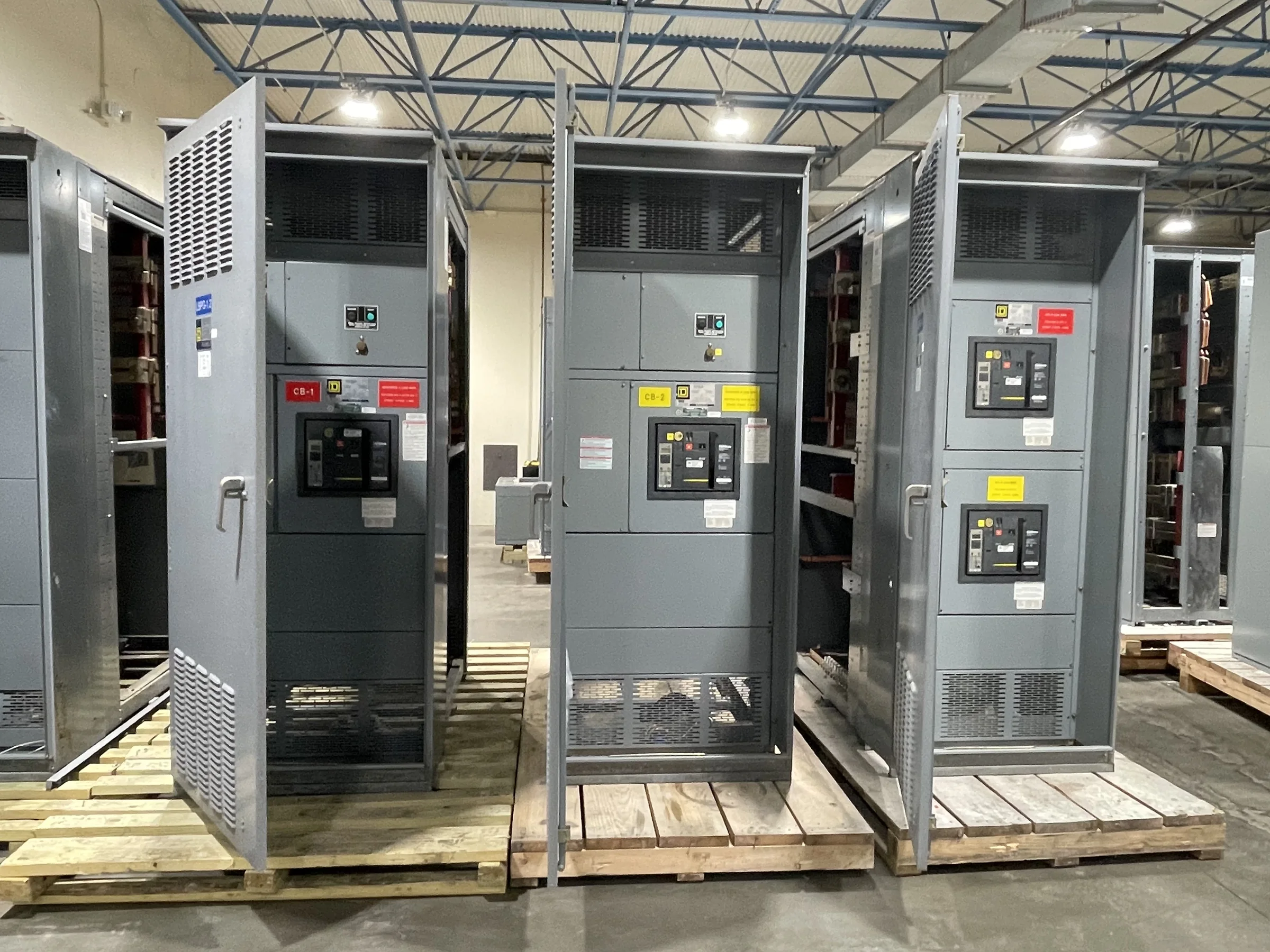
Plan the Service Entrance Around the Actual Load
A service entrance switchboard should be developed from the facility’s expected demand, not simply copied from an older lineup. In Baytown, projects may serve process buildings, warehouses, commercial properties, or mixed-use sites, each with different load profiles and future expansion plans. Provide the design team with available utility information, load schedules, one-line diagrams, and the intended service voltage and phase where known. Identify large motors, heating loads, standby generation, and planned equipment additions; these can affect the selected arrangement and coordination with upstream and downstream devices. Confirming those inputs early helps avoid a design that is difficult to integrate or undersized for planned growth. Final ratings, configuration, and applicable requirements must be verified for the specific project.
Coordinate Utility Requirements Before Releasing the Design
The serving utility’s requirements can shape the service entrance arrangement, so obtain its current service criteria before approving fabrication documents. Confirm the planned point of delivery, metering approach, available fault-current information, and any required utility-owned or customer-owned compartments. These details matter because a mismatch in metering access or service configuration can delay acceptance or require field changes. The electrical engineer, utility representative, contractor, and equipment manufacturer should resolve open items through coordinated drawings and written review. Baytown facilities may also involve phased construction or constrained access to existing electrical rooms, making early agreement especially valuable. Utility acceptance, code compliance, and equipment suitability depend on the project and reviewing authorities; they should not be assumed from a product description alone.


Check the Room, Access Route, and Working Clearances
A switchboard that fits on a drawing may still be impractical to install if the room, door openings, or route to the final location have not been checked. Measure the available footprint and access path, including turns, thresholds, overhead obstructions, and any equipment that must remain in service during construction. Verify required working space, ventilation, environmental conditions, and access for operation and maintenance with the project’s electrical and building professionals. In Baytown, industrial campuses may have controlled gates, truck restrictions, active operations, or limited laydown areas; confirm these constraints before selecting a delivery date. Sectional construction or a different lineup arrangement may be worth evaluating, but feasibility depends on the design, handling plan, and site conditions.
Specify Protection, Metering, and Future Flexibility
Protection and metering choices should reflect the source characteristics, connected loads, and the facility’s coordination objectives. Share available fault-current data, protective-device information, and any arc-flash or coordination study requirements with the engineer and manufacturer so the proposed configuration can be reviewed against the project documents. Discuss spare capacity and future provisions in concrete terms: an intended feeder addition, a planned process expansion, or space for later metering may justify a different arrangement than an unspecified request for extra room. Confirm whether control power, communications, or monitoring interfaces must connect with existing systems. Device selections, ratings, and compatibility require project-specific engineering review. Clear decisions at quotation stage reduce uncertainty in scope and help prevent late changes to drawings or installation planning.
Review Submittals and Purchasing Scope Before Approval
A useful quotation and submittal review compares the offered equipment with the project specification line by line. Check the one-line diagram, elevation, compartment arrangement, device schedule, metering details, accessories, and stated exclusions; flag discrepancies rather than relying on a general description of a switchboard. For a low-voltage switchboard, UL 891 may be relevant when the assembly is appropriately evaluated for that standard, but it is not a blanket certification for every product or voltage class. Ask what documentation is included and what information the buyer or engineer must supply. Confirm drawing-review responsibilities, approved-submittal status, change-control expectations, and commercial terms before release. Exact compliance, labeling, and scope should be confirmed for the specified assembly.
Align Manufacturing Timing and Delivery With Site Readiness
Discuss requested timing with the manufacturer when the technical scope is being developed, then confirm the schedule against approved drawings, component availability, and the project’s release requirements. Short lead times may be available, but timing is specific to the configuration and cannot be treated as a guarantee before scope and availability are verified. For delivery to Baytown, provide the receiving address through the project’s normal procurement process, site contact, receiving hours, gate instructions, unloading resources, and any restrictions on truck size or delivery windows. Coordinate shipment with a ready foundation, clear access route, and a safe plan for moving the equipment into place. Confirm packaging, shipment condition, and documentation at receipt; installation and energization must follow approved procedures and be performed by qualified personnel.