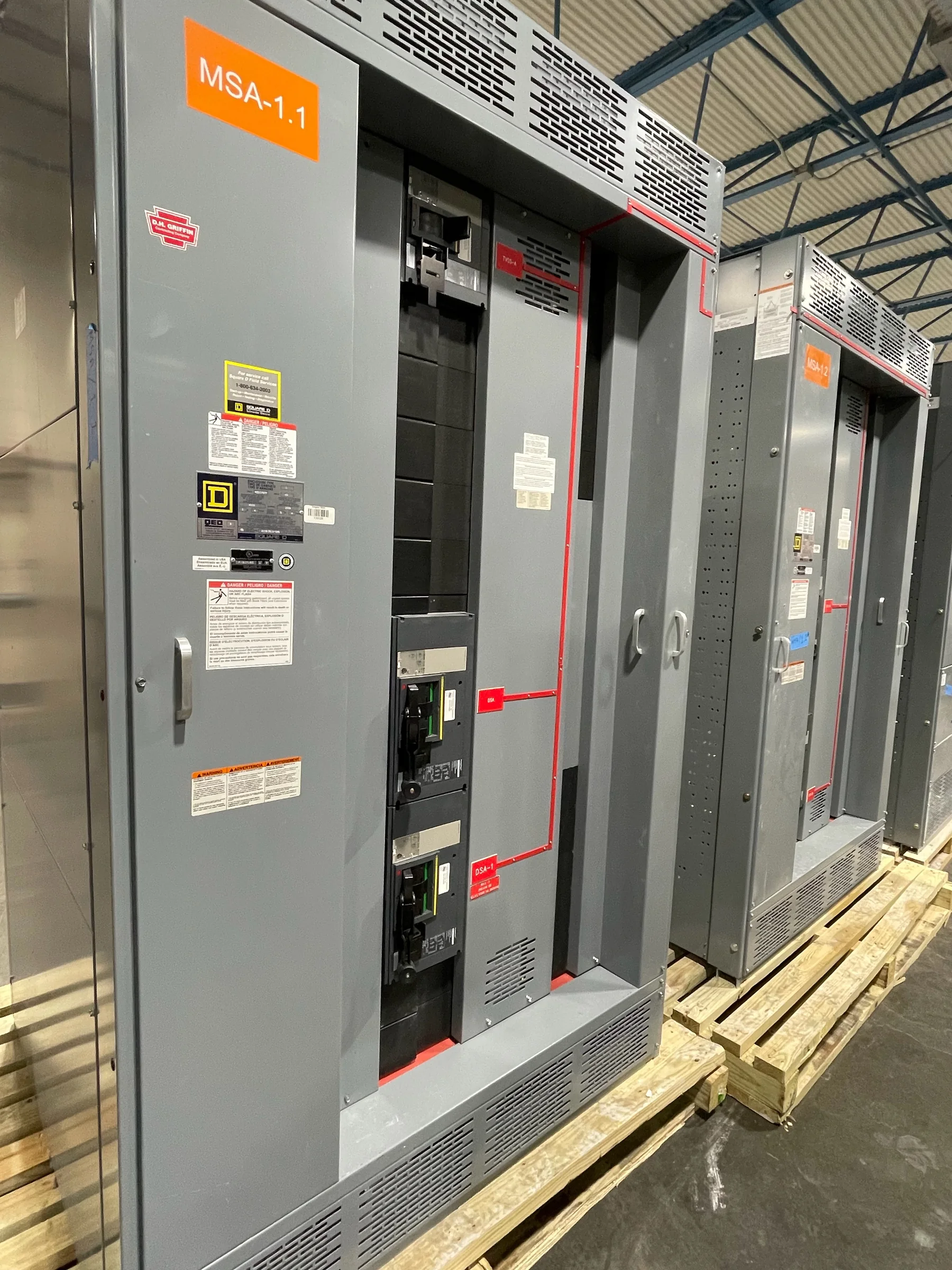
Define the Service Entrance Before Selecting the Switchboard
A service-entrance switchboard sits at a critical boundary: it receives utility power and distributes it to a facility’s downstream systems. Before requesting a quote, identify the serving utility, service voltage and phase, available fault-current information, load profile, and the intended service disconnect arrangement. These details affect equipment configuration and coordination with the utility, transformers, protective devices, and downstream distribution. In Conroe, a project may serve a manufacturing building, warehouse, commercial property, or a mixed-use site; the actual load and operating conditions—not the city name—should drive the design. Confirm who will provide utility data and who will review the proposed arrangement. Early agreement on these responsibilities helps prevent a switchboard from being specified around assumptions that later require redesign.
Resolve Ratings, Protection, and Utility Requirements
Specify electrical ratings from documented project conditions rather than from an existing switchboard’s nameplate alone. The engineer should establish the required bus and service ratings, interrupting or withstand requirements, protective-device functions, metering needs, and any provisions for future loads. Available fault current and utility requirements can influence the equipment arrangement and device selection, so request current information from the appropriate project and utility contacts. Also identify applicable codes, specifications, and inspection expectations for the site; exact requirements depend on the installation and authority having jurisdiction. If the project calls for a low-voltage switchboard assembly evaluated to UL 891, make that requirement explicit and confirm its applicability to the proposed assembly. Do not assume that standard applies to medium- or high-voltage equipment.


Coordinate the Enclosure With Conroe Site Conditions
Outdoor exposure, indoor environmental controls, and the physical route into the electrical room can all shape an equipment order. In the Conroe area, heat, humidity, and heavy rain are practical conditions to discuss when an installation is exposed to weather or experiences moisture concerns; enclosure selection still depends on the actual location and specified environment. Confirm whether the board will be indoors or outdoors, the available clearances, working space, ventilation, access openings, and any restrictions on lifting or moving sections. Check doorways, corridors, turning areas, floor capacity, and the final equipment position before approving dimensions. These checks matter because a switchboard that meets the electrical design but cannot be moved safely into place can disrupt construction and require costly changes.
Build a Complete Procurement Package
A useful request for quotation gives the manufacturer enough information to propose equipment against the project’s real requirements. Include one-line diagrams, load and fault-current data, the equipment schedule, dimensional constraints, preferred incoming and outgoing cable arrangements, metering details, and the project specification. Mark open items clearly rather than treating an unconfirmed assumption as a requirement. Identify the requested manufacturer documentation, such as outline drawings, connection details, bills of material, and submittal information, and state who must review and approve them. For replacement work, provide existing equipment information and describe what must connect to the new board; compatibility cannot be inferred from appearance or nominal voltage. A complete package gives the U.S. manufacturer a stronger basis for a custom build and reduces avoidable clarification cycles.
Discuss Schedule and Delivery Before Releasing the Order
Custom equipment timing depends on the final configuration, approved submittals, component availability, and the project’s release milestones. Share the required-on-site date, construction sequence, decision deadlines, and any phased delivery needs when discussing a quote; a requested date is not a delivery guarantee. Ask which approvals or customer-furnished details must be complete before production can proceed, and document how revisions will be handled. For a Conroe destination, coordinate the delivery address, receiving hours, site contact, unloading equipment, truck access, and any restrictions on trailers or delivery appointments. Confirm whether the route to the building can accommodate the shipment and how equipment will be protected after arrival. Resolving these logistics early helps align manufacturing plans with site readiness instead of letting freight arrive before the installation area is prepared.
Plan Installation, Commissioning, and Future Service
A successful purchase includes more than the switchboard itself: the project team should plan installation interfaces, inspection, testing, commissioning, and maintenance access. Confirm who is responsible for foundations or housekeeping pads, conduits, cable terminations, grounding, protective-device settings, and coordination with the utility. Those responsibilities should match the approved drawings and project specifications. All installation, inspection, testing, and maintenance must be performed by qualified personnel under applicable requirements, with equipment de-energized when required; energized work is not a substitute for safe planning. Before final acceptance, keep approved drawings, device information, test records, and operating documentation with the facility’s electrical records. Clear documentation helps operators identify the installed configuration, plan future load changes, and communicate accurately when service or replacement work is needed.