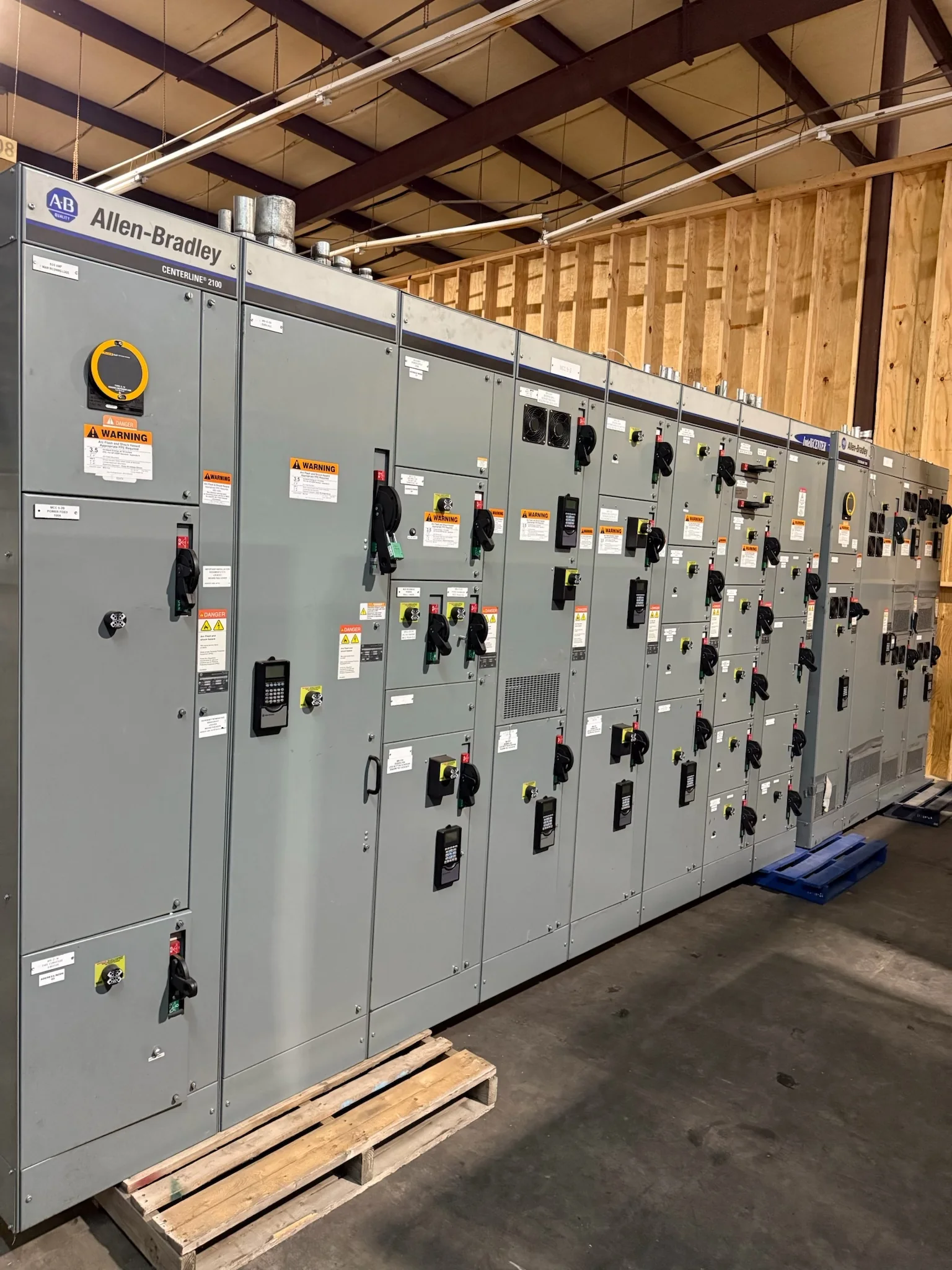
Define the Modernization Scope Before Selecting Equipment
Switchgear modernization in Conroe begins with the actual operating problem, not a presumed equipment replacement. A facility may need a new low-voltage switchboard, a medium-voltage assembly, or a broader distribution change; those are different applications with distinct design and evaluation requirements. Document the existing one-line diagram, source characteristics, system voltage, available fault-current information, protective-device settings, connected loads, and planned expansion. Record enclosure dimensions, cable-entry locations, bus arrangement, grounding method, and the condition of upstream and downstream equipment where information is available. These details help determine whether new equipment can serve the intended loads and fit the project boundaries. They also identify missing data early, when engineers and the manufacturer can resolve questions before a purchase order, detailed design, or shutdown plan is committed.
Develop Ratings and Protection Requirements from Verified Data
An equipment schedule should distinguish confirmed system requirements from preliminary assumptions. Specify voltage, continuous-current needs, short-circuit withstand or interrupting requirements as applicable, bus configuration, service conditions, protective-device functions, metering, and control interfaces. The engineer responsible for the project should verify fault-current calculations and coordinate protective devices with the complete distribution system; selecting a rating from the old nameplate alone may overlook a changed utility source, transformer, or feeder. Ask the manufacturer to review the intended application and identify information needed to complete the proposed configuration. UL 891 may be relevant to appropriately evaluated low-voltage switchboard assemblies, but it is not a blanket certification for medium- or high-voltage equipment, and a specific label should never be assumed. Applicable standards, evaluation, ratings, and approvals must be confirmed for the actual assembly and project.


Coordinate the New Build with Plant Operations
For a Conroe facility, the purchasing schedule should account for process commitments, planned maintenance windows, and the consequences of taking distribution equipment out of service. New equipment is built to an agreed project scope, so an early review of drawings, approved submittals, device functions, and interface points can reduce late changes. Establish who supplies relays, breakers, control wiring, communications components, and any transition or connection materials; responsibility may vary by project. Confirm whether temporary power, load transfers, or phased installation are part of the owner’s plan rather than assuming the equipment supplier provides them. Before installation or connection work, the facility team and qualified electrical professionals should establish the required outage, isolation, verification, and safety procedures. Clear responsibility and realistic sequencing matter because a delivered assembly cannot compensate for an unapproved design or unavailable shutdown.
Check the Room, Access Route, and Connection Interfaces
A replacement assembly must work in the electrical room and along the path used to bring it there. Provide accurate room dimensions, door and corridor clearances, ceiling height, floor openings, lifting limits, and any restrictions on turning or staging equipment. Note exposure to dust, moisture, corrosive substances, heat, or other site conditions so enclosure and environmental requirements can be reviewed for the application. Compare the proposed footprint and lineup arrangement with working clearances, existing cable lengths, conduit locations, bus connections, and the direction of incoming and outgoing conductors. In Conroe, coordinate delivery access with the facility’s receiving hours, truck restrictions, security procedures, and available unloading equipment; do not assume a carrier can reach the installation point. These checks help prevent costly field modifications and keep logistics aligned with the approved design.
Prepare Submittals and Procurement Documents for Review
A useful request for quotation includes the one-line diagram, equipment schedule, site conditions, required options, and the project’s submittal and approval process. Identify requested documentation, such as outline and floor-plan drawings, connection details, bills of material, device data, and applicable test or evaluation records, without treating any unconfirmed document or certification as guaranteed. Ask the manufacturer to state assumptions, exclusions, customer-furnished items, and open technical questions in its proposal. Review deviations against the engineer’s specification before release; an apparently small difference in bus arrangement, control power, metering, or communications can affect interfaces elsewhere in the system. Also confirm the basis for any stated schedule and what events affect it, including drawing approval and scope changes. A complete, consistent procurement package makes proposals easier to compare and reduces ambiguity during manufacture and installation.
Plan Delivery and Commissioning as Project Activities
Nationwide shipping can support a Conroe project, but delivery timing, transportation arrangements, and site readiness should be confirmed for the specific order rather than presumed. Agree on the shipping destination, receiving contact, unloading responsibility, packaging expectations, inspection process, and storage conditions before dispatch. Check that the electrical room, access route, foundation or housekeeping pad, cable pathways, and required installation resources will be ready when the assembly arrives. Keep approved drawings and final device settings available to the installation and commissioning teams, and document any field changes for engineering review. Qualified personnel should complete installation, inspection, testing, and energization in accordance with project documents, manufacturer instructions, and applicable requirements; energized work must not be treated as a shortcut. A coordinated handoff helps the facility verify interfaces and readiness before placing new distribution equipment into service.