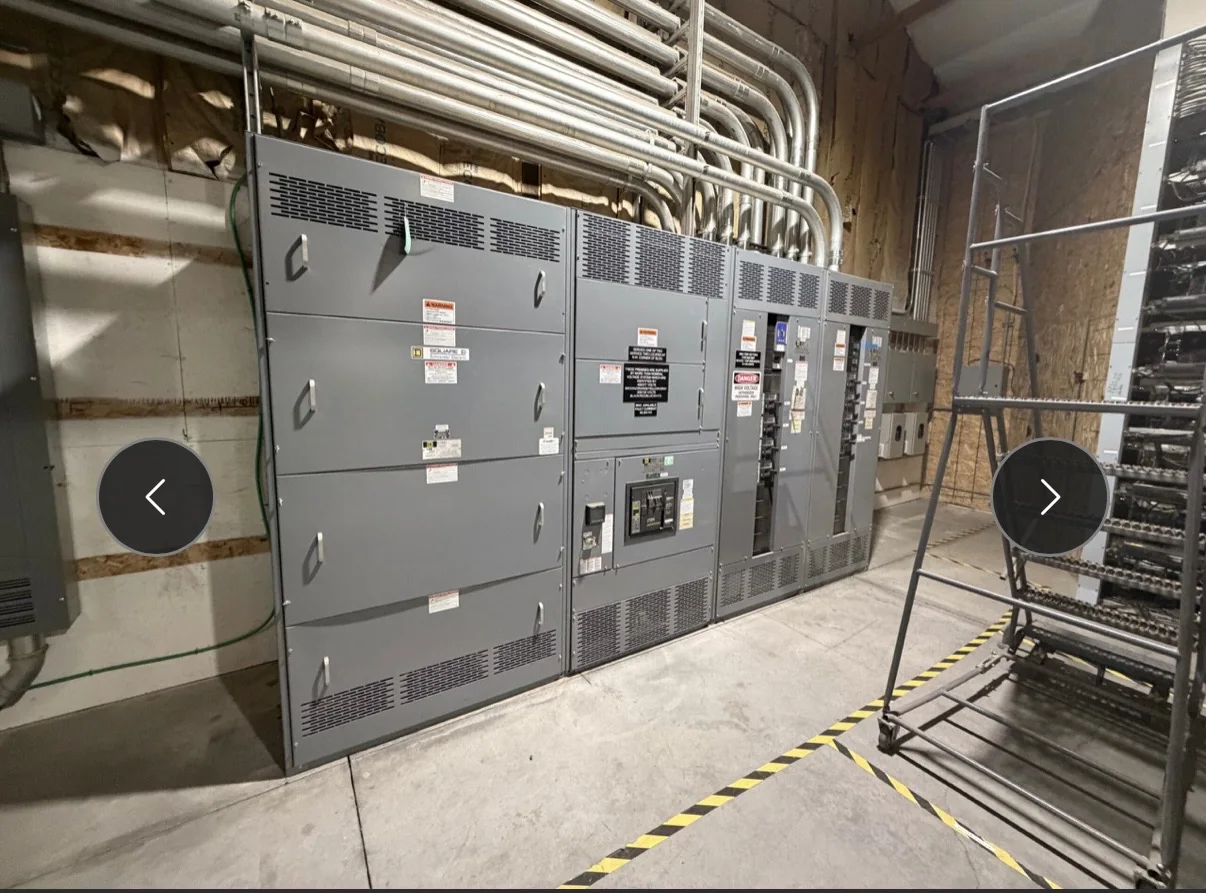
Define the Conroe Project Before Requesting a Quote
A useful switchgear quote starts with the electrical duty, not a product label or an assumed replacement match. Identify the facility’s service voltage, phase, frequency, available fault-current information, main and feeder requirements, and whether the work involves new construction, capacity expansion, or replacement. Include the one-line diagram and any available equipment schedules so the manufacturer can review how the proposed assembly fits the distribution system. For an existing site, record the installed equipment’s manufacturer, catalog data, dimensions, and connection arrangement where accessible; a similar-looking lineup may still differ in bus configuration or termination space. These details matter because they shape the design, scope, and price. Final ratings, compatibility, standards, and suitability must be confirmed for the specific project.
Match the Assembly to the Electrical Application
Describe what the switchgear will serve and how the facility expects to operate. A commercial building, water-related facility, manufacturing plant, or campus expansion may call for different feeder counts, metering, protective-device arrangements, control features, or future provisions. Share load information and planned additions rather than sizing only for today’s connected equipment; inadequate allowance can make later expansion disruptive, while unnecessary capacity can affect cost and footprint. Identify whether the equipment is low-voltage switchboard construction or medium-voltage gear, because applicable design and evaluation requirements differ. UL 891 applies to appropriately evaluated low-voltage switchboard assemblies, not as a blanket certification for every switchgear type. The manufacturer can develop a project-specific proposal, but the engineer of record should verify system coordination, protection, and code requirements.


Review Timing, Submittals, and Scope with the Manufacturer
Timing is easier to assess when the quote request separates the equipment scope from the project milestones. Provide the required approval-submittal date, requested ship window, installation sequence, and any outage or turnover constraints, while recognizing that availability and production timing depend on the final design and component selection. Ask which documents are included in the proposed submittal package, such as outline drawings, electrical schematics, equipment schedules, and bill-of-material information, as applicable to the order. Clarify who reviews and approves drawings, how revisions are handled, and whether changes after approval may affect price or schedule. Early agreement on these steps reduces the risk of ordering against incomplete information. Short lead times may be available, but no delivery period should be treated as confirmed until the project scope and schedule are reviewed.
Check Conroe Site Access and Installation Constraints
Conroe deliveries can serve sites with very different access conditions, from established commercial properties to industrial locations with controlled gates, limited laydown areas, or active construction traffic. Include the delivery address, receiving hours, truck restrictions, unloading arrangements, and any escort, badging, or advance-notice rules with the request. Confirm the route from the receiving point to the electrical room: door widths, corridor turns, floor loading, overhead clearances, and available staging space can determine whether a lineup needs a particular shipping configuration. These checks matter because equipment that reaches the property may still be difficult to move into position. Nationwide shipping does not resolve site-specific handling. Coordinate delivery and rigging responsibility with the project team, and verify dimensions and handling provisions against approved drawings before shipment.
Document Replacement Interfaces and Retrofit Risks
For replacement work, the existing installation is a set of interfaces to verify, not proof that a new assembly will fit or connect without modification. Document available room dimensions, the location and direction of incoming and outgoing conductors, bus connections, cable-entry paths, anchorage, grounding, and adjacent equipment clearances. Photograph nameplates and accessible connection areas when permitted, and note field changes that are missing from older drawings. These records help reveal conflicts early, including termination-space limits or a mismatch between existing conductors and proposed lugs. Identify the planned outage window and who will verify existing conditions before release for manufacture. Any transition details, retrofit scope, and compatibility must be evaluated for the specific installation; do not assume that a replacement can be installed as a direct swap.
Compare the Quote and Plan for Delivery
Compare proposals on a like-for-like basis by checking the stated voltage and current ratings, interrupting or withstand requirements where applicable, bus and enclosure details, included devices, metering, accessories, and drawing or testing scope. Ask the manufacturer to identify exclusions and assumptions, including field wiring, installation, rigging, commissioning, and third-party services, so a lower initial price does not conceal a scope gap. American components and custom builds may be options to discuss, but component selection and availability are project-specific. Before approving an order, reconcile the quoted configuration with the latest one-line diagram and approved submittals. For delivery to Conroe, confirm the receiving contact, appointment process, unloading plan, and inspection procedure. This practical review helps procurement, engineering, and facilities teams align cost, technical requirements, and site readiness.