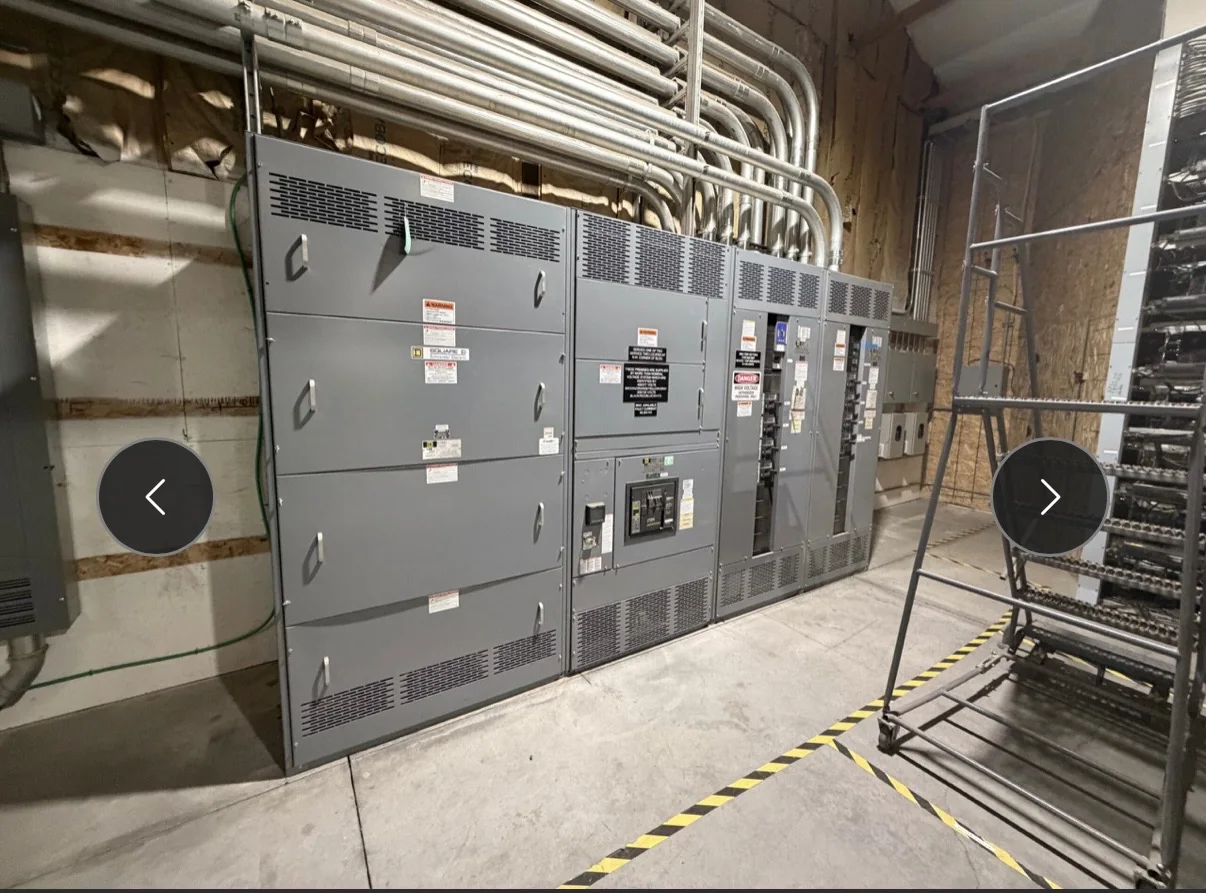
What Metal-Enclosed Switchgear Is
Metal-enclosed switchgear is an assembly of electrical switching and protective devices housed within a metal enclosure. Depending on the application, it may include circuit breakers, switches, fuses, bus conductors, instrument transformers, controls, and metering. The enclosure organizes these components and helps provide barriers between live parts and accessible areas, but its construction and internal arrangement vary by equipment type and rating. The term describes an enclosure style, not one universal voltage class, configuration, or level of protection. Engineers and buyers should identify the system voltage, available fault current, load requirements, operating method, and installation environment before selecting equipment. Those details affect the appropriate design and evaluation. Confirm the project’s applicable standards and required labeling for the specific assembly rather than assuming the name alone establishes compliance.
How Enclosure and Compartments Affect Operation
The metal enclosure protects equipment from accidental contact and can separate functional sections, but the degree of separation depends on the design. Compartment arrangement influences how components are accessed for inspection, maintenance, or replacement, and whether work on one section can be planned without disturbing adjacent equipment. It does not make energized work safe or remove the need for project-specific safety procedures. For a procurement review, request drawings that show device locations, bus arrangement, cable entry, access doors, and any barriers or interlocks included in the proposed configuration. Compare those details with the facility’s operating practices and maintenance clearances. A compact layout may suit a constrained electrical room, but limited access can complicate cable termination, testing, and future service; evaluate the complete equipment footprint, not just its front elevation.


Choose Equipment for the Electrical System
Selection begins with the one-line diagram and the conditions the equipment must withstand. Confirm nominal system voltage, continuous current needs, short-circuit duty, grounding method, source arrangement, and the type and function of each switching device. Protection and control requirements also matter: breaker trip functions, metering, communications, and coordination with upstream and downstream devices should be defined with the responsible engineer. These items are interdependent; for example, changing a source or transformer can alter available fault current and affect equipment suitability. Avoid treating a familiar catalog designation as proof of compatibility. Submit the latest one-line, load information, utility or study data where available, and operating sequence for review. Final ratings, standards, device selection, and any required evaluation depend on the project and must be confirmed for the specified assembly.
Plan the Room, Connections, and Future Access
Site constraints often determine whether a technically suitable lineup can actually be installed and maintained. Verify room dimensions, ceiling height, floor loading, housekeeping pads, door openings, turning space, and the path from the receiving area to the final location. Check cable routing and termination space, including whether conductors enter from above or below and where the equipment’s connections are positioned. Confirm working clearances and access requirements against applicable codes and the project design; do not rely on enclosure dimensions alone. Existing facilities may also have fixed walls, overhead piping, or equipment that limits removal and installation options. Share site plans, photographs, elevation details, and known obstructions early. That information can shape lineup arrangement and connection planning, reduce field changes, and help identify when a construction or outage plan needs additional coordination.
Specify Documentation and Review Points
A complete request for quotation gives the manufacturer enough information to identify the intended application and flag open questions. Provide the one-line diagram, equipment schedule, load and fault-current data, control schematics if available, applicable project specifications, and requested standards or evaluation requirements. Identify incoming and outgoing connections, metering, protective functions, communications interfaces, enclosure conditions, and any required accessories. Ask for proposed drawings and a submittal process that allows the engineer and facility team to verify dimensions, device arrangement, ratings, and interfaces before release for production. For low-voltage switchboard assemblies, UL 891 may be relevant when applicable to the project and the specific assembly’s evaluation; it is not a blanket certification for all metal-enclosed switchgear. Resolve deviations and responsibility boundaries in writing, especially where switchgear interfaces with transformers, controls, or other supplied equipment.
Coordinate Build Timing, Shipment, and Installation
Discuss schedule and delivery requirements during specification, not after drawings are complete. A U.S. manufacturer can review project-specific requirements for a new custom build, including American component preferences, but timing depends on the approved design, component availability, and the scope of the assembly. Treat any schedule as subject to confirmation rather than assuming a standard lead time. Coordinate shipment with the site’s receiving hours, unloading equipment, staging capacity, access route, and planned outage or construction sequence. Confirm packaging, shipment configuration, delivery destination, and who handles unloading and movement into the electrical room. Nationwide shipping does not resolve local site constraints: a restricted dock, limited laydown area, or narrow access route may require advance planning. Align drawing approvals, site readiness, delivery coordination, and installation responsibilities so the equipment arrives when the facility can receive and place it safely.