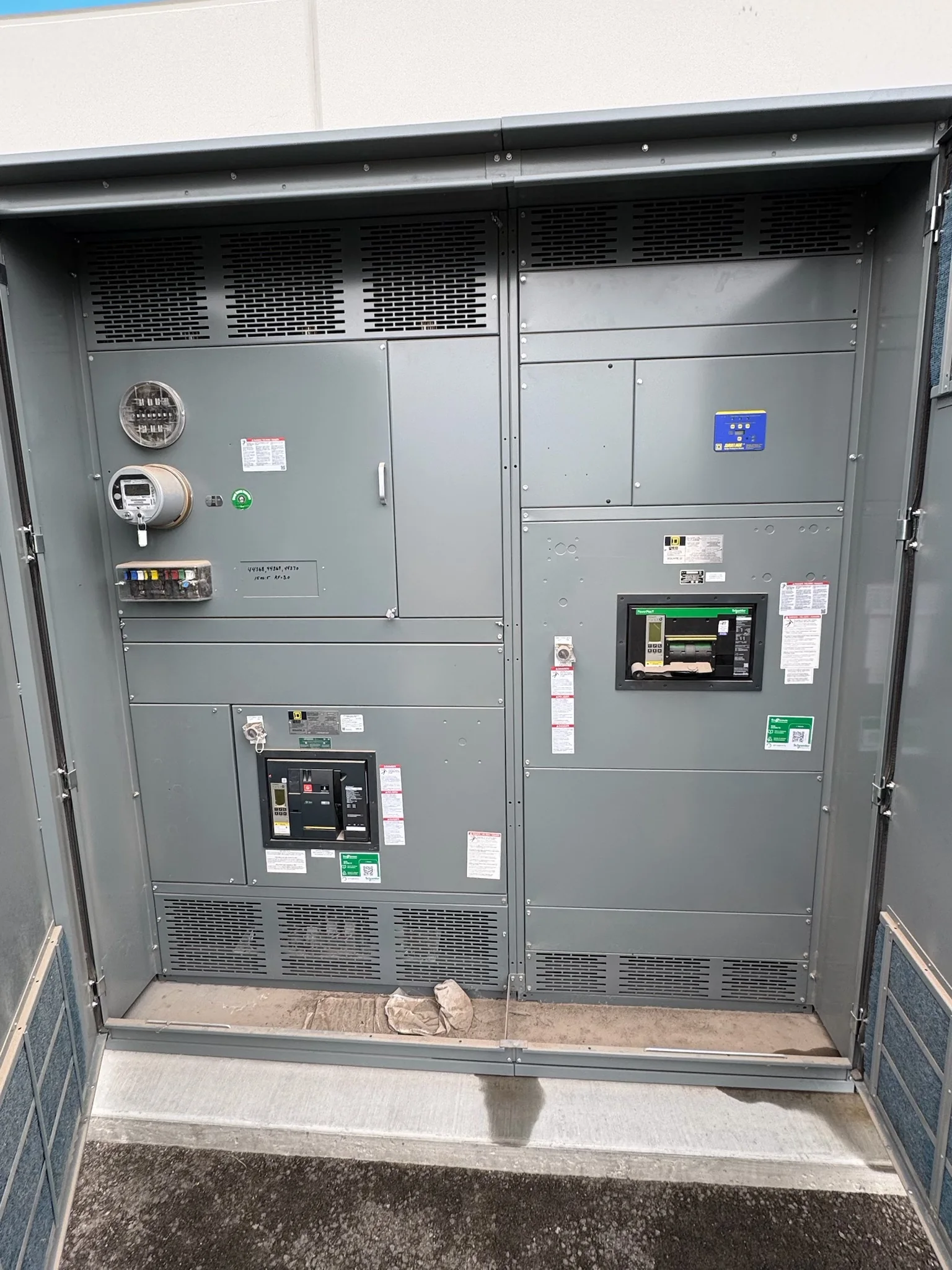
Define What the 1200 Amp Rating Must Serve
A 1200 amp designation is a starting point for equipment selection, not a complete design. Confirm the system voltage, phase, frequency, available fault current, service conditions and whether the assembly is intended for service entrance or downstream distribution. The connected load and expected demand help determine whether 1200 amps is appropriate; a nameplate rating alone does not establish that the equipment will suit a particular load profile. Identify the source, main-device arrangement, feeder count and any future circuits the installation must accommodate. These details affect the lineup, bus and protective-device choices. Provide the one-line diagram and load information when requesting a quote, and have the project engineer verify coordination with the complete electrical system before equipment is specified.
Select the Assembly Type and Configuration
Switchgear and switchboards are not interchangeable labels for every application. The required function, construction, protective devices, access needs and applicable standards guide which assembly is appropriate. For low-voltage switchboard projects, UL 891 may be relevant to assemblies evaluated for that standard; it should not be assumed to apply to every product or to medium- or high-voltage equipment. Determine whether the project calls for a main device, distribution sections, metering, transfer provisions or other specific features, then confirm that the requested arrangement is compatible with the source and downstream system. A clear equipment schedule prevents assumptions about included components. Submit preferred manufacturer or component requirements early, since component selection and custom configurations can affect both design review and procurement.


Check Fault Duty, Protection and Coordination
The available short-circuit current at the proposed equipment location is essential to selecting an assembly and its protective devices. Request the project’s fault-current study or calculated value, along with the upstream device information; do not treat a 1200 amp rating as evidence of adequate interrupting or withstand capability. Engineers should review protective-device settings and selective coordination needs against the loads and applicable project requirements. Where an existing lineup will remain in service, its ratings, bus arrangement and documentation can affect whether the new equipment can be integrated safely. Resolve those interface details during engineering rather than after fabrication. Equipment ratings, device combinations, testing and listing applicability are project-specific and must be confirmed for the final design; qualified personnel must de-energize equipment before performing installation or service work.
Plan the Room, Access and Installation Route
A lineup that fits the electrical room on paper may still be difficult to install or maintain. Share room plans, equipment elevations, door and corridor dimensions, floor conditions, overhead obstructions and the proposed path from receiving to the final position. Identify working-space requirements and whether the equipment needs front access, rear access or both, then confirm these against the project drawings and applicable codes. Account for cable entry direction, conduit locations, bending space, ventilation and any wall or structural restrictions. Shipping splits and field-joining requirements, if applicable to the specified design, should be reviewed before the room layout is finalized. These checks help prevent costly changes to access, rigging or conduit work when the equipment arrives.
Build a Quote Package That Supports Review
A useful request for quotation includes more than the amp rating. Provide the one-line diagram, equipment schedule, system voltage, available fault current, enclosure and environmental requirements, incoming and outgoing cable details, metering needs, preferred components and applicable project specifications. Mark items that are mandatory separately from preferences, and identify required submittal formats or approval milestones. If replacing existing gear, include photographs, nameplate information, dimensions and connection details where available; these records help the manufacturer assess interfaces without assuming compatibility. Request a scope clarification for inclusions, exclusions, required accessories and field connections. A complete package gives engineering and procurement teams a sound basis to compare proposals, resolve open questions and avoid treating an unverified configuration as a confirmed design.
Coordinate Production Timing and Delivery
Custom equipment schedules depend on the approved scope, component availability, engineering review and submittal decisions, so discuss timing before the project schedule is fixed. Ask for a current, project-specific schedule and identify the dates needed for drawing review, release to production, site readiness and delivery. A U.S. manufacturer can discuss American component options, custom builds and nationwide shipping, but lead time and availability must be confirmed for the requested configuration. Before shipment, establish the delivery address, receiving hours, unloading capability, site contact, access restrictions and whether a coordinated appointment is required. Confirm who handles unloading and final movement into the electrical room. Aligning procurement milestones with construction readiness reduces storage, handling and schedule risks without assuming a guaranteed delivery window.