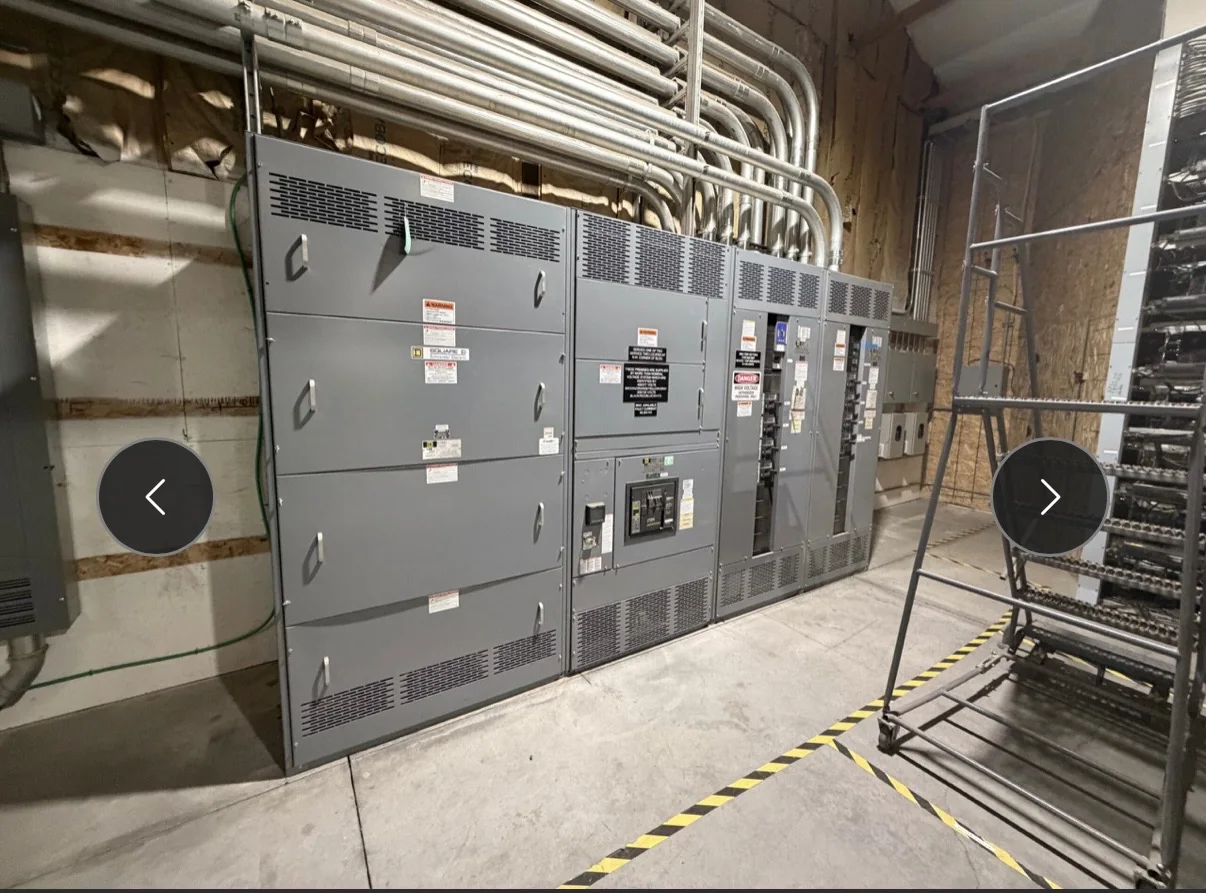
Define What “2000 Amp” Means for the Project
A 2000-amp designation identifies a current rating, not a complete equipment specification. Before requesting a quote, confirm whether the requirement applies to a switchboard, switchgear lineup, or a particular section, and document the system voltage, phase, frequency, service conditions, and intended use. The available fault current and required short-circuit ratings also matter: ampacity alone does not establish that equipment can withstand or interrupt the available fault. Ask the engineer of record to identify the governing codes and project standards, then have the manufacturer review the one-line diagram and load information. This early alignment reduces the risk of comparing proposals built around different assumptions. Final ratings, construction, and suitability depend on project-specific engineering and evaluation.
Coordinate Main and Feeder Requirements
At 2000 amps, the relationship between the main device, feeder devices, and downstream distribution can shape both the equipment layout and the protection scheme. Provide the planned feeder count, load types, continuous-load assumptions, and any requirements for metering, ground-fault protection, or selective coordination. Those details help the design team assess device arrangement and available space without treating a nominal amp rating as proof that every configuration will fit. Coordination studies and protection settings should be developed or reviewed by qualified project professionals using the actual system data. Clarify who is responsible for those studies and settings during procurement. Resolving responsibility before submittal review helps avoid late changes to device selection, compartment layout, or project documentation.


Choose a Configuration That Fits the Installation
A 2000-amp assembly must be selected for its electrical duties and its physical route into the building. Confirm available floor area, working clearances, access for inspection, cable entry direction, conductor bending space, and the path from the receiving point to the electrical room. Door openings, corridors, elevators, structural limits, and overhead obstructions can constrain section dimensions or delivery sequencing. Share room plans and site photographs with the project team, and identify whether the equipment will be installed in a new space or replace existing distribution. Replacement work may involve existing conduit, bus connections, or shutdown windows that limit options. Obtain project-specific dimensional drawings and connection details before finalizing the room layout or construction schedule.
Prepare a Complete RFQ and Submittal Package
A useful request for quotation gives the manufacturer enough information to price the intended equipment rather than a placeholder. Include the latest one-line diagram, load schedule, system and fault-current data, environmental conditions, preferred equipment arrangement, and specified options. Identify applicable project standards, required documentation, and any owner or engineer review process. If UL 891 applies to a low-voltage switchboard assembly, state that requirement for the assembly under evaluation; it is not a blanket certification for medium- or high-voltage equipment. During submittal review, check ratings, device schedules, enclosure details, dimensions, and connection points against the contract documents. A documented review cycle makes discrepancies visible while design changes are still manageable.
Plan Timing Around Approvals and Site Readiness
Procurement timing depends on more than the requested shipment date. Engineering inputs, drawing reviews, approved submittals, component selection, and changes to the scope can all affect the production sequence. Ask for a project-specific schedule and identify the dates needed for drawing approval, release to production, factory coordination, and delivery planning. The manufacturer offers short lead times, but no standard period should be assumed for every configuration or market condition. On the site side, verify that the electrical room, foundations, grounding, cable pathways, and receiving arrangements will be ready when equipment arrives. Coordinate outages separately with the facility team, especially when existing distribution must remain in service until a planned, controlled transition.
Coordinate Delivery, Installation, and Turnover
Nationwide shipping can support projects across the United States, but the receiving plan still needs site-specific attention. Confirm the delivery address, unloading resources, access restrictions, receiving hours, storage conditions, and whether the shipment must arrive in a particular sequence. Large electrical assemblies can be difficult to move through a site after unloading, so compare shipping and handling assumptions with the approved layout and route survey. Before installation, qualified personnel should verify equipment condition, anchoring and connection requirements, grounding, and compatibility with the approved design; electrical work must follow applicable safety procedures, including de-energizing equipment before work. Set expectations for turnover records, final drawings, device information, and commissioning responsibilities so facility staff can maintain the distribution system using accurate project documentation.