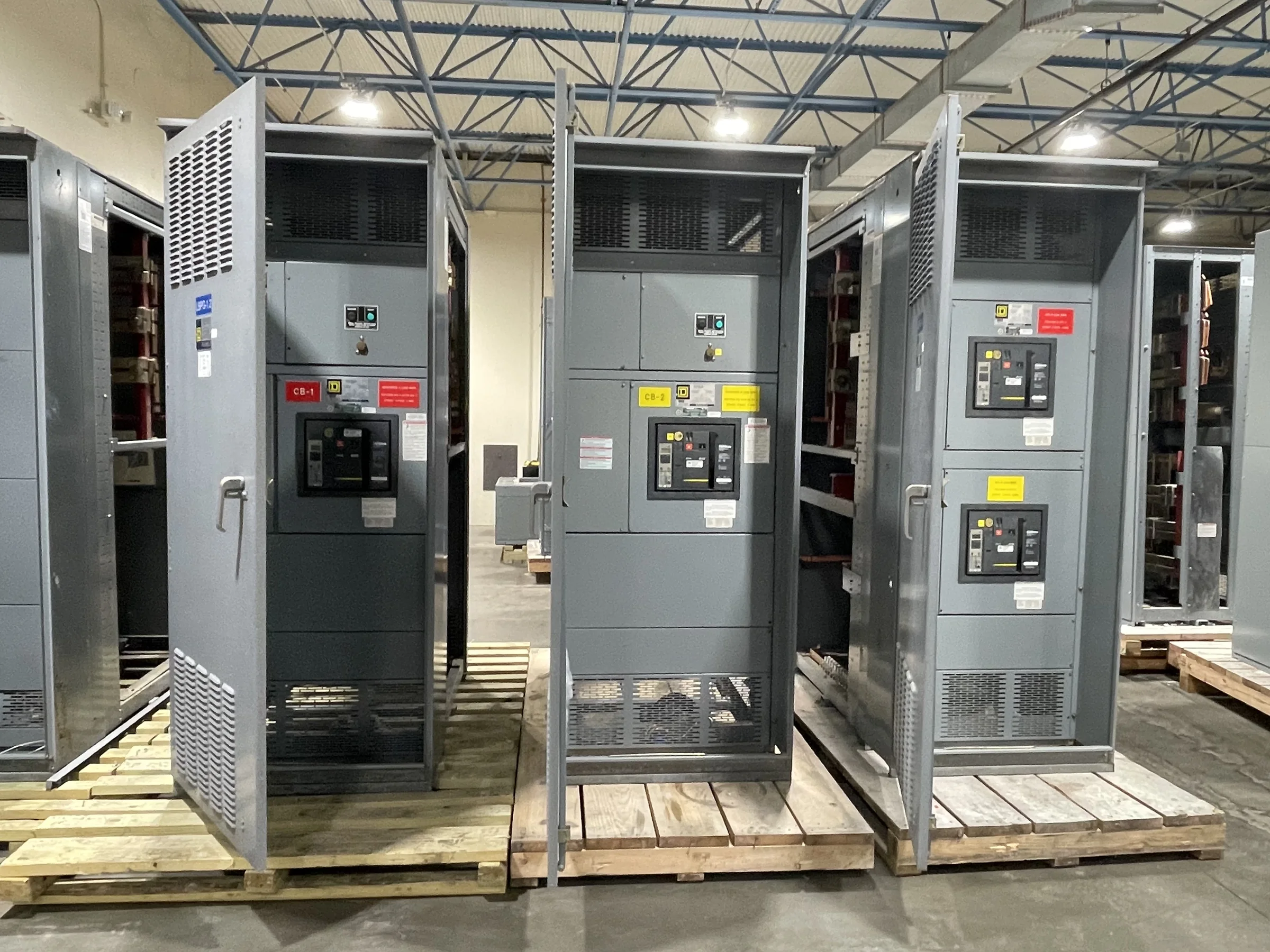
Match the Switchboard to Houston’s Electrical Load
Start with the system the switchboard must serve, not a catalog description. Gather the one-line diagram, utility service information, available fault-current data, connected and demand loads, and details of major motors or other large equipment. Those inputs help the project team assess bus and main-device ratings, short-circuit requirements, feeder quantities, and space for future circuits. Houston facilities may combine process loads, commercial occupancy, and building services, so confirming which loads operate together matters when evaluating demand and expansion plans. A manufacturer can review the stated requirements and develop a new assembly around them, but final ratings and configuration depend on the application and engineering review. Resolve gaps in load data before release: late changes can affect the design, equipment arrangement, and coordination with upstream and downstream devices.
Coordinate Existing Gear, Protection, and Replacement Scope
For a replacement or expansion, document the installed equipment before selecting a new switchboard. Record manufacturer and model where known, nameplate data, incoming and outgoing conductor details, bus arrangement, enclosure dimensions, and how cables enter and leave the equipment. Photographs and verified field measurements can reveal obstructions or access limits that drawings omit. Do not assume a new assembly will fit an existing footprint or connect to existing conductors merely because nominal voltage and current appear similar. Confirm protection and coordination requirements with the responsible electrical engineer, including how the proposed equipment relates to upstream devices and downstream loads. If the scope includes retrofit work, define what is replaced, retained, or modified, and require qualified personnel to perform installation and testing with equipment de-energized under established safety procedures.


Plan Enclosure and Site Conditions for Houston
Houston-area conditions make enclosure selection and installation location practical design questions, not finishing details. Discuss whether equipment will be indoors or outdoors, the degree of exposure to rain, humidity, airborne contaminants, washdown, or corrosive conditions, and whether the space is mechanically conditioned. The appropriate enclosure and environmental provisions depend on the actual site; a city name alone does not establish a rating. For indoor rooms, check working space, door swing, ventilation, housekeeping pads, overhead services, and the route for bringing the assembly into position. For outdoor installations, coordinate the mounting surface, weather exposure, access, and cable-entry plan. These details affect usability and equipment protection. Have the project engineer and site team confirm applicable codes, environmental requirements, clearances, and installation conditions before the configuration is finalized.
Set a Realistic Schedule and Submittal Path
A useful schedule begins with a complete scope, not an assumed delivery date. Share the required in-service date, approval milestones, project dependencies, and any shutdown or construction windows when requesting a quote. Custom builds and short lead times may be available, but timing depends on the approved design, component availability, scope changes, and manufacturing schedule; confirm current availability for the specific project rather than relying on a general estimate. Establish who reviews drawings, how comments are returned, and what constitutes approval to proceed. Submittals should be checked against the project’s one-line diagram, equipment schedule, specified ratings, dimensions, and connection requirements. Late approval or revised feeder information can create avoidable rework. Keep the procurement team, engineer, contractor, and manufacturer aligned on revisions so the released assembly matches the accepted documents.
Prepare Drawings and Requirements for a Clear Quote
A well-defined quote request gives procurement a reliable basis for comparing proposed equipment. Include the project location, system voltage and phase, service arrangement, main and feeder requirements, available fault-current information, specified short-circuit ratings, enclosure conditions, and any required metering or control features. Attach the current one-line diagram and equipment schedule, and identify deviations or unresolved design questions instead of leaving assumptions unstated. If the project calls for American components, identify that preference in the specification and confirm the proposed component selection during review. UL 891 applies to appropriately evaluated low-voltage switchboard assemblies; it does not automatically apply to every product or establish a blanket listing for medium- or high-voltage equipment. Request documentation relevant to the actual scope, and verify applicable standards, evaluation, labeling, and acceptance requirements with the project’s responsible parties.
Coordinate Delivery and Receiving Across Houston
Delivery planning should account for the actual destination and jobsite route, whether equipment is headed to an industrial facility, commercial building, or active construction site. Confirm the ship-to address, receiving hours, unloading responsibility, dock or lift-gate needs, site access rules, staging area, and whether the delivery vehicle can reach the designated unloading point. Check door openings, corridors, elevators, turning space, and the final equipment-room path against the planned assembly arrangement; a successful truck delivery does not guarantee the gear can reach its final position. Houston traffic, weather, and facility access procedures can affect coordination, so align the delivery window with the site contact and installation sequence. Nationwide shipping is offered, but routing, packaging, freight arrangements, and delivery timing are project-specific. Assign responsibility for inspection and reporting visible shipping damage upon receipt.