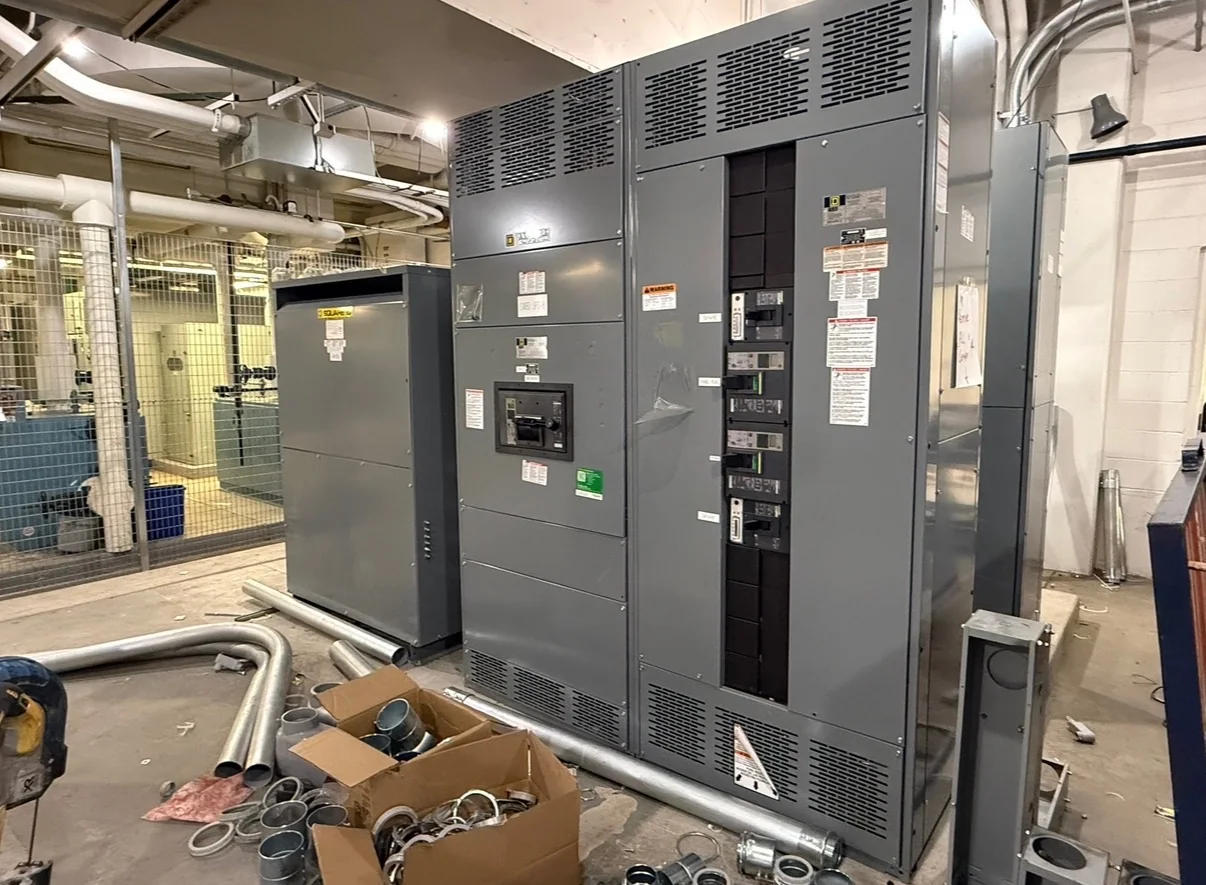
Define What 4,000 Amps Means for the Project
A 4,000-amp designation is a starting point for equipment selection, not a complete specification. The design team must establish the system voltage, phase, frequency, available fault current, grounding arrangement, and the role of the equipment in the distribution system. Confirm whether the requested assembly is a low-voltage switchboard, switchgear, or a replacement section intended to interface with existing gear; those terms do not describe interchangeable configurations. The upstream protective device, downstream feeder requirements, and intended load profile affect the lineup and its protective-device choices. Provide a one-line diagram and equipment schedule with the request for quotation, noting any known future loads or planned expansion. These details help the manufacturer develop a project-specific design rather than assume that a 4,000-amp label alone establishes suitability.
Coordinate the Main Device, Bus, and Protection
At this current level, the main protective device and bus arrangement need to be considered together with the connected system. Engineers should identify the required main and feeder functions, protection preferences, metering needs, and any selective-coordination or arc-flash study requirements that govern device selection. Available fault current and the required interrupting and withstand performance must be reviewed against the actual installation; they should not be inferred from the ampere rating. Bus material, temperature-rise limits, neutral requirements, and ground-fault protection may also affect the design and applicable evaluation. Share study results and project standards where available, and clearly identify items still under review. This lets the manufacturer flag open engineering decisions early, while the engineer of record confirms system calculations, protective-device settings, and code compliance for the completed project.


Check Room Layout and Installation Access
A lineup that fits the electrical schedule may still be difficult to install if the room, route, or working clearances were not checked against its actual configuration. Before design release, compare proposed dimensions and section arrangement with door openings, corridors, turning space, floor conditions, overhead obstructions, and the equipment’s final location. Confirm access for cable entry and termination, conduit placement, ventilation, and maintenance, while the project’s qualified design professionals verify required working space and applicable code provisions. Existing-building work deserves particular attention: a narrow service entrance or limited staging area can constrain shipping splits and rigging choices. Provide room plans, photographs, elevation details, and known access limits during quotation. Reviewing these constraints before fabrication can reduce field modifications, schedule disruption, and the risk that delivered sections cannot be moved into position.
Prepare Drawings and Approval Information Early
A complete submittal package gives engineering, procurement, and construction teams a shared basis for review. Typical project inputs include the one-line diagram, load and feeder schedules, equipment layout, cable-entry requirements, control and metering needs, and the project’s governing specifications. Identify who will review drawings, respond to technical questions, approve deviations, and authorize release for fabrication; unclear responsibility can delay decisions after the quotation is accepted. For low-voltage switchboard applications, UL 891 may be a relevant evaluation standard when applicable to the specified assembly, but it is not a blanket certification for every switchgear product or voltage class. State the required standards and labeling expectations in the inquiry, then confirm applicability for the proposed configuration. Compare submittals against the approved design before release, documenting exceptions rather than relying on assumptions.
Discuss Timing Without Treating It as a Guarantee
A requested ship date is useful only when it is discussed alongside the decisions and approvals needed to support it. Custom configurations, component selections, drawing review, specification changes, and unresolved interface details can affect the project schedule. Ask for a current, project-specific schedule and clarify which milestones depend on approved drawings, finalized requirements, or other customer decisions. The manufacturer offers short lead times, but actual timing and availability depend on the equipment scope and project conditions; a general statement should not be treated as a guaranteed delivery date. Procurement teams can reduce avoidable uncertainty by issuing coordinated documents, consolidating comments, identifying long-lead concerns, and reporting changes promptly. If the installation date is fixed, share that constraint at quotation so the team can evaluate feasible options without presenting an unconfirmed schedule as a commitment.
Plan Delivery, Handling, and Existing-System Interfaces
Delivery planning should account for the route from the truck to the electrical room, not just arrival at the facility. Confirm the receiving location, unloading responsibility, access restrictions, staging space, and any site rules that may affect delivery coordination. Nationwide shipping is available, but shipping arrangements, packaging, timing, and section handling remain specific to the order and destination. For replacement or retrofit work, document the existing equipment’s manufacturer, model, ratings, dimensions, bus arrangement, connections, and control interfaces where known. Photographs and measured field conditions help identify compatibility questions before the new lineup is finalized; matching one nameplate value does not establish that assemblies can connect or operate together. Plan shutdowns and cutovers with the facility’s qualified electrical team, and perform electrical work only under appropriate de-energized conditions and established safety procedures.