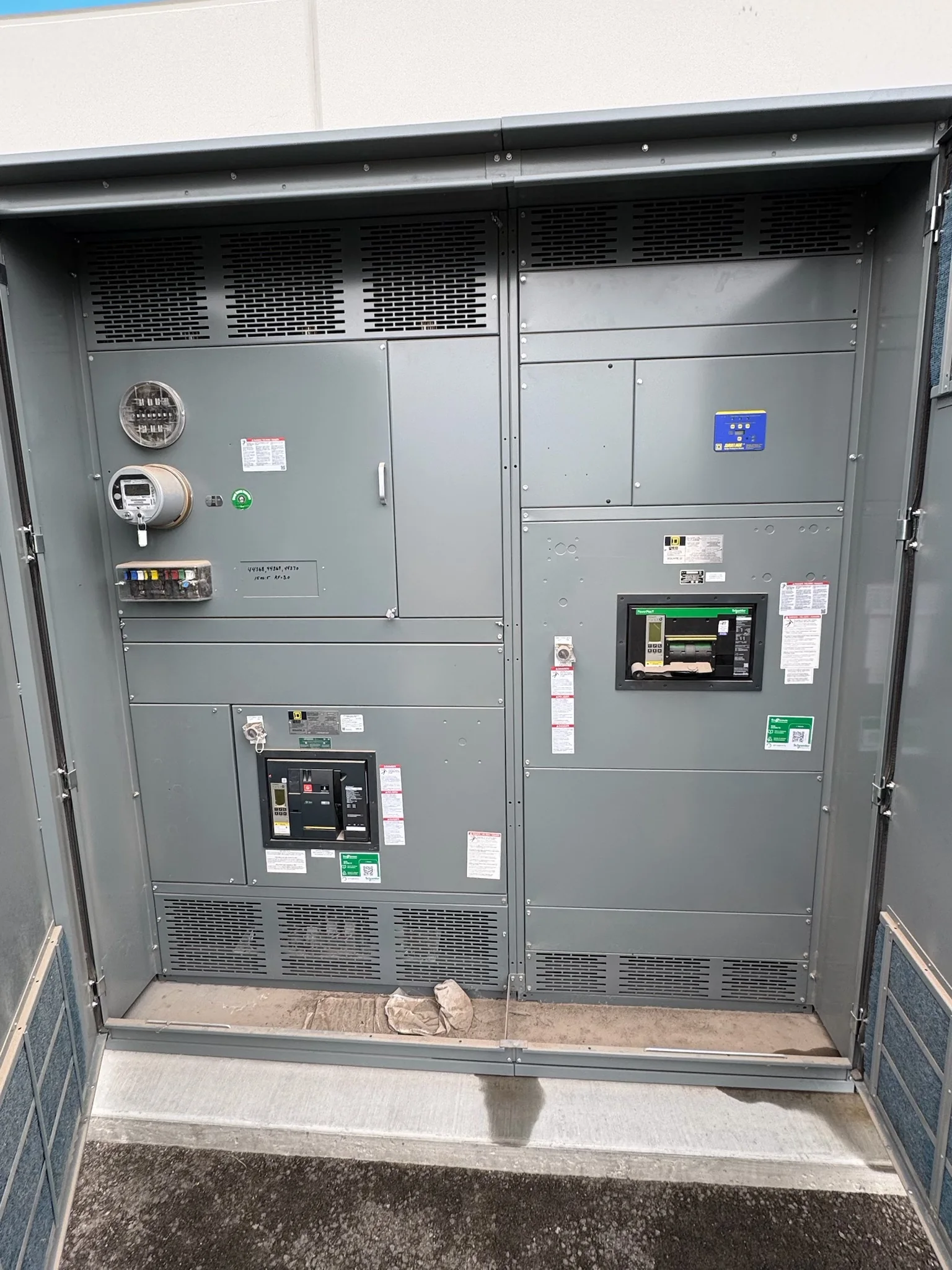
Start With the Electrical Duty, Not a Catalog Match
A useful supplier conversation begins with the one-line diagram and the electrical conditions the assembly must handle. Identify system voltage, phase and wire arrangement, available fault current, service entrance role, feeder count, and any required main or tie configuration. These details affect equipment selection, protective-device coordination, bus arrangement, and whether a proposed assembly fits the application. Share load studies or utility fault-current data when available; an assumed value can produce a design that is unsuitable or requires revision. Also describe future capacity needs, such as planned loads or spare feeder provisions. A U.S. manufacturer can develop a custom build around project requirements, but final ratings, configuration, and compatibility should be confirmed through engineering review and approved submittals.
Match the Equipment Type and Compliance Scope
“Switchgear” can refer to equipment with very different voltage classes, functions, and construction. Confirm whether the project calls for a low-voltage switchboard, switchgear, or medium-voltage equipment, then specify the applicable project standards and authority requirements. UL 891 applies to appropriately evaluated low-voltage switchboard assemblies; it is not a blanket certification for medium- or high-voltage equipment, and a general product description alone does not establish that a particular assembly bears a UL Mark. Ask what evaluation or listing applies to the exact proposed construction, and request supporting documentation for review. Where the installation serves as service equipment, interfaces with generators, or uses multiple sources, state that early. Application, evaluation, and acceptance are project-specific.


Make the Layout Work in the Actual Electrical Room
A design that meets electrical requirements can still create installation problems if the room is not ready for it. Provide equipment-room plans with door widths, ceiling height, wall obstructions, housekeeping-pad details, cable trench or conduit locations, and required working clearances. Confirm whether conductors enter from above or below and which side must remain accessible for operation or maintenance. These choices influence section arrangement and cable landing space; late changes can force drawing revisions or interfere with site work. Consider the full route from the unloading point to the final position, including turns, ramps, elevators, and floor capacity. Ask the manufacturer to show dimensions and shipping configuration on the submittal, then have the installing team verify measurements before release.
Compare Quotes by Scope, Not Just Initial Price
A competitive quote should make it possible to compare equivalent equipment. Check the proposed lineup against the requested one-line, device schedule, control requirements, enclosure conditions, finish, and included accessories. Note exclusions such as field-installed components, interconnecting wiring, startup support, or special packaging rather than assuming they are included. If American components are preferred, name that preference in the request and ask how component substitutions will be handled; availability and compatibility can depend on the specified design. Review breaker or fuse family, trip-unit functions, metering interfaces, and communications needs with the responsible engineer. Differences in these details may change coordination, monitoring, or future service options. Record accepted exceptions in writing so procurement, engineering, and the installer work from the same scope.
Build a Realistic Schedule Around Submittals and Site Readiness
Short lead times can help a project, but no delivery date should be treated as guaranteed before the design, materials, and schedule are confirmed. Ask for the current estimated manufacturing window, the event that starts it, and the assumptions behind it. Clarify when drawings will be issued, who must approve them, and how requested revisions affect the schedule. Long-lead devices, custom features, or changes after approval may affect timing, so identify critical components and decision deadlines early. Coordinate the equipment schedule with utility work, shutdown windows, construction progress, and commissioning plans. If existing distribution equipment must be replaced, plan the outage and temporary power with the project team; installation and service work must be performed under appropriate de-energized conditions.
Plan Shipping, Receiving, and Turnover Documentation
Nationwide shipping is useful only when delivery matches the site’s receiving conditions. Confirm the destination, unloading responsibility, access hours, dock or lift availability, and whether a truck can reach the equipment’s final staging area. Ask how the sections will be packaged and identified, and coordinate delivery sequencing with the contractor so equipment does not obstruct active construction or sit exposed to weather. Before shipment, align the approved drawings, bill of materials, device data, wiring diagrams, and any applicable evaluation documents with the purchase order and installation plan. At turnover, retain final record drawings, labels, operating instructions, and maintenance information required for the facility. For a quote, submit the one-line, ratings, layout, schedule, and delivery constraints together; a complete request supports a more useful project-specific review.