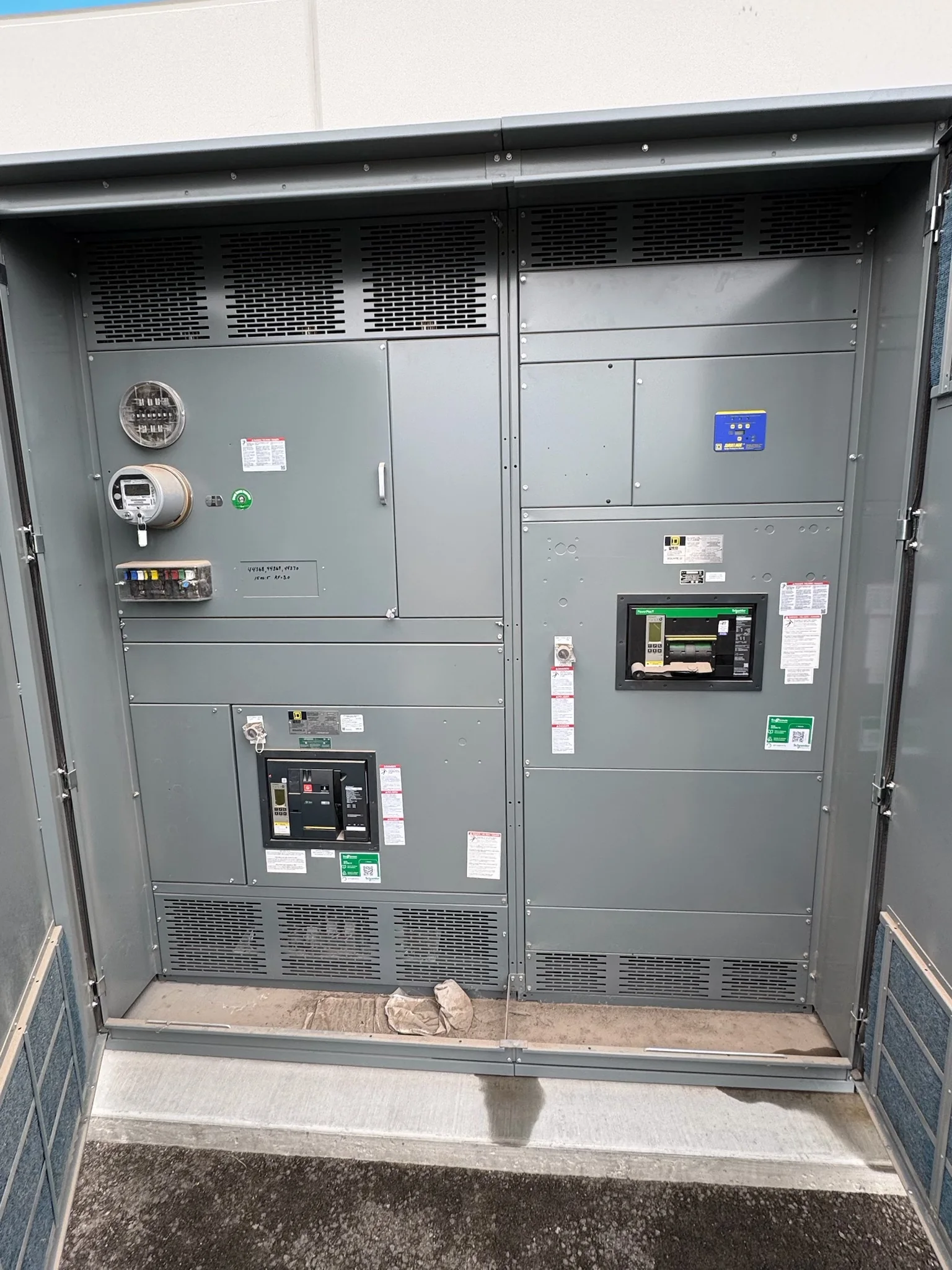
Define the Distribution Scope Before Requesting a Quote
For a Conroe project, start with the electrical one-line diagram and identify what the new gear must serve, rather than relying on a product name alone. Record system voltage, phase, frequency, available fault current, main and feeder requirements, and the intended connection to upstream and downstream equipment. Note whether the scope is a low-voltage switchboard, a medium-voltage assembly, or a combination of equipment; those categories have different design and evaluation considerations. Include the operating environment, future load plans, and any required metering, protective devices, or control interfaces. This detail helps the manufacturer assess the requested configuration and flag missing information before pricing. Final ratings, compatibility, and applicable standards must be confirmed for the specific project and site.
Match Customization to the Electrical Design
Custom construction is most useful when it resolves a documented project constraint: a defined feeder arrangement, a specified control interface, a particular cable-entry direction, or a coordinated layout with adjacent equipment. Provide the latest one-line, load schedule, equipment specifications, and relevant control diagrams so the design can be reviewed against the actual system. If the project includes existing gear, share manufacturer and model information, nameplate data, photographs, and available drawings; apparent similarities do not establish electrical or mechanical compatibility. Identify owner standards and consultant requirements early, including any requested evaluation or labeling. UL 891 applies to appropriately evaluated low-voltage switchboard assemblies, not automatically to every custom assembly or to medium- and high-voltage equipment. Confirm the applicable requirements for the exact scope.


Coordinate Timing Around Approved Submittals
A requested completion date depends on more than fabrication: engineering review, submittal approval, component selection, and resolution of open questions can all affect the schedule. During quotation, ask which project inputs are needed to begin design and when the manufacturer expects to receive approved drawings and final selections. Establish who can authorize revisions, because late changes to breaker arrangements, metering, or enclosure details may require renewed review. For a Conroe facility upgrade, align those milestones with outage planning, contractor availability, inspections, and any temporary-power strategy. Treat an estimated lead time as project-specific, not as a delivery guarantee. Written schedule assumptions and prompt disposition of comments give procurement and field teams a more dependable basis for planning.
Check the Site and Delivery Route in Conroe
Before equipment dimensions are finalized, verify the intended room or outdoor pad, access openings, turning clearances, floor capacity, and the route from the receiving point to the installation location. A lineup that fits its electrical footprint may still be difficult to move through a doorway, around a column, or across a finished floor. In the Conroe area, coordinate delivery with the site’s actual access rules and conditions, including construction traffic, receiving hours, staging space, and any weather-sensitive unloading arrangements. Share the delivery address, unloading responsibility, lifting limitations, and required shipment breakdown during planning. Nationwide shipping does not by itself establish that a particular truck, crane, or delivery method is suitable; confirm those details with the project team and carrier.
Prepare Submittals for Field Coordination
A useful submittal package gives engineers and installers enough information to review both electrical intent and physical fit. Request the project-specific drawings and data needed to verify dimensions, mounting and access needs, cable-entry locations, conductor space, grounding provisions, and interfaces with connected equipment. Review device schedules and control or metering details against the approved one-line and specifications, and resolve discrepancies before release for manufacture. The project team should also identify required documentation, such as installation information, operating materials, and records needed for inspection or maintenance, rather than assuming every owner uses the same package. Keep revision numbers and approval status clear across procurement, engineering, and the electrical contractor. Consistent document control reduces avoidable field questions and helps prevent installation against superseded drawings.
Plan Installation, Acceptance, and Future Service
Before shipment, confirm who will receive the assembly, inspect it for transit damage, and compare delivered sections and documentation with the approved scope. Installation and acceptance planning should account for the manufacturer’s instructions, project specifications, applicable codes, inspection requirements, and the responsibilities of the licensed electrical contractor. Electrical installation, testing, and maintenance must be performed by qualified personnel using appropriate safety procedures; equipment must be de-energized before work where required, with hazardous energy controlled and absence of voltage verified. Do not assume a proposed retrofit or tie-in is compatible until the existing system and interfaces are reviewed. For long-term serviceability, ask the project team to preserve final drawings, device information, and approved revisions with facility records. Confirm all project-specific obligations before ordering.