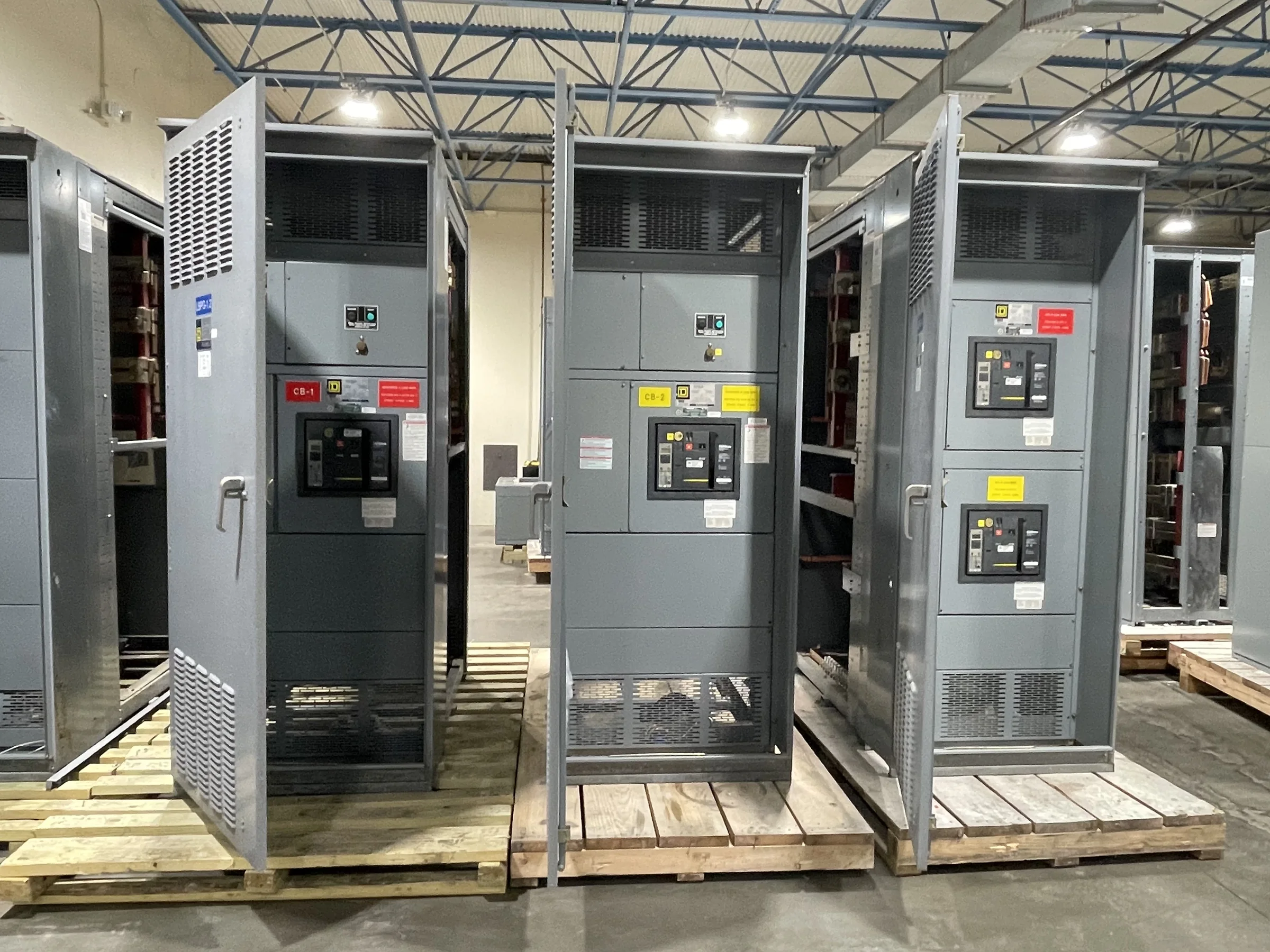
Define the Deer Park Application Before Selecting Equipment
A custom switchgear package starts with the electrical system it must serve, not with a preferred enclosure or catalog description. For a Deer Park facility, identify the source, nominal voltage, phase, frequency, available fault current, grounding method, and the loads and operating modes involved. A refinery-adjacent industrial site, warehouse, utility room, or water-treatment operation may have very different continuity and maintenance needs; the location alone does not establish the application. Share one-lines, load schedules, existing equipment data, and the intended point of connection so engineers can assess the scope. These inputs help prevent a proposal from overlooking coordination with upstream protection or downstream equipment. Final ratings, construction, and compatibility are project-specific and should be confirmed through engineering review before release.
Specify Protection, Bus, and Switching Around the System
Protection and bus decisions affect both equipment selection and how a facility can isolate faults or plan maintenance. Provide the latest available short-circuit study, protective-device settings, and coordination requirements, and identify any known changes to transformers, generators, or utility service. The manufacturer can use that information to develop a quote around the requested configuration; it is not a substitute for a project-specific engineering study. Specify required main and feeder arrangements, breaker or switch types, metering, control power, and any transfer or tie functions. Bus material and ampacity should follow the electrical design and applicable requirements, rather than assumptions based on building size. For low-voltage switchboards, UL 891 applicability depends on the particular assembly being evaluated; it does not imply certification for medium- or high-voltage equipment.


Account for Deer Park Site Conditions and Room Layout
Gulf Coast heat, humidity, rain, and airborne industrial contaminants can influence room placement, enclosure selection, ventilation, and maintenance planning, but conditions vary from site to site. Document whether equipment will be indoors or outdoors, the expected ambient environment, exposure to corrosive substances, and any washdown or dust concerns. Confirm room temperature and ventilation with the facility team; heat can affect equipment operation and the surrounding electrical space. Also provide the equipment-room plan, access-door dimensions, ceiling height, housekeeping-pad details, and required working clearances for review. These checks matter because an assembly that meets electrical requirements may still be difficult to install, service, or remove if the access route or room layout is overlooked. Environmental suitability and clearances must be verified for the actual installation.
Coordinate Replacement Work, Interfaces, and Records
When new switchgear replaces existing equipment, the critical question is whether the new assembly can connect safely and practically to the existing system. Provide nameplate photographs, dimensions, cable and bus connection details, conduit locations, control schematics, and available drawings of adjacent gear. Note which circuits must be retained, whether temporary power is needed, and the planned outage window. These details help reveal mismatches in footprint, termination space, protection, and control interfaces before equipment is ordered. Any field verification or installation work must be planned by qualified personnel and performed with equipment de-energized under the site’s safety procedures; energized work is not an assumed shortcut. Preserve approved drawings, settings, manuals, and test documentation for commissioning, operations, and future maintenance.
Discuss Build Timing and Procurement Requirements Early
A realistic schedule depends on the approved scope, design review, component availability, fabrication sequence, and any required evaluation or inspection—not simply the date a quote is requested. Tell the manufacturer when drawings are needed, when the facility expects approval, and when equipment must be ready for shipment or installation. Identify owner standards, preferred component manufacturers, acceptable substitutions, documentation requirements, and any inspection or witness points before placing an order. American components and custom builds may be available, but exact components, configuration, and schedule require project-specific confirmation. Short lead times are an offering, not a guaranteed delivery date. Resolving technical questions and approval comments promptly can reduce avoidable delays; a purchase order should clearly identify the agreed scope, exclusions, submittals, and schedule assumptions.
Plan Delivery to the Deer Park Receiving Site
Nationwide shipping can serve a Deer Park project, but delivery planning should reflect the receiving site rather than a generic freight assumption. Confirm the ship-to address, receiving hours, unloading equipment, dock or gate restrictions, escort rules, and who is authorized to accept the shipment. Industrial facilities may require advance notice, driver identification, safety orientation, or coordination around controlled-access roads; verify each requirement with the site. Discuss shipment dimensions, handling points, packaging, and whether the planned route from the truck to the electrical room has adequate clearance and floor capacity. Assign responsibility for unloading and moving the assembly before it ships, since freight delivery does not automatically include placement or installation. Confirm shipment timing against site readiness and outage plans, and inspect delivered equipment for visible damage before acceptance.