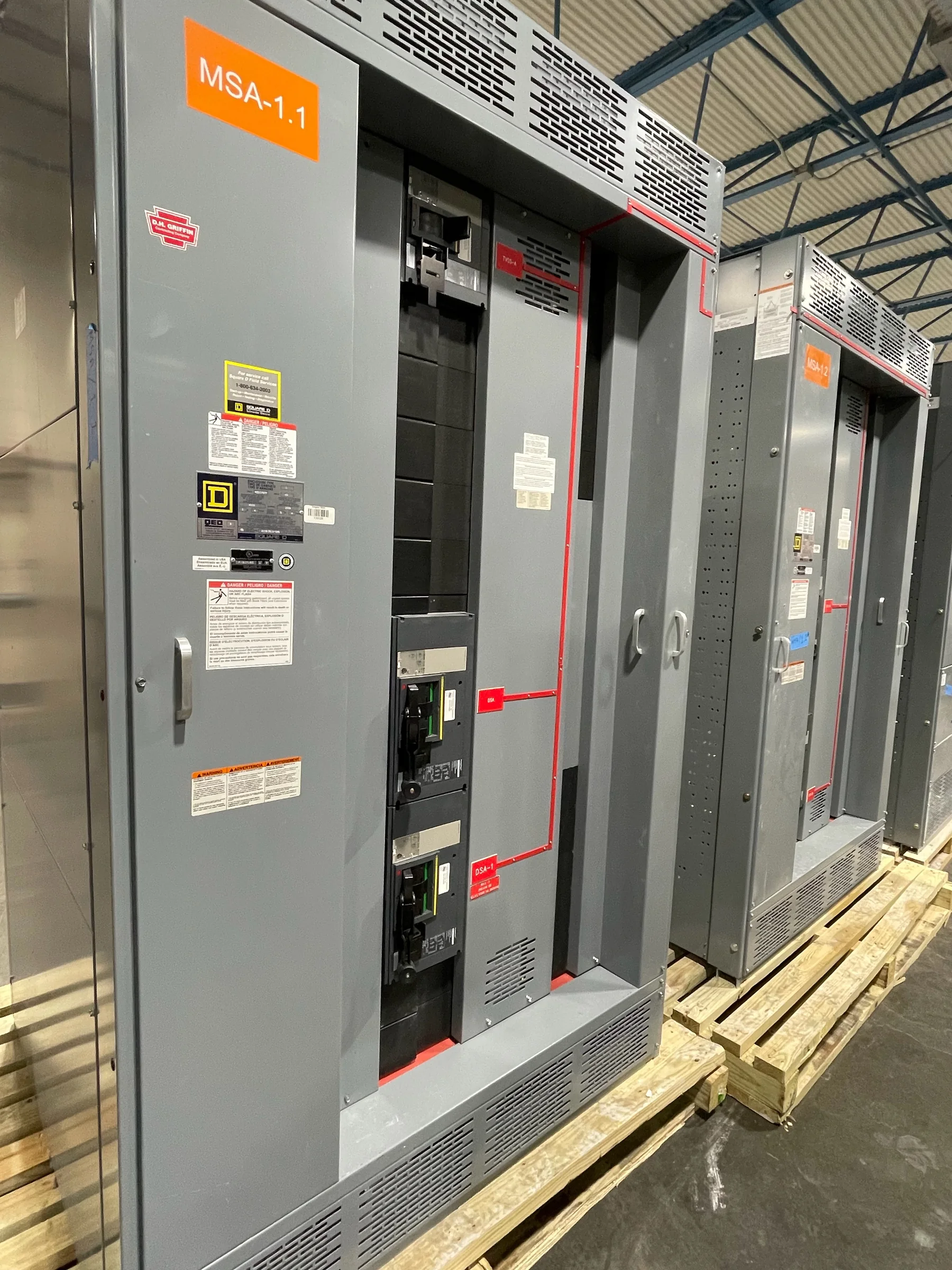
Define the Distribution Scope Before Requesting a Quote
For a Pearland project, start by documenting what the switchgear must serve, how it connects to existing distribution, and what the facility expects during an outage or expansion. Identify the source, downstream loads, operating arrangement, required voltage class, available fault-current information, and whether the work replaces equipment or adds capacity. These details help the manufacturer assess the appropriate equipment category and identify questions before design begins. Low-voltage switchboard assemblies and medium-voltage switchgear are not interchangeable, and standards or evaluation requirements depend on the equipment and application. Share one-line diagrams, load schedules, and known utility or coordination requirements with your request. A clearly bounded scope reduces assumptions that could affect equipment selection, interfaces, cost, or schedule.
Resolve Ratings and Existing-System Compatibility
Electrical ratings should be confirmed against the actual system, not copied from a nameplate without checking its context. Provide available voltage, continuous current, short-circuit data, grounding method, and protective-device requirements where known; the engineer of record and responsible utility or facility representatives should verify inputs that affect design. For replacement work, document the existing gear’s manufacturer, model, dimensions, bus arrangement, cable entry, and connected equipment. A new lineup may need to fit a constrained electrical room while preserving practical access for operation and maintenance. Compatibility is not guaranteed by matching a single rating or brand. Reviewing drawings, field measurements, and interface details early can reveal mismatches before fabrication, when layout or connection changes are more manageable.


Plan for Pearland’s Site and Delivery Conditions
Pearland projects may involve active industrial facilities, commercial campuses, or construction sites with different access and unloading limits. Before placing an order, confirm delivery address, receiving hours, truck and crane access, turning space, dock capacity, laydown area, and the route from unloading point to electrical room. Houston-area heat, humidity, heavy rain, and storm-related site interruptions can affect storage and installation planning; protect equipment as its shipping and storage instructions require, and keep it in an appropriate environment before installation. Check doorway widths, floor loading, elevator limits, and any need to move sections separately. Delivery coordination is a project responsibility to settle in advance, not an assumed service or guaranteed date. Share site constraints with the manufacturer when discussing configuration and shipment.
Coordinate Enclosure, Layout, and Connections
Room drawings should show more than the switchgear footprint. Include wall clearances, working space, egress, ventilation, cable-tray and conduit routes, overhead obstructions, floor openings, and any nearby equipment that could restrict access. Confirm whether cables enter from above or below, where they terminate, and whether the lineup must align with existing bus or distribution equipment. Enclosure construction and environmental provisions should suit the actual installation location; an indoor electrical room and an exposed or washdown-prone area can call for different considerations. These choices affect dimensions, access, heat management, and field connections, so they should be coordinated by the project’s qualified design team. Submit current architectural and electrical drawings, and flag any dimensions still awaiting field verification.
Set a Realistic Procurement and Submittal Sequence
Discuss schedule at the beginning of procurement, but treat timing as dependent on the approved scope, design review, component availability, and project-specific requirements—not as a fixed promise. Ask what information is needed for a complete quotation, what documents will be provided for review, and which approvals must occur before production can proceed. Identify decision-makers for drawings, deviations, protective-device selections, and interface questions so comments do not sit unresolved. If the project has a required outage window or construction milestone, share the date and the consequences of missing it; then coordinate installation and commissioning planning with the contractor and facility. A U.S. manufacturer can discuss custom-build options, American components, short lead times, and nationwide shipping, while confirming actual scope and availability for the order.
Prepare Records for Installation and Future Maintenance
A complete handoff helps installers and facility teams verify what was supplied and maintain the equipment safely. Establish which approved drawings, equipment schedules, bills of material, operating information, and test or inspection records are required by the contract and applicable project specifications. UL 891 applies to appropriately evaluated low-voltage switchboard assemblies; it is not a blanket certification for medium- or high-voltage equipment, and any required listing or marking must be confirmed for the specific assembly. Before installation, qualified personnel should compare delivered equipment with approved documents, check shipping condition, and follow manufacturer instructions and site safety procedures. Plan de-energized installation, inspection, and commissioning activities with responsible electrical professionals. Clear records of settings, connections, and revisions also support troubleshooting and future expansion.