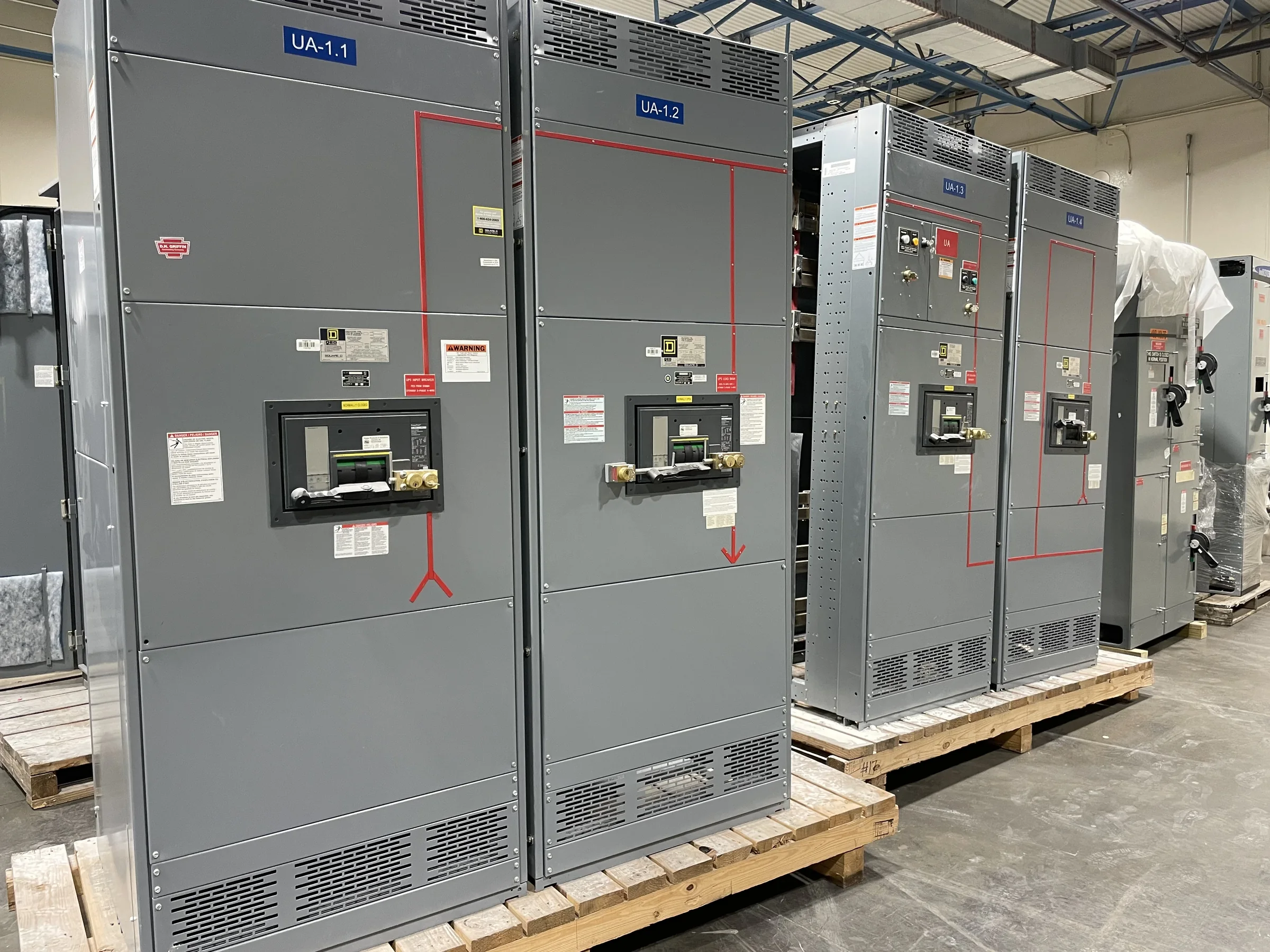
Specify the Panelboard Around the Load
Start with the circuits the panelboard must serve, not a catalog frame size. Provide the connected-load schedule, anticipated demand, continuous loads, motor and HVAC data, and any expected additions so the design team can evaluate bus capacity, branch positions, and usable spare space. Identify voltage, phase, wire configuration, frequency, and the available fault current at the proposed installation point. That fault-current information matters because interrupting ratings and upstream protection must be coordinated with the actual system, rather than assumed from nominal voltage. Note whether the application is service equipment or a downstream distribution panel, and identify the required main-device arrangement. These inputs allow a U.S. manufacturer to develop a project-specific proposal and flag missing information before it becomes a procurement or field-change problem.
Coordinate Protection and System Compatibility
A panelboard is one part of a coordinated electrical system, so specify the upstream protective device, transformer data, grounding arrangement, and relevant one-line diagram when requesting a quote. Engineers should confirm breaker types, trip functions, interrupting ratings, and selective-coordination or arc-energy-reduction requirements against the project design and applicable codes. Compatibility cannot be inferred simply because a device fits a familiar panel family; the bus, enclosure, ratings, and evaluated assembly must suit the application. Where future circuit changes are anticipated, define the intended spare capacity and identify any restrictions on breaker positions or device combinations. These details help procurement compare technically equivalent proposals, while giving the manufacturer a clearer basis to identify exceptions for engineering review instead of leaving critical assumptions buried in a submittal.


Fit the Enclosure to the Actual Room
Confirm the installation environment and physical route before finalizing the enclosure. Indoor electrical rooms, damp or corrosive areas, washdown spaces, and outdoor locations can call for different enclosure constructions and environmental protection; the required choice depends on site conditions and project specifications. Record ambient conditions, exposure to dust or moisture, available wall or floor space, mounting surface, and required working clearances. Check the door swing and the space needed to operate devices, remove covers, and service equipment without obstructing adjacent gear or egress. Measure the complete delivery path, including door openings, corridors, elevators, loading areas, and any turns that constrain package dimensions. A panelboard that meets the electrical schedule but cannot reach its intended location creates avoidable handling, construction, and schedule risk.
Build a Quote Package That Supports Review
A useful request for quotation includes the current one-line, panel schedules, equipment specifications, and the project’s required submittal format. Mark the panelboard’s source, destination, system voltage, main and branch-device requirements, and any metering, control, labeling, or accessory needs. Identify governing project standards and applicable code requirements, but avoid treating a general reference as confirmation that every requested feature applies to the supplied assembly. Ask the manufacturer to identify deviations, open technical questions, and information still needed for design. Procurement can then compare scope, exclusions, and options on a consistent basis rather than relying on headline price alone. If the project requires evaluated or listed equipment, state the exact requirement and equipment category; applicable evaluation and labeling are specific to the assembly and cannot be assumed from a product description.
Set Timing and Delivery Expectations Early
Discuss the required on-site date, submittal review sequence, approval milestones, and shipping destination while the design is still being finalized. Custom builds and component availability can affect the production plan, so a short-lead-time offering is not a guaranteed delivery date for every configuration. Ask which customer decisions or approvals must be complete before manufacturing can proceed, and clarify how approved changes are handled. For delivery planning, provide site receiving hours, unloading capabilities, access limits, contact procedures, and any restrictions on truck size or delivery appointments. Coordinate arrival with the electrical contractor’s installation window and the readiness of the room; early delivery can consume scarce staging space, while late delivery can disrupt installation. Confirm packaging, shipment scope, and responsibility for moving the equipment from the receiving point to the final location.
Plan Installation, Turnover, and Future Changes
Before release for construction, have the responsible electrical professionals verify the approved drawings, equipment dimensions, conductor entry, termination space, mounting details, and interfaces with the upstream and downstream system. Resolve field conditions through the project’s formal review process rather than modifying equipment or relying on unapproved substitutions. Installation and maintenance require qualified personnel, suitable protective measures, and de-energized work; the project plan should address isolation, verification, and applicable safety procedures. At turnover, collect approved submittals, final circuit directories, device and accessory information, operating instructions, and records required by the owner. Accurate labeling and a complete directory reduce troubleshooting time and help prevent circuit misidentification. If loads may expand, document the intended spare provisions and have future changes checked for electrical and physical compatibility before adding circuits or replacing protective devices.