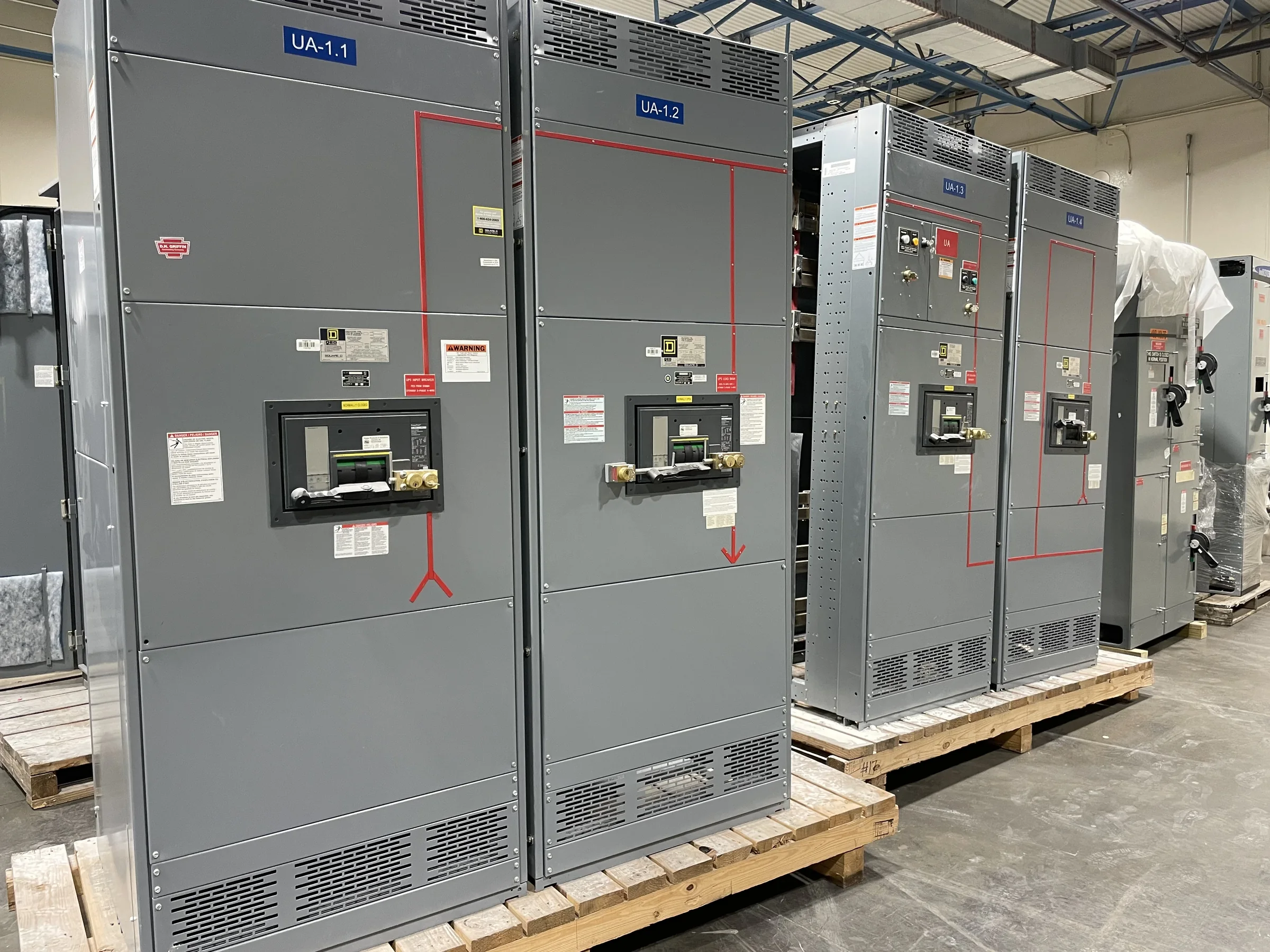
Coordinate Switchboard Scope with Conroe’s Project Conditions
A switchboard order is easier to evaluate when the project team first defines what the equipment must serve, where it will sit and how it connects to the existing distribution system. In Conroe, facilities may include manufacturing, commercial operations, municipal infrastructure and growing developments, each with different load profiles and operating priorities. Identify the source transformer or upstream gear, downstream feeders, available fault-current information and any planned capacity additions. These details influence the lineup arrangement, protective-device requirements and connection points; assumptions can lead to costly field changes. Share the one-line diagram, load schedule, service requirements and installation environment with the manufacturer for review. Final ratings, construction and compatibility depend on project documents and applicable evaluation—not on a location label or a standard package.
Specify Ratings, Protection and Future Capacity
Procurement should distinguish present operating needs from reasonable future expansion. Confirm system voltage, phase, frequency, ampacity, bus configuration, interrupting requirements and the functions of each feeder before requesting pricing. Protection must coordinate with upstream and downstream devices, so provide available fault-current data and the current coordination study when available. A breaker’s frame or trip rating alone does not establish that the complete assembly suits the installation. For Conroe facilities with planned production changes, spare spaces or provisions for future circuits may be useful, but their feasibility depends on enclosure dimensions, heat dissipation, bus capacity and the design. Ask the manufacturer to identify assumptions and exceptions in its proposal. An engineer should verify the design against the service conditions, governing codes and project specifications before release.


Review Drawings Before Releasing the Build
Approved drawings are a practical control point, not paperwork to rush past. Review the general arrangement for lineup width, depth, working access, cable entry and door swing against the actual electrical room. Check the one-line diagram against feeder schedules, breaker functions, metering, control power and naming conventions; a mismatch can complicate commissioning or leave operators with unclear circuit identification. Confirm bus details, neutral and grounding requirements, terminal provisions and any specified accessories. For replacement work, document existing connection locations and equipment interfaces rather than assuming an older lineup will match a new assembly. Resolve comments in writing and establish which revision governs fabrication. The manufacturer can build to an agreed project scope, but final dimensions, connection compatibility and any UL 891 evaluation are assembly- and project-specific.
Plan Delivery Around the Conroe Site
Delivery planning should begin with the route from the receiving point to the electrical room, not end at the property gate. Conroe projects may face active-site traffic, limited staging, construction sequencing or access restrictions near occupied facilities. Confirm truck access, unloading equipment, doorway and corridor clearances, floor loading, turning space and whether the switchboard must be moved in sections. Compare shipping-piece dimensions and weights with the route and lifting plan before shipment is scheduled; a lineup that reaches the site but cannot pass through an opening can disrupt installation. Identify the receiving contact, delivery hours, site safety requirements and storage location. Nationwide shipping can support projects in the area, while freight arrangements and timing remain subject to the approved configuration, production schedule, carrier coordination and site readiness.
Set a Realistic Schedule and Purchasing Record
A useful quotation request gives the manufacturer enough information to price the intended assembly and flag missing decisions. Include the specification, one-line diagram, equipment schedule, required options, delivery location and target need date, then ask which items are assumed, excluded or still awaiting confirmation. Custom construction can address project-specific requirements, and short lead times may be available, but neither a schedule nor availability should be treated as guaranteed before scope review. The overall procurement path also includes drawing review, approval turnaround, fabrication, shipping, receiving and installation. Record the required submittals, revision process, commercial terms and schedule milestones in the purchase documents. If the project deadline is fixed, identify it early and discuss acceptable alternatives with the engineer and manufacturer rather than relying on an unverified delivery promise.
Prepare for Installation, Verification and Ongoing Use
Before installation, align the approved drawings with field conditions and confirm that the designated space, foundation, cable routes and service access are ready. Switchboard installation, inspection, testing and commissioning should be performed by qualified personnel under the project’s safety procedures, with equipment de-energized for work as required. Keep the final drawings, device information, labels and approved changes available to the commissioning team; discrepancies discovered late can delay energization and make troubleshooting harder. For a replacement or retrofit, plan outages and temporary operating arrangements with facility stakeholders, and verify the interfaces before removing existing equipment. After turnover, retain records of settings, test documentation and maintenance requirements applicable to the supplied assembly. Exact installation procedures, acceptance criteria and evaluation status depend on the design, contract documents and applicable authority requirements.