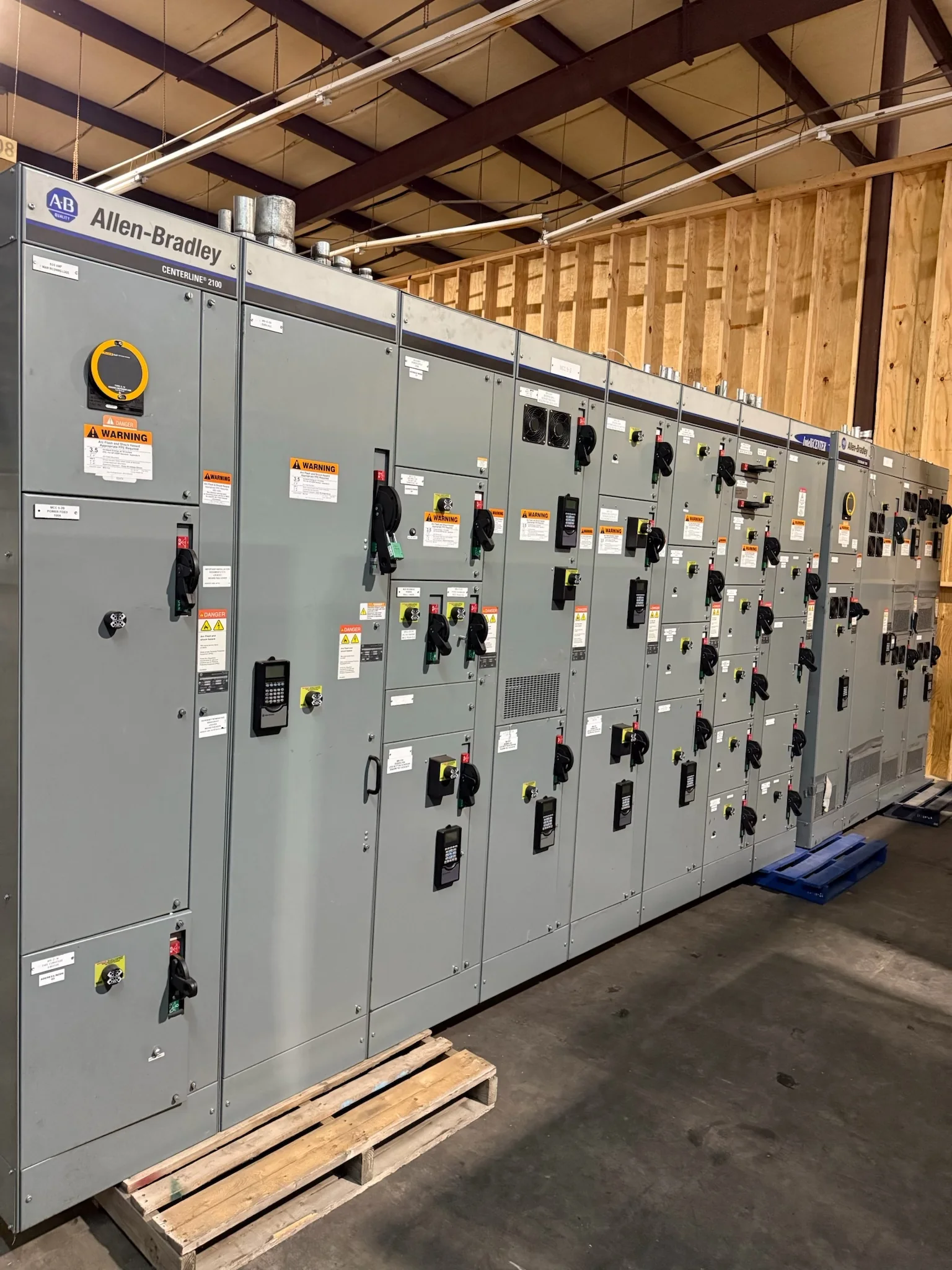
Define the La Porte Project Before Selecting a Switchboard
For a La Porte facility, begin with the electrical distribution problem the new switchboard must solve: a service replacement, added production load, building expansion, or a change in how power is divided among areas. Each purpose affects the one-line diagram, feeder arrangement, protective-device coordination, and room layout. Gather the existing service voltage, phase and frequency, available fault-current information, utility or upstream-device data, and the loads expected at startup and later buildout. Do not assume an old nameplate or panel schedule reflects current conditions; have qualified personnel verify field information with the equipment safely de-energized. Clear inputs help the manufacturer develop a reviewable proposal and expose missing engineering decisions before procurement. Final ratings and compatibility depend on project documents and site verification.
Match the Electrical Ratings to the Actual Distribution System
A switchboard must suit the system it serves, not merely the facility’s estimated load. Confirm the nominal voltage, number of phases and wires, service configuration, grounding method, main-device requirements, feeder quantities, and anticipated load profile. Available fault current and the required short-circuit rating are especially important: if upstream utility or transformer information changes, the proposed assembly may need reevaluation. Coordinate protective-device types and settings with the engineer’s study and applicable project criteria rather than selecting devices from a generic equipment list. For a La Porte industrial site, future process additions may also influence spare sections or feeder provisions, but unused capacity must be defined rather than presumed. Submit the current one-line diagram and equipment schedules so the manufacturer can identify questions early; final design remains project-specific.


Account for Gulf Coast Conditions and Equipment-Room Layout
La Porte’s Gulf Coast setting makes the equipment environment and installation location practical design inputs. Ask the project team to document whether the switchboard will be indoors, in a conditioned room, or exposed to outdoor temperature, moisture, airborne contaminants, or washdown conditions. The selected enclosure and equipment arrangement must be appropriate to the actual exposure; a geographic label alone does not determine an enclosure rating. In the room, verify wall clearances, working space, ceiling height, door swings, access paths, cable-entry direction, and space to remove or replace components. Existing conduits and structural obstructions can constrain section placement and termination access. Accurate field dimensions matter because a board that meets electrical requirements but cannot be moved into the room or safely accessed creates costly redesign and installation delays.
Resolve Interfaces, Protection, and Replacement Scope Early
Replacement work often hinges on interfaces that are easy to overlook in a purchasing schedule. Record how existing cables enter and terminate, conductor material and size where verified, lug requirements, bus connections, control wiring, metering, communications, and connections to downstream equipment. Identify which components are to remain and who is responsible for confirming their condition and compatibility. If the project includes tying new distribution into existing gear, the engineer should review electrical ratings, protective coordination, available fault current, and operating sequence; physical fit alone does not establish suitability. Define outage limits, temporary-power needs, demolition boundaries, and the party responsible for field measurements before release. These decisions help distinguish a complete replacement scope from an equipment-only purchase and reduce change orders caused by assumptions about reused cables or controls.
Prepare Submittals and Review the Purchase Scope
Before ordering, align the request for quotation with the documents the engineer and facility team will use to evaluate the equipment. A useful package may include the one-line diagram, panel or feeder schedules, specifications, room plans, cable-entry details, fault-current and coordination information, metering requirements, and clearly marked exceptions or open items. Ask the manufacturer to identify proposed deviations for review rather than treating an unconfirmed feature as included. For low-voltage switchboard assemblies, UL 891 may be relevant when the project calls for an appropriately evaluated assembly; it is not a blanket certification for every product or for medium- and high-voltage equipment. Confirm the applicable standards, evaluation scope, ratings, and labeling requirements for the specific project. A disciplined submittal review resolves technical gaps before fabrication and supports a more complete procurement record.
Coordinate Schedule, Delivery, and Installation Readiness
Discuss schedule and delivery with the manufacturer using the project’s actual approval and site constraints. A requested ship date is not a guaranteed delivery date: drawing review, engineering decisions, component availability, approved changes, and production planning can affect timing. Clarify when the buyer must return submittals, what information is needed before release, how revisions are handled, and what delivery assumptions appear in the quotation. For a La Porte site, coordinate the receiving window, truck access, unloading equipment, staging space, security or check-in procedures, and the route from drop-off to the electrical room. Confirm who receives and inspects the shipment and how packaging or transit damage is documented. Before installation, verify that the room, foundations, conduits, and required outage plan are ready; energization must follow approved procedures.