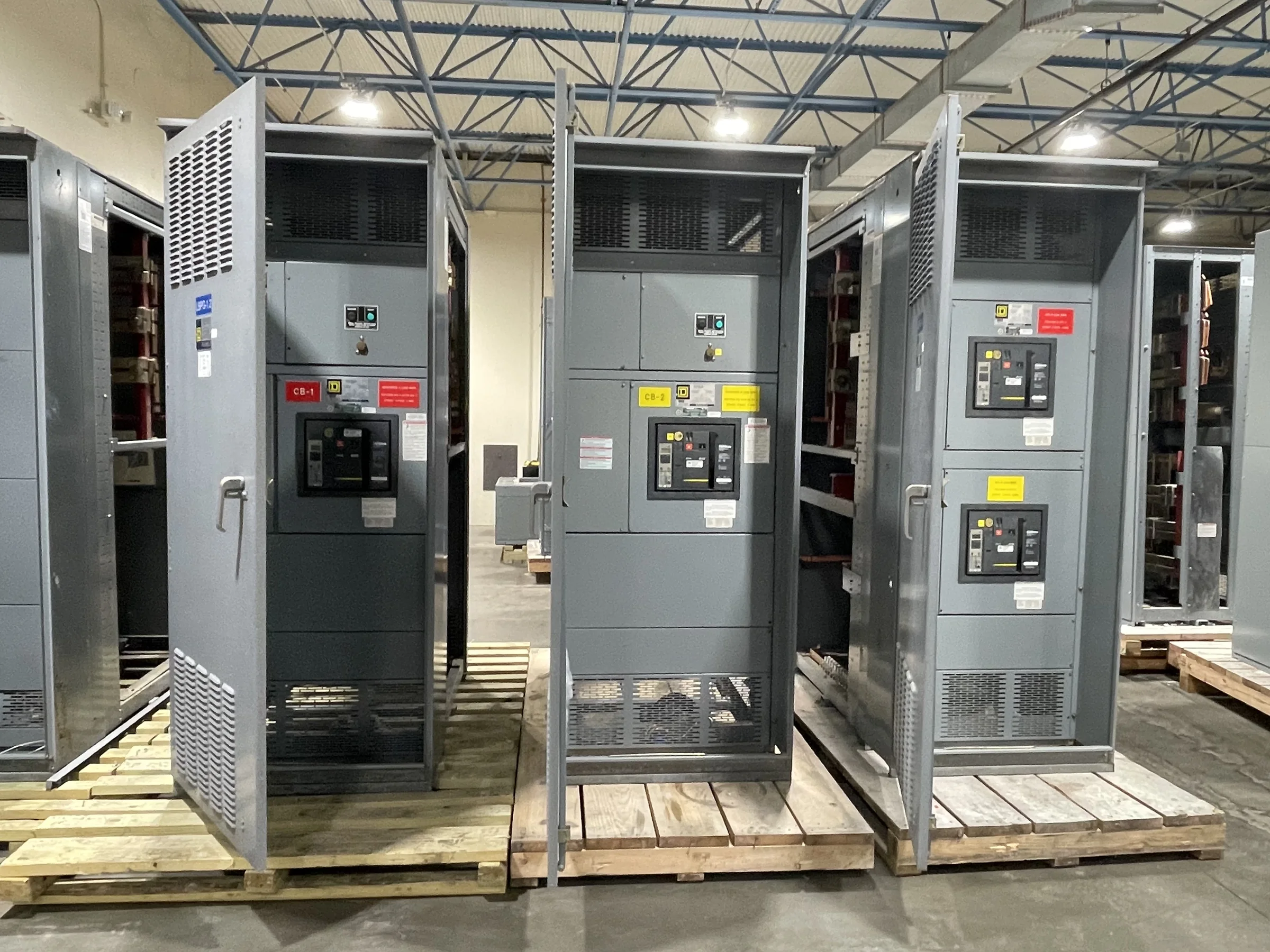
Define the Switchboard Around the Load
For a Pearland facility, begin with the loads the switchboard must serve—not a catalog frame size. Gather the service voltage and phase, available fault-current information, main and feeder requirements, and a current load schedule. Include motors, HVAC, process equipment, EV charging, and planned expansions where applicable. These details affect bus and overcurrent-device selection, space planning, and the evaluation required for the proposed assembly. Also identify whether the board is service equipment or downstream distribution; that distinction can change the required configuration and documentation. A U.S. manufacturer can build to project-specific requirements, but final ratings and compatibility must be confirmed against the electrical design and site conditions. Incomplete load data can lead to redesign, coordination delays, or equipment that does not fit the intended system.
Coordinate Protection and System Interfaces
A switchboard is one part of a coordinated electrical system, so request the information needed to review interfaces before approving a build. One-line diagrams, protective-device settings or study requirements, and upstream transformer or utility data help the project team evaluate available fault current and protection coordination. Confirm how the proposed equipment connects to transformers, generators, transfer equipment, or downstream panels, including conductor entry and termination arrangements. These interfaces matter because a physically suitable board may still conflict with the distribution design or installation details. Do not assume that a breaker, bus arrangement, or rating can be substituted without engineering review. Applicable codes, standards, and any required evaluation depend on the assembly and project. For low-voltage switchboard assemblies, UL 891 may be relevant when the assembly is appropriately evaluated; it is not a blanket certification for other voltage classes.


Plan for Pearland Site and Delivery Conditions
Delivery planning in Pearland should reflect the actual route from the receiving point to the electrical room, not just the truck’s arrival at the property. Check gate and access restrictions, turning space, unloading equipment, floor capacity, door and corridor clearances, and the route around operating areas. Gulf Coast heat, humidity, and severe-weather exposure can also affect temporary storage and the timing of indoor installation; keep equipment protected and follow the manufacturer’s handling and storage instructions. Confirm who can receive the shipment, where it can be staged, and whether delivery must be coordinated with a construction window or facility shutdown. A clear site plan helps prevent blocked access, avoidable handling, and damage. Shipping availability and delivery timing are project-specific, so confirm them against the build schedule and site readiness.
Resolve Room Layout and Cable Entry Early
Electrical-room constraints can determine whether a proposed switchboard arrangement is practical. Provide room dimensions, equipment-room and doorway clearances, the intended lineup location, and the planned cable approach. Identify whether conductors enter from above or below, where the service or feeder conduits terminate, and whether field access is available for pulling and terminating cables. Review working space, egress, ventilation, nearby piping, and other equipment with the project’s electrical and building teams. These checks matter because conduit stub-ups or overhead obstructions discovered after fabrication may force costly field changes or compromise access. Ask for project drawings that show the equipment footprint and connection points, then compare them with current architectural and electrical plans. Final layout, dimensions, and installation requirements must be verified for the selected design and site.
Submit a Complete RFQ and Review Package
A useful request for quotation gives the manufacturer enough information to identify the intended equipment without guessing. Include the one-line diagram, load schedule, voltage and phase, main and feeder details, requested options, available fault-current data, and any required project standards or specifications. Add the needed drawing submittal milestones, shipping destination, receiving constraints, and target installation window. During review, compare the quotation and drawings with the electrical design: check device quantities, labels, metering, bus arrangement, cable access, and specified accessories. Flag exceptions in writing before approval, and route revisions through the engineer and procurement team so everyone is working from the same document set. Clear records matter for purchasing, construction, and later maintenance. Pricing, availability, final configuration, and schedule depend on the approved project requirements and should be confirmed in the manufacturer’s proposal.
Align Build Timing With Installation Readiness
Short lead times may be available for some custom builds, but they should not replace a verified project schedule. Ask what information is required to release the design, when drawing approval is needed, and how changes after approval could affect fabrication and shipment. Coordinate those milestones with permitting, upstream equipment, conduit installation, and the planned outage or commissioning window. Before delivery, confirm that the room is secure and accessible, the foundation or mounting surface is ready, and lifting and receiving arrangements are in place. Installation and connection work must be performed by qualified personnel under applicable safety procedures, with equipment de-energized for work that requires it. After installation, testing and commissioning should follow the project requirements and equipment documentation. Confirm the actual build and shipping schedule directly; timing varies with configuration, approvals, and availability.