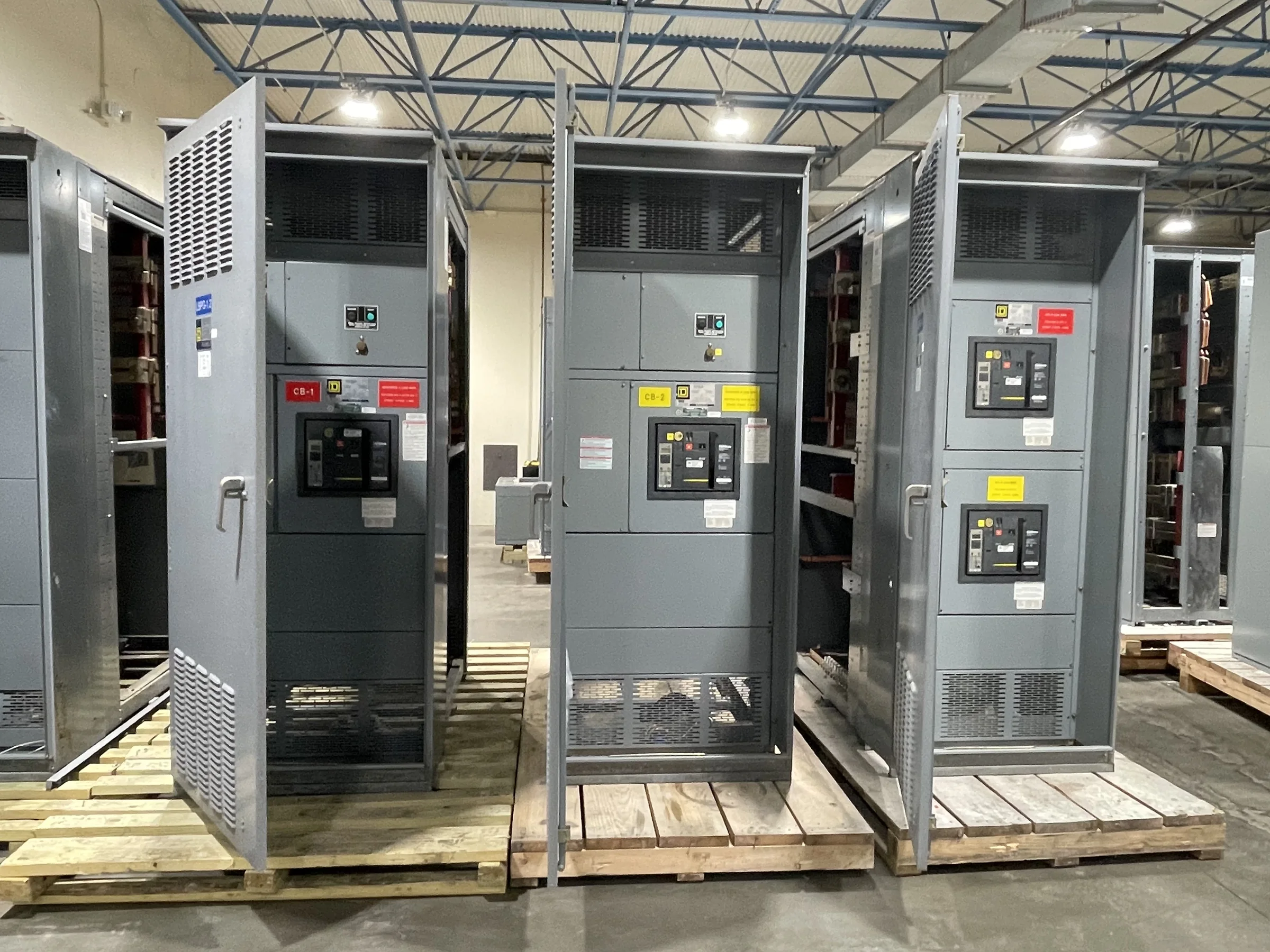
Define the Katy Project Before Selecting Equipment
For a new facility, expansion, or replacement in Katy, begin with the electrical one-line diagram and the operating conditions the equipment must support. Identify the service voltage, phase, frequency, available fault current, main and feeder requirements, and whether the installation is a switchboard or a different class of switchgear. Those distinctions affect the applicable standards, construction, protection, and evaluation path; a UL 891 assembly is relevant to appropriately evaluated low-voltage switchboards, not a blanket designation for medium- or high-voltage equipment. Share the utility or service-provider requirements, load information, and project specifications with the manufacturer early. Missing or conflicting inputs can send a quote toward an unsuitable configuration, delay engineering review, or force costly revisions after procurement.
Coordinate Ratings, Protection, and Future Loads
A useful equipment schedule ties each breaker or protective device to its intended load, conductor, and coordination strategy rather than listing frame sizes alone. Engineers should verify interrupting and withstand requirements against the available fault current, and review selective coordination or arc-energy objectives where the project requires them. Consider spare spaces and realistic future additions, but avoid treating empty compartments as proof that an assembly can accept any later device. Bus ratings, temperature rise, enclosure arrangement, and device compatibility all depend on the designed assembly. In Katy, where projects may combine office, process, warehouse, or commercial loads, documenting which loads are critical helps reviewers understand priorities for shutdown and expansion. Final ratings and compatibility remain specific to the installation and approved design.


Plan the Enclosure Around the Site
Room dimensions and access routes can be as consequential as electrical ratings. Confirm the equipment footprint, working clearances, door swings, cable entry direction, ceiling height, housekeeping pad, and the route from the delivery point to the electrical room before approving drawings. Houston-area sites can face heavy rain, high humidity, heat, and wind-driven moisture; specify the actual indoor or outdoor environment and exposure rather than assuming a standard enclosure will suit every location. For outdoor or partially conditioned installations, discuss enclosure rating, corrosion exposure, ventilation, and drainage with the design team. These details influence construction and maintenance access. A mismatch discovered after concrete, louvers, or cable trench work is complete can require field modifications and disrupt the construction sequence.
Make Submittals Useful for Review
A complete procurement package helps the engineer, contractor, and owner check that the proposed equipment matches the design intent. Provide the latest one-line diagram, equipment schedule, specification, control schematics where applicable, and any required utility criteria. Ask for drawings that show overall dimensions, conduit and cable landing space, shipping splits, lifting provisions, and connection details so the field team can coordinate structural supports and pathways. Identify requested nameplate data, protective-device information, and documentation deliverables in the specification; availability depends on the project and product configuration. Review exceptions carefully instead of relying on a general statement of compliance. Resolving a feeder arrangement, metering detail, or control interface during submittal review is usually simpler than reconciling it after fabrication.
Discuss Schedule and Delivery as Project Inputs
When timing matters, distinguish the date equipment is needed on site from drawing approval, release for production, and readiness to receive a shipment. Custom-built assemblies require project-specific engineering and approvals, so an early, coordinated specification can reduce avoidable clarification cycles. Confirm which components or features are essential, what substitutions require approval, and whether phased delivery is practical for the construction sequence. A U.S. manufacturer can discuss current schedule and delivery options, but timing should be confirmed for the actual configuration rather than assumed from a general short-lead-time offering. For Katy-area sites, coordinate truck access, unloading equipment, delivery hours, staging space, and weather contingencies with the general contractor. Clear responsibility for receiving and inspection helps prevent equipment from waiting exposed or blocking active work.
Specify Support for Installation and Long-Term Operation
Before ordering, establish who will verify field dimensions, receive and inspect the equipment, manage storage, and coordinate installation and commissioning. The installation team should have approved drawings, equipment instructions, and project-specific settings or protection information before work begins. Electrical installation, inspection, testing, and maintenance must follow applicable codes, manufacturer instructions, and qualified-person practices; equipment must be de-energized and verified safe before work. Ask how replacement devices, spare parts, and future modifications will be identified against the final approved configuration, since similar-looking components are not necessarily interchangeable. For a facility in Katy, documenting environmental conditions, maintenance access, and critical-load priorities can also help the owner plan service intervals and outages. Confirm exact support, documentation, and availability during the project review.