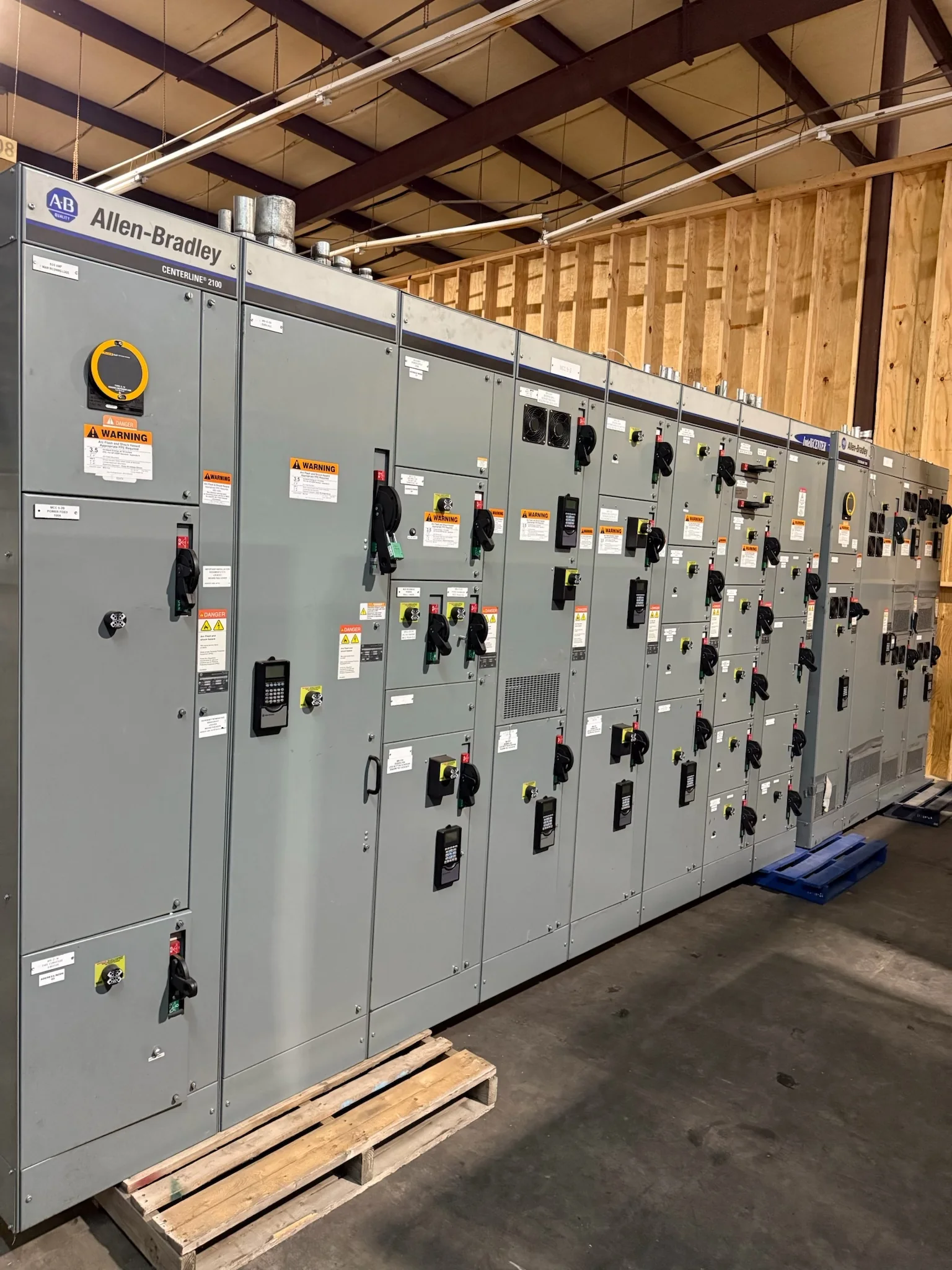
Specify Switchgear Around the Actual Distribution System
For a League City project, begin with the one-line diagram and the role the equipment must perform—not a product label alone. Document the system voltage, available fault current, continuous load, source arrangement, grounding method, and whether the lineup serves service entrance, distribution, or a dedicated process. These details affect bus design, protective-device selection, compartmentation, and the equipment’s short-circuit ratings. Include the intended operating sequence for normal and alternate sources, including any transfer or interlocking requirements. A U.S. manufacturer can build new equipment to project requirements, but ratings and compatibility must be confirmed against the site electrical study and applicable codes. Resolving those inputs before quotation reduces redesign risk and gives engineers and procurement teams a consistent basis for comparing proposals.
Coordinate Ratings, Protection, and Connected Equipment
Protection cannot be specified in isolation from the system it protects. Share upstream and downstream device information, transformer data, motor or other significant loads, and the latest available short-circuit and coordination studies. Engineers can then review interrupting and withstand requirements, trip functions, selective coordination objectives, and interfaces with existing equipment. If a replacement lineup must connect to installed gear, provide manufacturer and model information, drawings, bus details, conductor entry, and photographs where useful; field verification remains important because records may not reflect later modifications. Confirming these interfaces early helps avoid mismatched connections or protection settings that undermine system performance. Final device selections, ratings, and suitability depend on the project documents, engineering review, and the applicable standards.


Plan the Lineup for the Room and the Route In
A switchgear design that fits an electrical drawing may still be difficult to install if the room or delivery route is overlooked. Check the available floor area, working clearances, ceiling height, door openings, turning points, loading access, and the path from the receiving area to the final position. Record equipment orientation, cable trench or conduit locations, and whether conductors enter from the top or bottom. In League City, coordinate delivery around the actual site access plan, weather exposure during unloading, and any restrictions on truck movement or staging; do not assume the receiving area is protected or immediately adjacent to the electrical room. Confirm shipping sections, handling provisions, and the installation sequence with the project team before release. These checks reduce avoidable handling, access, and schedule conflicts.
Set a Realistic Schedule With Complete Submittals
Discuss timing when the specification is being developed, not only after purchase approval. Custom construction and component availability can influence a project schedule, and short lead times are an offering rather than a guarantee for every configuration. Identify the required approval date, release-for-production date, delivery window, and any shutdown or commissioning milestones. Submit the latest one-line diagram, equipment schedule, control requirements, connection details, and site constraints together so reviewers can identify gaps before they affect fabrication. Track open technical questions and revision status, especially when multiple disciplines are changing loads or room layouts. A defined submittal and approval process gives the manufacturer and project team a clearer basis for discussing schedule, while preserving time for review, installation planning, and required field coordination.
Review Construction, Standards, and Project Records
Procurement documents should define what is being supplied without assuming a standard applies to every assembly. UL 891 applies to appropriately evaluated low-voltage switchboard assemblies; it is not a blanket certification for medium- or high-voltage equipment, and a product’s listing status must be confirmed for the specific configuration. State the intended application, voltage class, ratings, enclosure requirements, metering, controls, and any project-required evaluation or documentation. Ask for proposed shop drawings, bills of material or equipment schedules, wiring and elementary diagrams, and operation and maintenance information as applicable to the scope. Review submittals against the specification and one-line diagram, documenting approved deviations before release. Clear records help the engineer verify design intent and help facility staff understand the supplied equipment after installation.
Coordinate Delivery and Future Service Needs
Nationwide shipping makes delivery planning part of the equipment purchase, not an afterthought. For a League City site, establish who can receive the shipment, where sections can be unloaded and staged, what access limits apply, and how delivery timing fits with construction and weather contingencies. Confirm packaging, shipment configuration, receiving inspection responsibilities, and the process for reporting visible damage before the carrier departs. Also consider how the lineup will be accessed for inspection and maintenance once installed: provide adequate working space, keep doors and removable sections clear, and retain final drawings and device information with facility records. Specify any requested startup, testing, or field services in the project scope and confirm availability rather than presuming they are included. These practical decisions support a smoother handoff without compromising required de-energized work procedures.