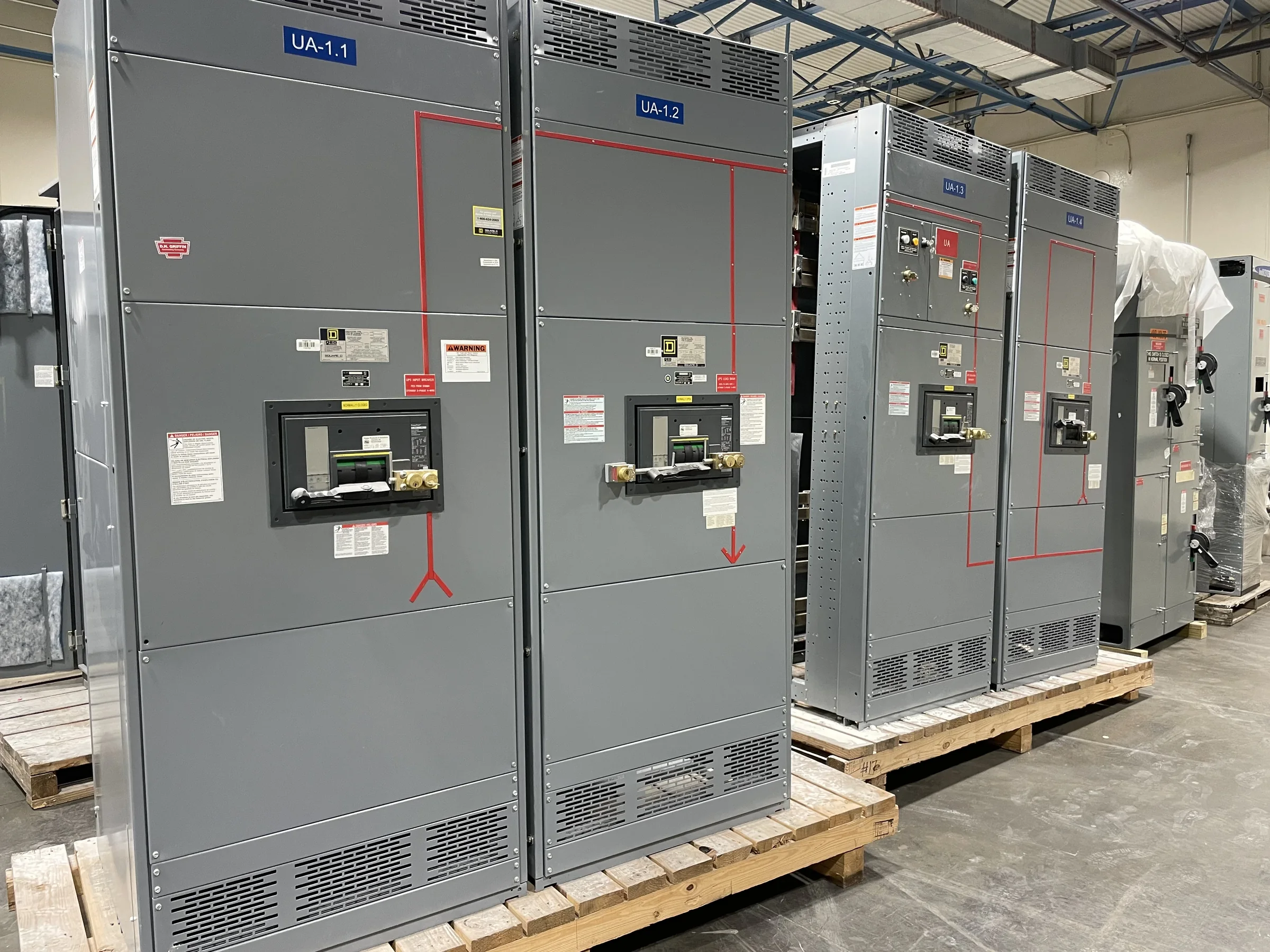
Define the Distribution Duty Before Selecting Equipment
For a Sugar Land facility, begin with the electrical duty the equipment must serve, not a catalog label. Gather the available fault-current information, system voltage, phase and wire arrangement, service entrance details, and the loads expected at startup and during normal operation. These inputs influence bus ratings, protective-device selection, enclosure arrangements, and whether a low-voltage switchboard or another assembly type is appropriate. Include future capacity only when a documented load plan supports it; oversized or underspecified equipment can both create cost and coordination problems. A U.S. manufacturer can review the project requirements and build new distribution equipment around them. Final ratings, construction, and standards depend on the one-line diagram, utility information, and engineering review for the specific installation.
Coordinate New Gear With Existing Site Conditions
Replacement and expansion projects often have to fit a room designed around equipment that is already in place. Before requesting a quote, document the available footprint, access openings, ceiling height, working clearances, cable entry points, and the locations of nearby piping or other obstructions. In Sugar Land’s mix of commercial, institutional, and industrial properties, an equipment route may include a loading area, service corridor, or occupied space; each can affect section dimensions and delivery sequencing. Confirm whether existing conductors can reach proposed terminals and whether the installation requires transitions or field modifications. Photos and measured drawings help identify conflicts early, but they do not replace field verification. The project team should resolve fit, access, and installation responsibilities before approving final drawings.


Make Protection and Coordination Requirements Explicit
Protective devices should be selected as part of a coordinated system, not treated as interchangeable line items. Provide available fault-current data, upstream and downstream device information, grounding details, and any arc-flash or coordination study criteria that apply. These records help the engineer assess interrupting capability, selectivity, and the consequences of a fault; incomplete data can lead to revisions or an unsuitable configuration. Ask which protective devices and controls are included in the proposed assembly, which are specified by others, and what settings or study work remain in the project scope. Requirements vary with the installation, and a manufacturer’s review is not a substitute for the engineer of record’s design approval. Confirm that approved drawings and device schedules match the final equipment configuration before release.
Plan Around Houston-Area Weather and Delivery Access
Delivery planning deserves early attention in the Houston area, where heavy rain, high humidity, and seasonal storms can complicate outdoor staging and access. Confirm that the receiving area is suitable for unloading, that the route to the electrical room can handle the equipment’s dimensions and handling needs, and that the site has a dry, secure place for any equipment that cannot be installed immediately. Share gate procedures, delivery-hour limits, lift or dock availability, and any restrictions on truck access before shipment is scheduled. Nationwide shipping and short lead times may be available as manufacturer offerings, but a project-specific ship date and transport plan must be confirmed rather than assumed. Protecting equipment from moisture and impact during staging matters because damage or contamination can delay installation and require inspection.
Review Drawings, Interfaces, and Applicable Standards
Submittal review is the practical checkpoint for finding mismatches before equipment is built. Compare the proposed one-line diagram, elevations, section arrangement, connection details, device schedule, and nameplate information against the approved project documents. Verify interfaces with transformers, generators, automatic transfer equipment, metering, building controls, and cable systems where applicable; each party should identify its connection and commissioning responsibilities. UL 891 may apply to an appropriately evaluated low-voltage switchboard assembly, but it is not a blanket certification for every product or for medium- or high-voltage gear. Ask what evaluation or labeling applies to the specific assembly and record deviations for formal approval. Project standards, utility requirements, and applicable code provisions should be checked by the responsible design professionals before release.
Compare Quotes by Scope, Schedule, and Turnover Needs
A useful quote makes scope visible, so compare more than the equipment description and price. Check the stated ratings and arrangement against the latest project documents, then identify exclusions such as protective devices, metering, control wiring, field installation, studies, or commissioning support. Ask about drawing review, approval milestones, required customer inputs, and the conditions that affect manufacturing and shipment timing. A stated short lead time is not a guaranteed delivery date; submittal approval, component availability, and changes can affect the schedule. For a Sugar Land project, align shipment with room readiness, contractor access, and any planned outage window, while leaving de-energized installation and inspection to qualified personnel under the project’s safety procedures. Request turnover documents appropriate to the order, such as final drawings and equipment data, so maintenance teams can plan future service.