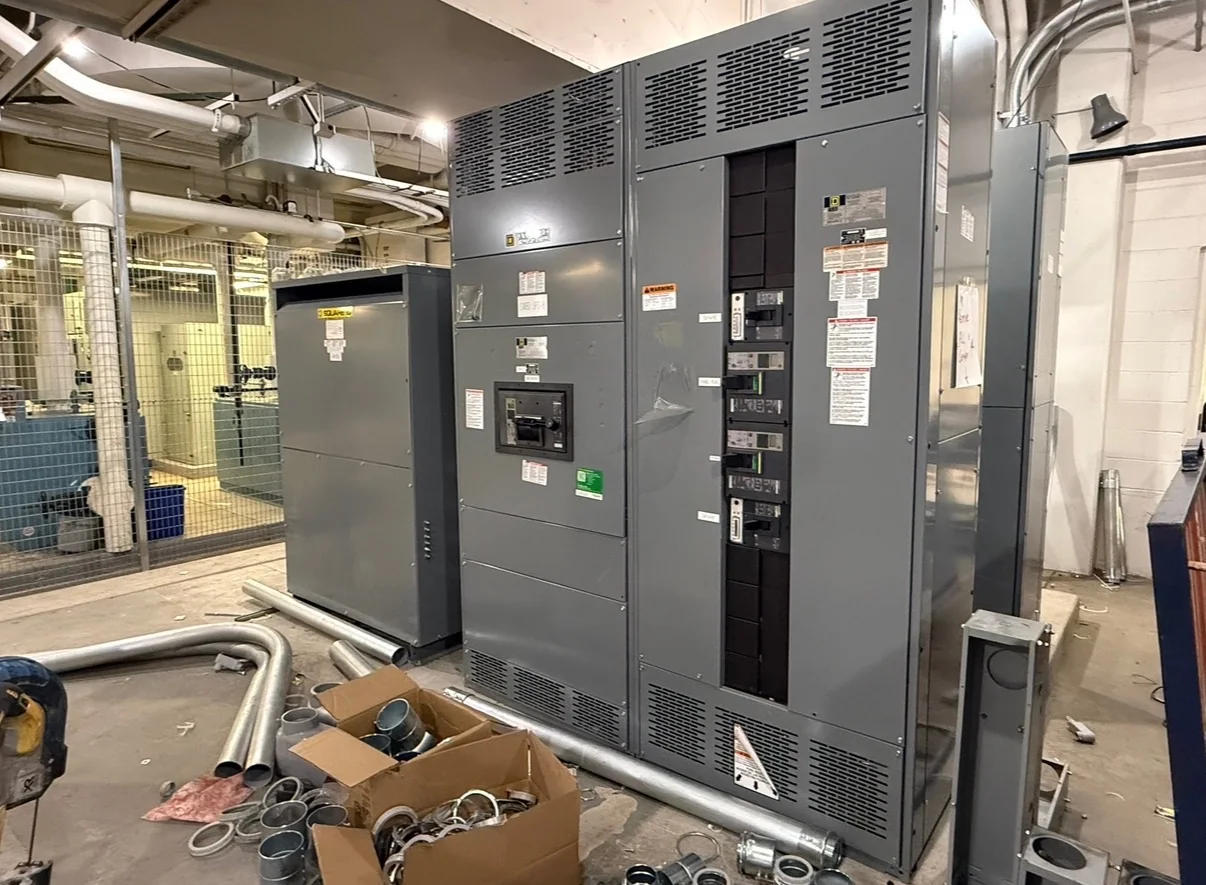
Define the Indoor Switchgear Application
Start with the electrical function, not a catalog label. Indoor switchgear may serve a service entrance, a distribution lineup, a generator connection, or a process load, and those duties shape the required arrangement. Identify the source and system voltage, available fault current, connected loads, grounding method, and intended operating sequence for the project team to review. Also clarify whether the equipment is medium-voltage switchgear or a low-voltage switchboard; their construction, evaluation standards, and applications are not interchangeable. A U.S. manufacturer can develop a new assembly around the documented project requirements, but ratings and design suitability must be confirmed for the specific installation. Early alignment prevents a proposal from appearing comparable on price while omitting functions the facility actually needs.
Resolve Ratings and System Compatibility
Equipment ratings must coordinate with the system it will serve and with upstream and downstream devices. Provide the latest available fault-current information, protective-device data, transformer details, and one-line diagram so engineers can assess interrupting or withstand requirements and protection coordination. For medium-voltage applications, specify the intended switching and protection functions and identify connected transformers, motors, or other loads. For low-voltage distribution, document feeder quantities, load characteristics, and any required metering or protective features. Do not assume an existing lineup’s nameplate data alone captures the present system: utility changes, added generation, or modified loads may affect the design basis. Final ratings and compatibility are project-specific and should be confirmed through the applicable engineering review before release for manufacture.


Plan the Room, Access, and Installation
An indoor assembly can meet its electrical requirements and still create installation problems if the room and access route are overlooked. Share room dimensions, door and corridor clearances, ceiling height, floor elevation, equipment access zones, and the planned route from unloading point to final position. Check for columns, cable trenches, overhead services, adjacent equipment, and working-space requirements against the project design and applicable codes. Where the lineup must be moved through a constrained building, shipping splits and reassembly interfaces need to be reviewed before the equipment configuration is finalized. Confirm who is responsible for anchorage, cable entry, interconnections, and installation activities. These details affect layout, construction coordination, and the ability to position equipment safely without avoidable site modifications.
Specify Documents and Interfaces Before Release
A useful purchase specification identifies what the supplier must design, what the facility will provide, and how interfaces will be verified. Include the current one-line diagram, load or feeder schedule, control schematics where available, communication requirements, and relevant owner or project standards. Call out cable-entry preferences, termination locations, metering, labeling, auxiliary power, and any interfaces with generators, transfer equipment, or building controls. Request submittals that let the project team review dimensions, ratings, arrangement, and connection points before fabrication proceeds. For a low-voltage switchboard, UL 891 may be relevant to an appropriately evaluated assembly; it is not a blanket certification for medium- or high-voltage switchgear. Confirm applicable standards and evaluation requirements for the specific product and scope rather than relying on a general label.
Discuss Schedule, Components, and Delivery
Schedule discussions are most productive when they begin with the required in-service date, drawing-review milestones, approval responsibilities, and the status of upstream design decisions. Custom builds and American components may be available as part of the manufacturer’s offering, but component selection, project scope, and current availability influence the actual schedule. Treat any timing estimate as specific to the proposed design and confirm it during quotation and order review; do not base a shutdown plan on an unverified lead-time assumption. Nationwide shipping can support projects across the United States, while delivery planning still depends on shipment configuration, site access, unloading equipment, receiving hours, and storage conditions. Align these responsibilities early so the equipment can arrive when the facility is prepared to receive and protect it.
Prepare for Review, Startup, and Replacement Work
Before ordering replacement or retrofit equipment, document the existing lineup’s manufacturer, model, ratings, dimensions, connection arrangement, and any known field modifications. Photographs and nameplate records help identify constraints, but they do not establish that new equipment will fit or connect without engineering review. Define whether the project replaces a complete assembly or addresses a specific distribution requirement, and coordinate outages, temporary power, demolition, and installation responsibilities with the facility team. Switching and installation work must be planned and performed under appropriate safety procedures; equipment must be de-energized where required, and this copy is not a substitute for qualified project planning. Request a quote with the available technical documents and open questions identified. The resulting review can clarify scope, compatibility, documentation needs, and project-specific timing before commitment.