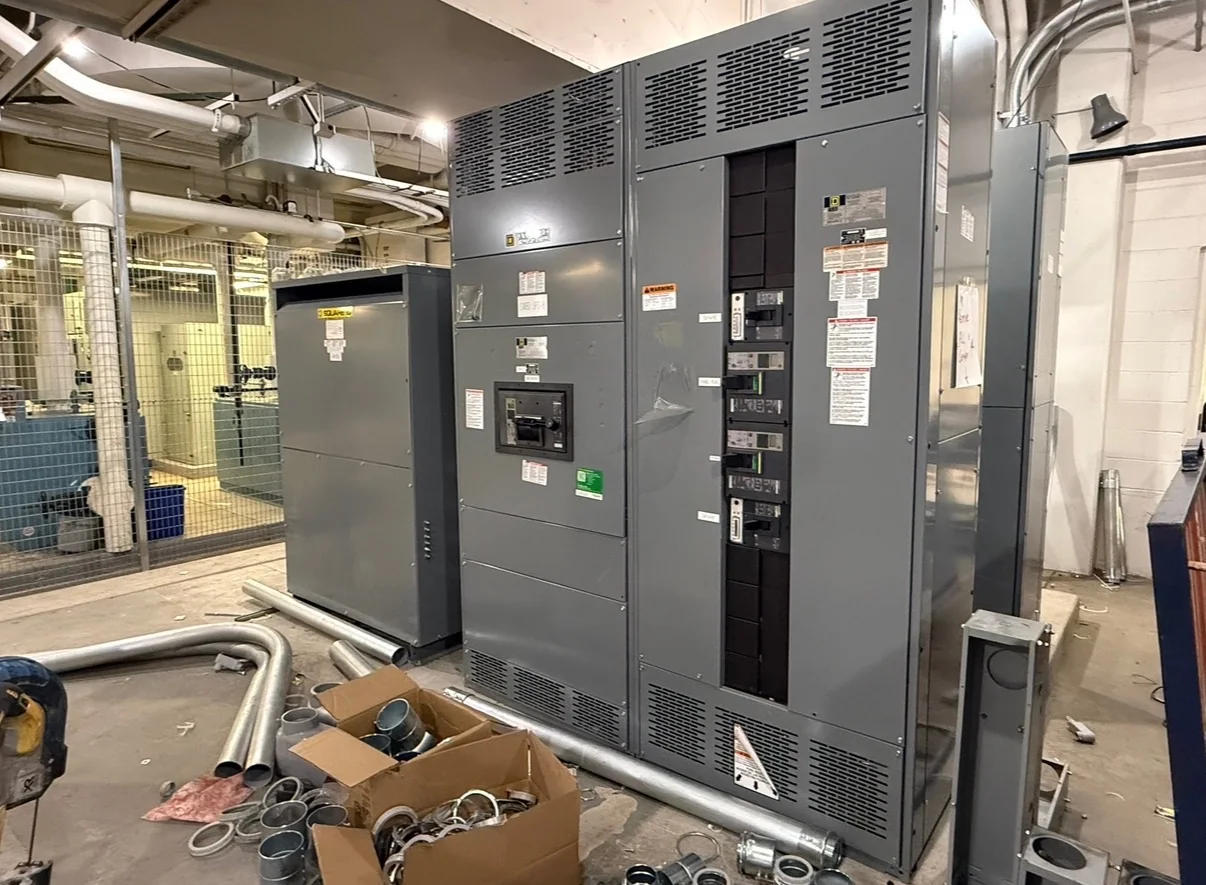
Define the Conroe Project Before Selecting Equipment
For a Conroe facility, start with the electrical distribution task rather than a product label. Record the service characteristics, available fault-current information, system voltage, phase, frequency, and the loads the new low-voltage switchgear must serve. Identify whether the work is a new installation, a capacity change, or a replacement tied to existing equipment. Those distinctions affect the one-line diagram, section arrangement, connections, and coordination with upstream and downstream devices. Include operating conditions such as continuous loads, motor starting, future circuits, and any required metering or control functions. Incomplete inputs can lead to avoidable design revisions or equipment that does not fit the intended application. A U.S. manufacturer can review the project basis with your engineering and procurement teams before a configuration is finalized.
Coordinate Ratings, Protection, and Connected Equipment
The requested voltage and current ratings are only part of the selection. The project team should also establish the available fault current at the installation point, the required interrupting and withstand capabilities, protective-device requirements, and coordination goals. Confirm which breakers, fuses, metering components, and control interfaces must work with the existing distribution system; equipment compatibility should be checked rather than inferred from appearance or brand alone. Where loads may expand, document the planned circuits and spare-space objectives so the design can address them without promising unverified future capacity. Low-voltage switchboard assemblies may be evaluated to UL 891 when the specific design and application qualify; that standard is not a blanket claim for every assembly or for medium- or high-voltage equipment. Verify applicable standards and evaluation requirements for the actual scope.


Plan the Replacement Around Shutdown and Field Verification
Replacement work often turns on details that are easy to miss in a preliminary equipment list. Gather existing nameplates, one-line diagrams, breaker information, cable or bus connection details, enclosure dimensions, and photographs where available. Field measurements should confirm the available footprint, access route, mounting conditions, and the position of incoming and outgoing conductors. Compare those findings with the proposed arrangement before release for manufacture. A replacement that fits electrically but conflicts with a doorway, cable bend space, or adjacent equipment can create expensive installation changes. Schedule the required outage and de-energized work with the facility’s qualified electrical personnel; do not treat energized work as a routine shortcut. If existing records are incomplete, flag the unknowns early and agree on how they will be resolved before final design approval.
Account for Conroe’s Site and Delivery Conditions
Conroe projects can involve industrial facilities, commercial buildings, and sites with different receiving and installation constraints. Before arranging delivery, confirm the ship-to location, receiving hours, unloading equipment, staging area, indoor storage conditions, and the route from the truck to the electrical room. Large assemblies may need a coordinated move that considers door clearances, turning space, floor conditions, and restrictions on cranes or forklifts. Texas heat, humidity, dust, and storm exposure can also make protected storage and prompt inspection important, especially if equipment cannot be installed immediately. These conditions are planning considerations, not assumptions about a particular site. Share access rules, lift limitations, and delivery contacts with the manufacturer early. Nationwide shipping is available, but delivery method, timing, packaging, and site coordination remain specific to the order and destination.
Review Drawings and Submittals Before Releasing the Order
A disciplined submittal review helps prevent mismatches between the design intent and the equipment being built. Check the equipment schedule and approved drawings against the one-line diagram, including section sequence, device functions, bus arrangement, metering, control wiring, cable entry, and connection orientation. Confirm enclosure dimensions and any project-specific labeling or documentation needs with the engineer of record and installation team. Record comments clearly and resolve open questions before authorizing production; late changes can affect both configuration and schedule. Procurement should also identify required documentation for receiving, inspection, installation, and maintenance, then verify what is included in the project scope. Do not assume a particular listing, test report, accessory, or drawing format without confirmation. The accepted submittal becomes a practical reference for checking the delivered assembly against the approved project requirements.
Discuss Build Timing, Scope, and Delivery Details
When requesting a quote, provide the project location, required equipment scope, target in-service date, current drawings, known site conditions, and any review or approval milestones. Ask the manufacturer to identify information still needed to confirm configuration, pricing, and schedule. Custom builds and short lead times may be available, but timing depends on the approved design, component availability, scope changes, and production requirements; no delivery date should be treated as assured until confirmed for the specific order. Clarify freight responsibilities, receiving arrangements, shipment documentation, and how damage or discrepancies should be reported. For a Conroe installation, align the expected delivery window with the outage plan, contractor availability, and receiving capacity. A clear written scope gives engineering, procurement, and facility teams a shared basis for evaluating the proposal and managing the next project decisions.