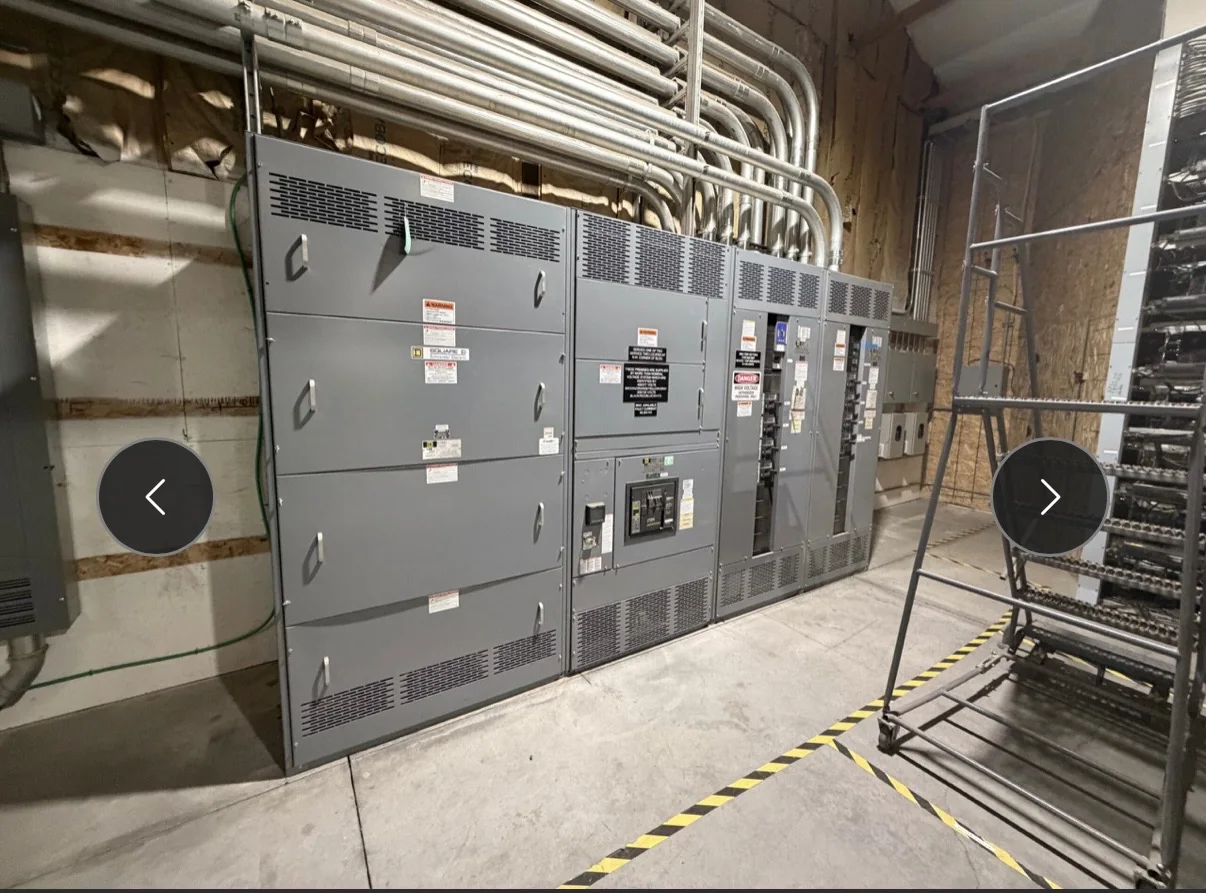
Define the Switchboard Around Deer Park’s Actual Loads
For a Deer Park facility, start with the load profile and operating plan—not a catalog frame size. Collect the one-line diagram, service voltage, available fault-current information, connected and demand loads, largest motor data, and planned additions. These inputs help the project team assess bus capacity, overcurrent protection, service configuration, and whether loads need separate sections or feeders. Process sites may have large motor loads, continuous operations, or critical utilities, but those conditions must be confirmed for the specific facility rather than assumed from its location. Ask the engineer of record and serving utility to resolve service and fault-current data before the manufacturer finalizes the design. A sound basis of design reduces late changes that can affect protection coordination, enclosure layout, cost, and delivery.
Confirm Ratings, Protection, and Applicable Standards
A low-voltage assembly’s voltage, continuous-current rating, interrupting capability, and protective-device selection must suit the application and the available system data. Confirm whether the project needs a service-entrance arrangement, main and feeder devices, metering, ground-fault protection, or provisions for future circuits; each choice affects space, wiring, and coordination. Request documentation showing the proposed configuration and device data so the consulting engineer can review it against the project specifications and protection study. UL 891 applies to appropriately evaluated low-voltage switchboard assemblies; it does not mean every assembly or every piece of medium- or high-voltage equipment carries a UL label. Identify required standards, labeling, and acceptance criteria in the procurement documents, then verify their applicability to the exact assembly being quoted.


Resolve Retrofit and Room Constraints Before Release
Replacement work often turns on dimensions that are easy to overlook: available wall length, ceiling height, access aisles, cable entry direction, housekeeping pads, and the path from the receiving area to the electrical room. In older Deer Park facilities, existing conduits or adjacent process equipment may limit where a new lineup can sit, while a larger service arrangement can change working clearances. Share measured room drawings, photographs, door and corridor dimensions, cable locations, and the existing equipment interface details before design approval. For a retrofit, identify what must remain in service and establish an outage plan with the facility’s electrical authority; all work requiring de-energization must be planned and performed under applicable safety procedures. Early fit checks prevent field modifications and help coordinate rigging, access, and shutdown windows.
Build a Procurement Package That Supports a Firm Review
A useful request for quotation gives the manufacturer enough information to identify exceptions instead of filling gaps with assumptions. Include the single-line and three-line diagrams if available, project specifications, load schedule, fault-current data, room and elevation drawings, cable termination requirements, and the preferred metering or communications scope. Call out enclosure conditions, paint or material requirements, spare capacity, labeling, and any owner or engineer submittal expectations. Mark unresolved items clearly and name who will provide each answer. This matters because a missing interface detail can affect the bus arrangement, device selection, or enclosure dimensions, leading to a revised proposal or schedule. Ask for a scope summary and a list of clarifications with the quote, then route them to the engineer and procurement team before issuing a purchase order.
Discuss Schedule Using Design and Approval Milestones
Short lead times may be available, but the achievable schedule depends on the approved design, component selection, project scope, and current availability. For planning, separate the expected durations for submittal preparation, engineer review, comment resolution, production, and shipment rather than treating delivery as one guaranteed date. Identify the decision deadline for each milestone and account for owner review cycles, utility coordination, and any outage or construction window. If the project is on a compressed schedule, ask which configuration choices are driving the timeline and whether an alternate arrangement meets the engineering requirements. Do not release fabrication on assumptions that remain unresolved. A written schedule basis helps the facility align electricians, contractors, receiving personnel, and operations around realistic dates while preserving time for inspection and installation planning.
Coordinate Shipment and Site Readiness in Deer Park
Nationwide shipping can support delivery to a Deer Park jobsite, but the delivery plan needs the destination’s practical details. Confirm the receiving address, site access rules, truck restrictions, unloading equipment, appointment requirements, and whether the lineup can be received as shipped or must be handled in sections. Industrial properties may require gate coordination, safety orientation, escort arrangements, or delivery windows that differ from standard freight access; verify those requirements with the site contact before dispatch. Match the shipping configuration to the route from the unloading point to the final room, and identify who is responsible for rigging and storage. Keep the approved drawings and shipment documentation available at receipt so personnel can check equipment identification and condition. Clear logistics reduce avoidable handling delays and help protect the assembly before installation.