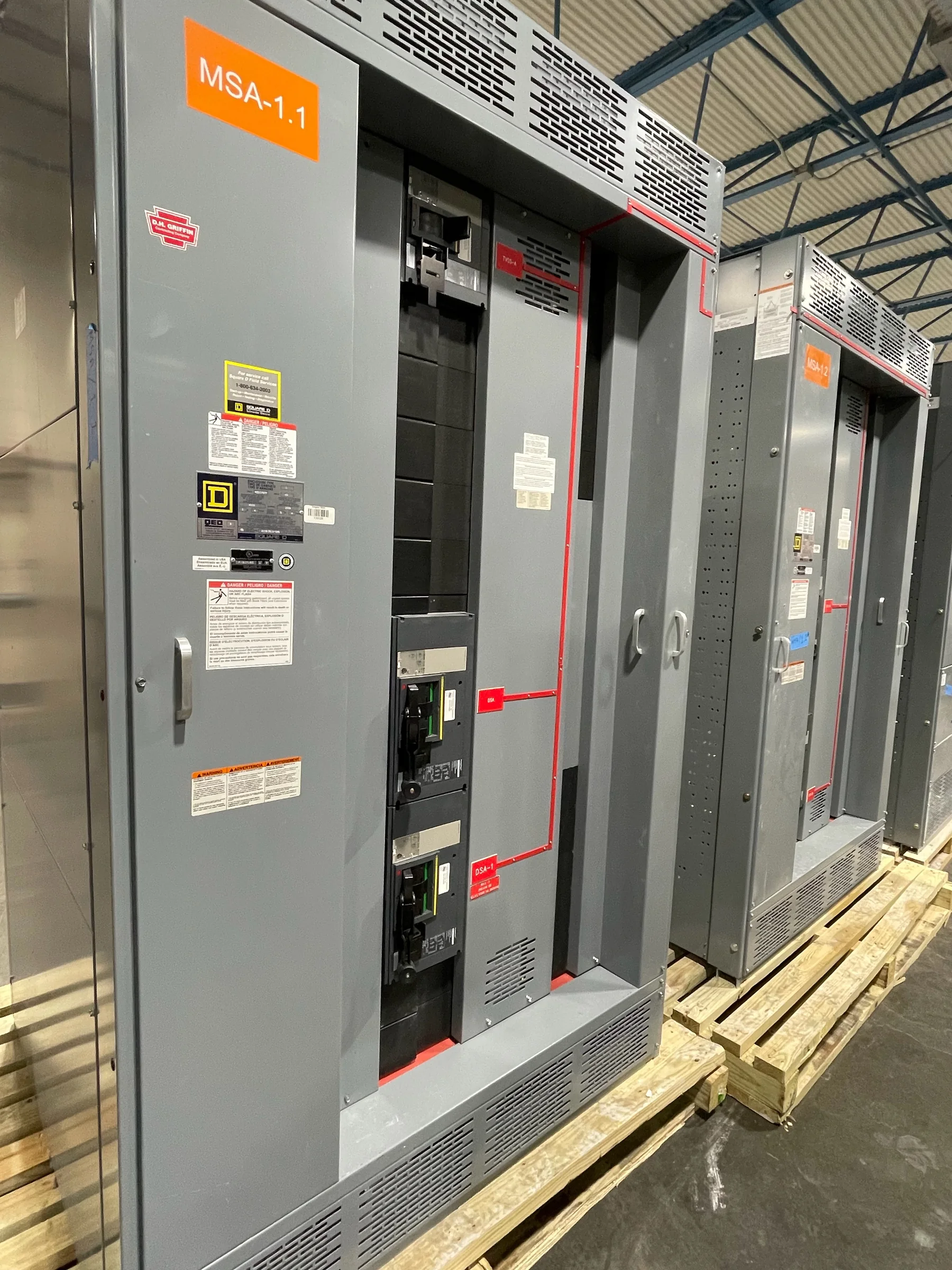
Define the Galveston Load and Distribution Scope
Start the specification with what the switchgear must serve, not with a catalog description. Identify incoming source details, system voltage, phase and wire configuration, available fault current, load types, and the distribution points the assembly needs to supply. For Galveston facilities, distinguish steady process loads from intermittent pumps, HVAC, refrigeration, or other equipment exposed to changing operating conditions; their starting and operating characteristics can affect protective-device selection and coordination. Include present demand and planned expansion, but have the design team establish applicable ratings from verified system data rather than assumptions. A U.S. manufacturer can build new low-voltage equipment around project requirements, with American components available as an option. Confirm component preferences, required standards, and any customer specifications during quotation and engineering review.
Resolve Protection, Coordination, and Equipment Interfaces
Protective-device choices depend on the upstream source, downstream loads, and the facility’s coordination objectives. Provide a current one-line diagram, fault-current information, and existing protective-device data where available; incomplete or outdated inputs can lead to selection changes during engineering. Ask the engineer of record to define required trip functions, settings, selective-coordination goals, and arc-flash study interfaces. Also identify any tie breakers, alternate sources, generator connections, or transfer equipment that affect the lineup. Verify how the new assembly is expected to connect to existing transformers, bus duct, cables, and grounding. Physical or electrical compatibility should not be inferred from a similar-looking installation. Confirm interfaces against drawings and field conditions before release, and have qualified personnel perform installation and testing under the approved project requirements.


Fit the Lineup to the Facility and Environment
A switchgear lineup must fit its room as well as its electrical design. Before requesting a quote, document available floor space, doorway and corridor dimensions, ceiling height, access routes, equipment working clearances, and the intended cable-entry direction. Galveston’s coastal setting makes environmental review especially useful: ask the project team to assess exposure to salt-laden air, moisture, flooding, and the building’s ventilation conditions. Those site conditions may affect enclosure, finish, placement, and maintenance considerations, but the correct solution depends on the actual installation environment and applicable requirements. Share room plans and photographs when available, and note whether equipment will be indoors or exposed to weather. Confirm handling limits and delivery access early; a lineup that cannot reach the electrical room can disrupt an otherwise complete installation plan.
Make the Quotation Package Specific and Comparable
A useful quotation request lets procurement compare the same scope across suppliers. Include the one-line diagram, equipment schedule, desired section arrangement, incoming and outgoing connection details, metering needs, control requirements, and any specified component preferences. State whether the project is new construction, a replacement, or part of a broader retrofit, and identify who is responsible for field verification, engineering, installation, and commissioning. For replacement work, provide existing nameplate information and dimensions, while treating final compatibility as subject to engineering review. Call out required submittals, drawing formats, project milestones, and any owner or consultant standards. Clarify whether low-voltage switchboard requirements, including UL 891 evaluation, apply to the specific assembly; that standard is not a blanket certification for all switchgear. Resolve open items before approval drawings.
Plan Schedule, Reviews, and Delivery to Galveston
Discuss schedule at the scope-review stage rather than relying on a generic lead-time assumption. The manufacturer offers custom builds and short lead times, but timing depends on the approved design, component availability, engineering changes, and production requirements; confirm the project-specific schedule in writing. Establish who will review drawings and how quickly comments are expected, since late approval can affect manufacturing and site readiness. Coordinate the requested ship window with construction milestones, receiving hours, unloading equipment, storage conditions, and the route into the building. For Galveston-area deliveries, confirm the exact receiving location and any access, weather, or site restrictions with the project team; do not assume a carrier can reach the final installation point. Nationwide shipping is offered, with delivery arrangements and responsibilities agreed for each order.
Prepare for Installation, Acceptance, and Future Service
Before equipment ships, align the approved drawings with the electrical contractor’s installation plan and the facility’s outage strategy. Verify foundation or housekeeping-pad details, anchoring, conduit or bus connections, grounding provisions, ventilation, and required working clearances against the project documents. Replacement projects need particular attention to outage duration and temporary power planning; the facility team should establish these constraints before work is scheduled. All installation, inspection, testing, and maintenance must follow approved procedures and be performed by qualified personnel, with equipment de-energized when required by those procedures. Request the agreed submittals, final drawings, operating information, and test documentation as part of the purchase scope. Record installed settings and any approved field changes so maintenance teams can support the system and future modifications without relying on assumptions.