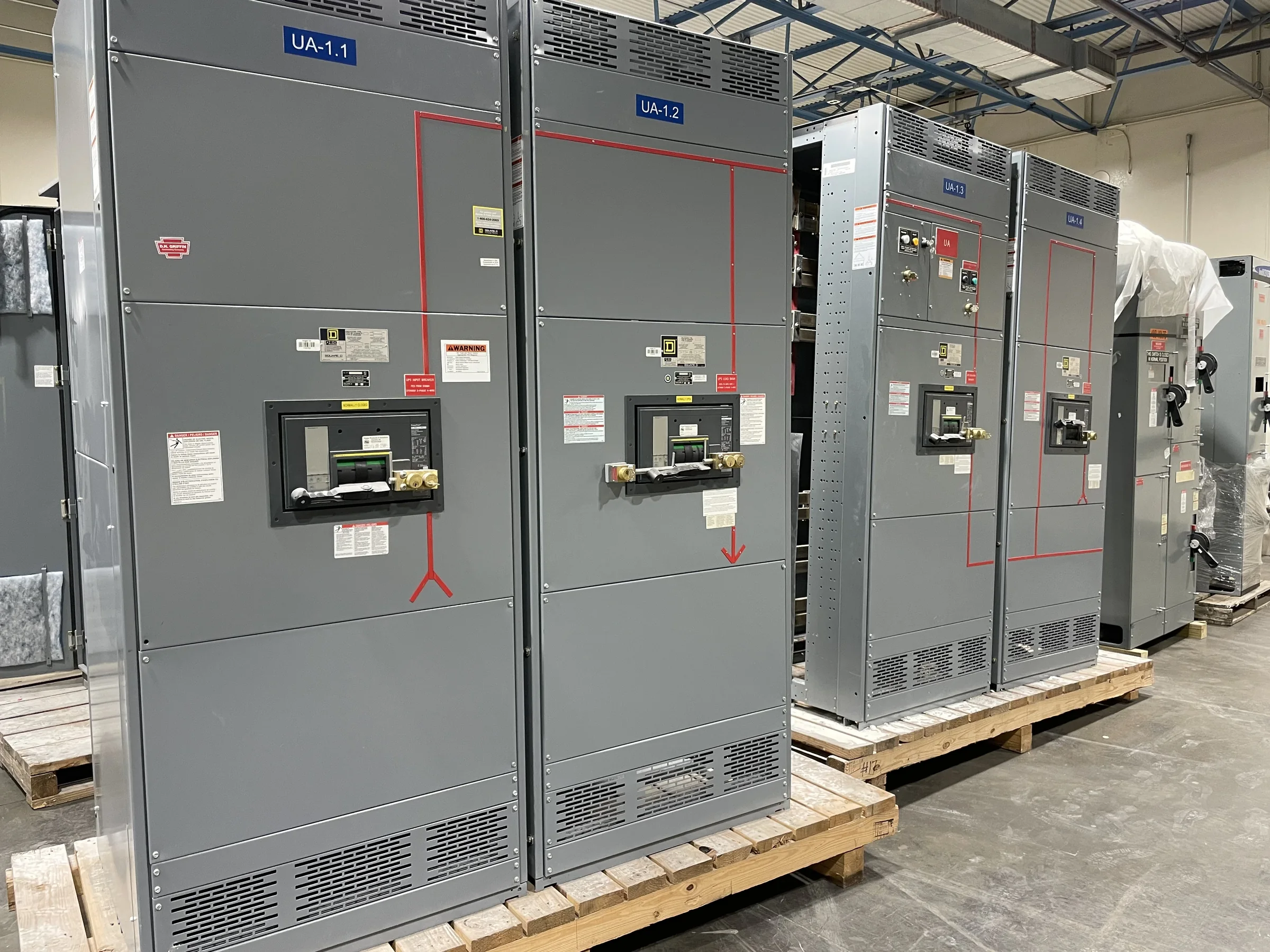
Define the Distribution Scope Before Requesting a Quote
A low-voltage switchgear request for a Katy facility should start with the electrical scope, not a preferred catalog lineup. Identify the source transformer or upstream equipment, the loads served, the available fault-current information, and whether the project replaces an existing assembly or adds capacity. Clarify operating voltage, phases, frequency, main and feeder requirements, metering, protective devices, and any need for future spaces; final ratings and configurations depend on engineering review. These details affect the assembly’s arrangement, coordination with upstream protection, and fit within the electrical room. For a replacement, include existing nameplate data and clear photographs where practical. A defined scope lets the manufacturer identify missing inputs early, reducing quote revisions and helping the team compare proposals on equivalent requirements.
Coordinate Protection, Fault Duty, and System Interfaces
Protection choices must match the actual system and the equipment connected downstream. Provide available fault-current calculations or the information needed for the engineer to establish them, along with the upstream protective-device characteristics and downstream feeder data. The design team can then review interrupting and withstand requirements, select suitable protective functions, and assess coordination goals. Treat selective coordination, arc-energy reduction, ground-fault protection, and metering as explicit project questions rather than assumed features; their applicability depends on the system, loads, governing requirements, and equipment configuration. Document how the proposed lineup interfaces with transformers, generators, transfer equipment, or paralleling systems, if present. Resolving these points before release matters because a mismatch can affect protection performance, equipment suitability, and commissioning—not merely the switchgear’s physical dimensions.


Verify Room Fit, Access, and Environmental Conditions
A sound electrical design can still become difficult to install if the room and route are not checked. For a Katy-area project, share room dimensions, door and corridor widths, floor elevations, available working space, cable-entry direction, and any overhead or structural obstructions. Include the intended lineup location and identify whether equipment must pass through existing openings or around active operations. Assess indoor conditions such as ambient temperature, ventilation, dust, moisture exposure, and nearby process hazards; enclosure and cooling choices are project-specific. Confirm floor loading and anchorage requirements with the responsible design professionals. These checks influence section arrangement, access for cable terminations, maintenance clearance, and delivery planning. Early field verification can prevent a lineup that meets the electrical one-line but cannot be positioned, connected, or serviced as intended.
Plan Lead Time Around Submittals and Decisions
Project timing depends on more than fabrication duration. A useful schedule accounts for completed technical inputs, proposal review, approved drawings, release authorization, component selection, production, inspection, freight, and installation readiness. Custom-built equipment and American components may be available options, but configuration, component availability, and delivery timing must be confirmed for the specific order; avoid treating an early estimate as a guaranteed date. Assign reviewers for the one-line, elevations, device schedules, and connection details, and set a realistic turnaround for consolidated comments. Late changes to feeder quantities, bus arrangement, metering, or cable entry can affect both design approval and the production plan. For a Katy facility, align the equipment schedule with contractor mobilization, shutdown windows, and other trades so delivery does not become a storage or sequencing problem.
Prepare Submittals and Acceptance Documentation
A complete procurement package helps engineering, construction, and operations work from the same basis. Typical review items may include the approved one-line, equipment elevations, device and accessory schedules, connection information, wiring diagrams, and identified deviations from the specification, as applicable to the assembly. Request the documentation required by the project and confirm its format and review process before order release. If the scope is a low-voltage switchboard assembly evaluated to UL 891, verify the exact assembly and labeling requirements with the manufacturer and project team; UL 891 is not a blanket certification for medium- or high-voltage equipment. Keep approved documents, final settings information, maintenance instructions, and test records together for commissioning and future service. Clear records help installers resolve questions without relying on assumptions.
Coordinate Freight, Receiving, and Installation Readiness
Nationwide shipping can support a Katy project, but the receiving plan still needs local coordination. Confirm the delivery address, receiving hours, unloading equipment, site contact, truck access, laydown area, and whether the route from the drop point to the electrical room has adequate clearance. Establish who inspects the shipment for visible damage and how discrepancies are documented before equipment is moved or installed. Protect the assembly from weather and jobsite debris according to the handling and storage instructions supplied for the ordered equipment. Before delivery, verify that the room is ready, foundations or housekeeping pads are complete as specified, cable pathways are available, and installation responsibilities are assigned. Energization and connection work require qualified personnel and the project’s safety procedures; de-energized work is not optional. Confirm delivery details and availability for the specific order.