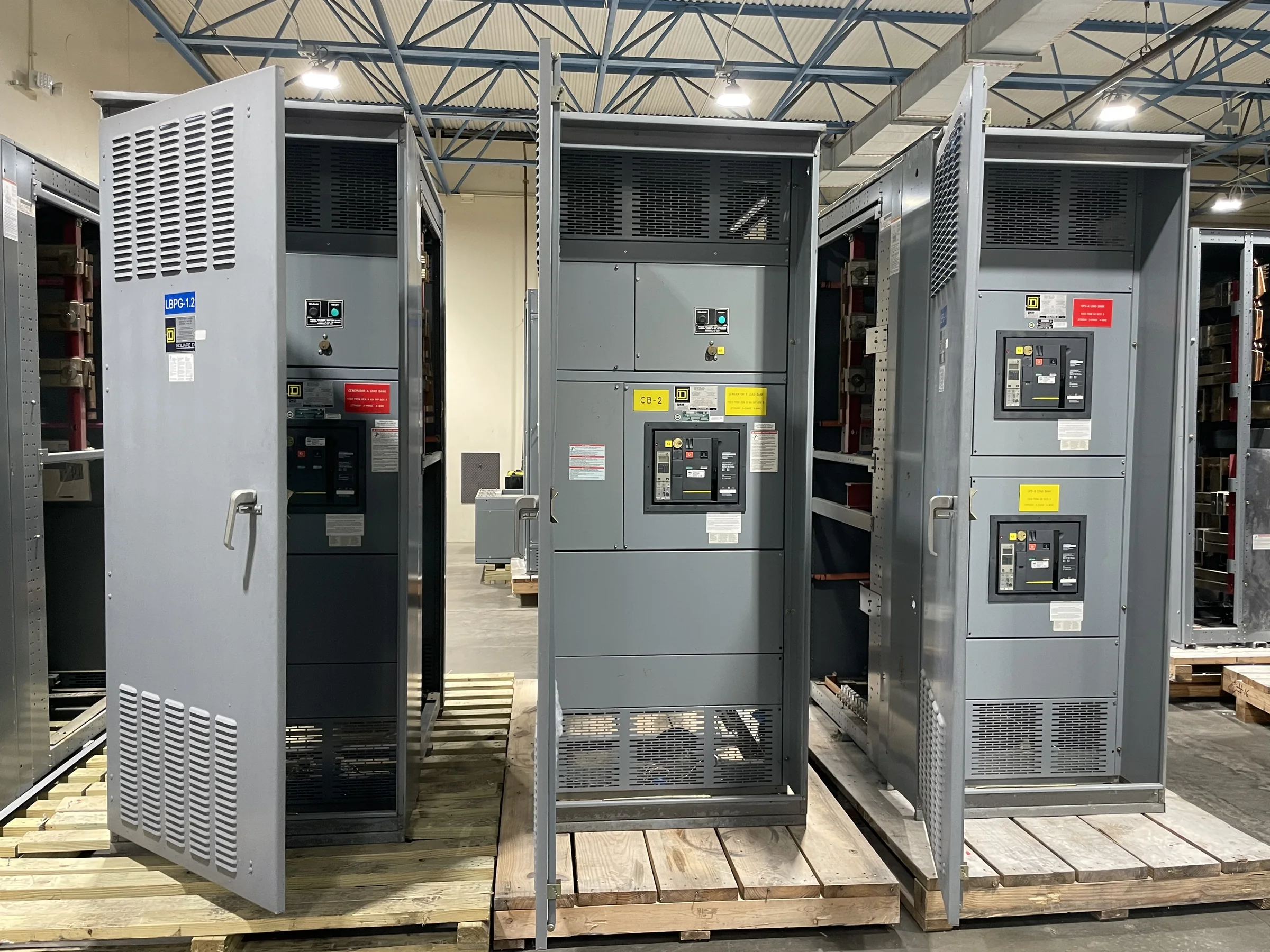
Define the La Porte Distribution Scope
For a La Porte facility, begin with the load served and the role the new switchgear must play: service entrance, a main distribution point, or a dedicated process lineup. Document present demand and planned additions, including motors, HVAC, pumps, chargers, and other major loads. This matters because an assembly sized only for today’s operating profile may constrain later expansion, while an oversized or poorly coordinated design can add unnecessary cost and complexity. Identify the available source, system voltage, phase, frequency, grounding arrangement, and expected fault-current information, then have the project engineer verify them against utility and site records. Share the one-line diagram, load schedule, and project specifications with the manufacturer before requesting a quote so assumptions and exclusions can be surfaced early.
Resolve Ratings and Protection Before Quotation
A useful quotation depends on more than a nominal voltage and ampere rating. Specify the required bus and breaker ratings, available fault current, enclosure conditions, incoming and outgoing cable arrangements, and any metering or communications functions. Protection and coordination requirements deserve particular attention where process equipment, parallel sources, generators, or tie breakers are involved: device selection affects selective operation and the consequences of a fault. Provide the latest one-line and coordination study, or identify who is responsible for completing or updating them. The manufacturer can build to project requirements, but final ratings, device compatibility, and applicable standards must be confirmed for the specific design. If the project calls for a low-voltage switchboard assembly evaluated to UL 891, state that explicitly; it does not establish a blanket listing for other equipment.


Check the Existing Room and Replacement Path
When replacing equipment, field conditions can be more restrictive than the original drawings suggest. Measure the access route as well as the switchgear room: door and corridor clearances, ceiling height, floor openings, turns, and available rigging space may determine whether a lineup can be delivered in sections or requires another arrangement. Record existing lineup dimensions, conductor entry points, bus connections, grounding details, and the location of adjacent equipment. These checks matter because a small mismatch can force unplanned structural or cable work and extend a shutdown window. For retrofit or phased replacement, identify what must remain in service, what will be removed, and the intended outage sequence. Treat dimensions and interfaces as subject to field verification before release for manufacture.
Coordinate La Porte Delivery and Site Readiness
La Porte’s industrial setting makes delivery planning part of the equipment specification, not a final-mile afterthought. Confirm the receiving address and site contact, truck access, gate procedures, delivery-hour restrictions, unloading method, and the surface or dock that will support the load. If the facility is within a controlled industrial complex, ask the site team about carrier registration, safety orientation, escort rules, and any limits on vehicle size or staging. Those details matter because a carrier may reach the area but still be unable to access the exact receiving point at the planned time. Share the delivery sequence and any site-specific constraints with the manufacturer early. Nationwide shipping is offered, but routing, handling, appointment availability, and delivery timing are project-specific and should be confirmed.
Review Drawings, Options, and Commercial Assumptions
Before approving a build, review the equipment submittal against the project’s one-line diagram, specifications, and actual installation plan. Check lineup arrangement, compartment and breaker designations, bus details, cable access, metering, control wiring, labels, and specified accessories. Assign a qualified reviewer to resolve discrepancies rather than relying on a note such as “match existing,” which may conceal differences in connections or protection. Procurement teams should also compare the quoted scope, exclusions, required customer-furnished information, drawing-review responsibilities, and stated schedule assumptions. This review matters because changes after approval can affect engineering, cost, and delivery. The U.S. manufacturer offers custom builds and American components; confirm component choices and availability for the specific project instead of assuming every requested part or configuration is included.
Plan Commissioning, Expansion, and Ongoing Records
A well-defined handoff helps the new lineup serve the facility beyond installation day. Establish who will manage installation, inspection, protection settings, testing, and commissioning, and ensure those responsibilities align with the project specifications and applicable requirements. Before energization, qualified personnel must complete the required installation checks and follow the approved safety procedures; de-energized work is not optional. Request and retain the approved drawings, final device and component schedules, wiring information, and applicable manufacturer documentation with the facility’s electrical records. These documents matter during troubleshooting, maintenance, and future modifications, especially if the one-line changes as production expands. For La Porte sites with planned process additions, identify likely future feeders or space needs during design, while treating future capacity, compatibility, and expansion options as items requiring project-specific engineering confirmation.