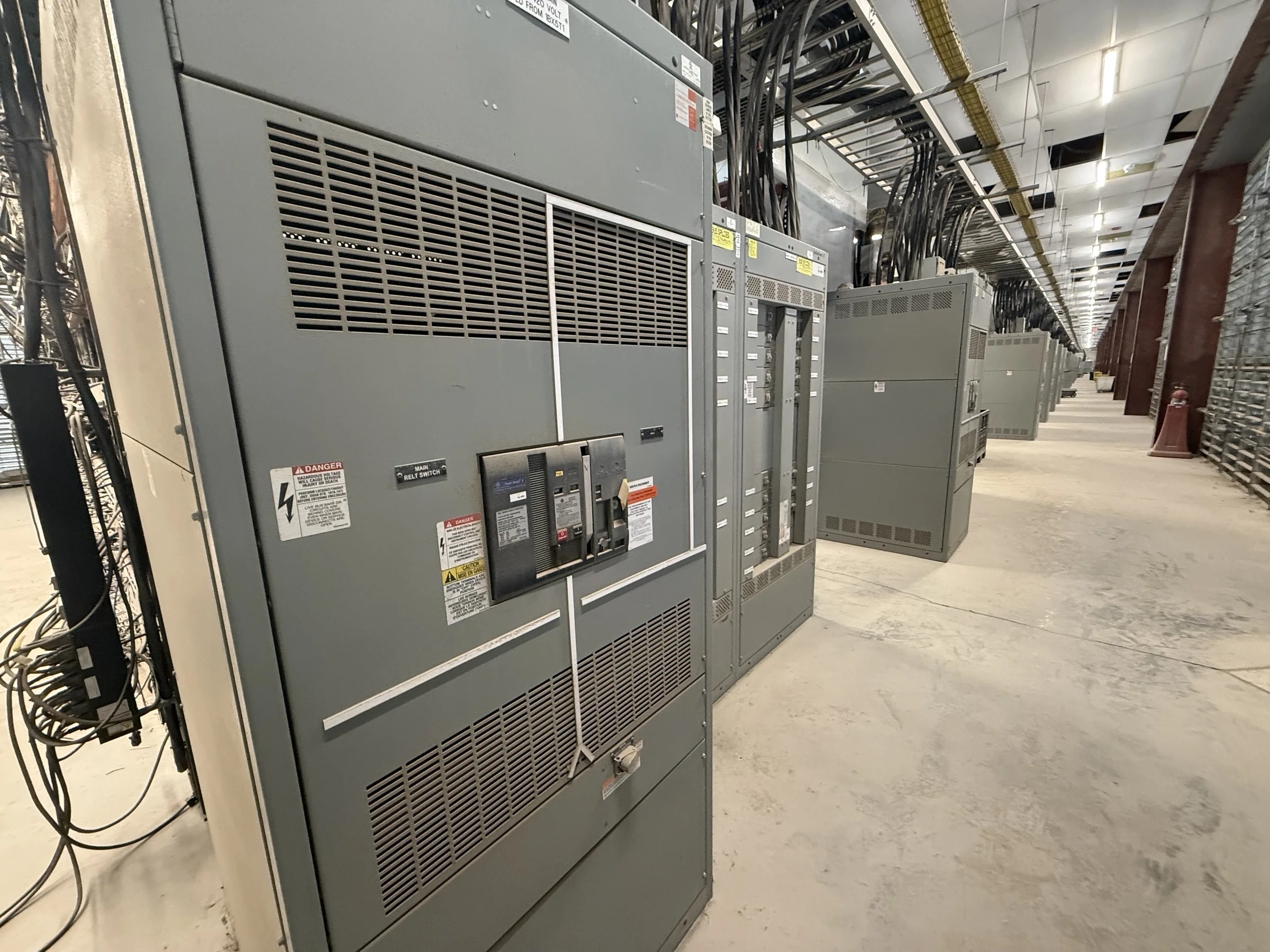
Define the Distribution Role Before Selecting Equipment
For a League City facility, begin by documenting what the switchgear must distribute and control—not by choosing a lineup from a catalog description. Identify the source arrangement, service voltage, system frequency, available fault current, load types, and the way the equipment will connect to upstream and downstream devices. A low-voltage switchgear assembly may serve a plant expansion, a building service, or a dedicated process area, but those applications can demand different bus arrangements, protective devices, metering, and future provisions. Ask the engineer of record and utility or service provider to confirm the governing design inputs. Early agreement matters because a change to fault-current assumptions or feeder layout can affect equipment selection, coordination studies, drawings, and the space reserved for installation.
Build a Specification That Supports a Comparable Quote
A useful request for quotation gives manufacturers enough detail to price the same scope. Include one-line diagrams, load schedules, preliminary physical layouts, electrical ratings, enclosure and access requirements, and a device schedule where available. Identify required communications, metering points, control power, and any interface with generators, transfer equipment, or building controls. Call out the project’s applicable codes and standards, but have the design team determine which provisions govern the installation. UL 891 applies to appropriately evaluated low-voltage switchboard assemblies; it should not be treated as a blanket label for every equipment type or configuration. Clear documents reduce exclusions and late clarifications, while leaving project-specific ratings, construction, evaluation, and compliance subject to engineering review and the final approved submittal.


Resolve Site Conditions and Working Clearances Early
League City’s coastal setting makes it sensible to review the actual installation environment rather than assume an indoor electrical room is benign. The project team should identify whether equipment will face humidity, salt-bearing air, washdown, dust, temperature variation, or possible water exposure, then specify suitable location and enclosure requirements for engineering review. Confirm the room’s dimensions, floor loading, door openings, access route, and required working space against the proposed lineup. These details matter because a switchgear section that fits on a plan may still be impossible to move through a corridor or position with available handling equipment. Coordinate ventilation, cable entry, conduit routing, and maintenance access with civil, mechanical, and electrical drawings before the manufacturer finalizes the arrangement.
Coordinate Timing Around Submittals and Construction Milestones
Discuss timing with the manufacturer when the project schedule is still being developed, not after the electrical room is ready for equipment. A practical schedule accounts for design review, drawing approval, release of long-lead components, fabrication, inspection, shipping, and site readiness; the sequence and duration depend on the approved scope and current availability. Ask which decisions or customer approvals are needed to keep the order moving, and identify dates that cannot shift, such as a planned outage or commissioning window. For phased construction, clarify whether separate shipments or staged installation are required and whether the site can protect equipment awaiting placement. A stated lead time is not a project guarantee: confirm the applicable schedule, assumptions, and delivery terms in the quotation and order documents.
Plan Delivery for the Actual League City Site
Nationwide shipping can support projects in League City, but delivery planning should be tied to the receiving site rather than a city name alone. Confirm the delivery address, truck access, gate and appointment rules, unloading responsibility, available lifting equipment, and whether the route from the drop point to the electrical room has height, width, or floor-load limits. Ask how the shipment will be divided and what handling or storage precautions apply to the supplied configuration. These questions matter because a scheduled truck cannot compensate for a blocked access road, an unprepared pad, or a missing crane. Coordinate delivery with the general contractor and site contact, especially where construction traffic, weather exposure, or restricted receiving hours could affect safe unloading and protection.
Review Drawings, Interfaces, and Acceptance Requirements
Before fabrication release, check the approved submittal against the project’s current one-line diagram and installation plans. Verify section sequence, feeder destinations, device functions, metering and control interfaces, cable access, and reserved space for future work; mismatches discovered after delivery can delay installation and require costly redesign. Confirm what documents are included for the specific order, such as equipment drawings, bills of material, installation information, and applicable evaluation or test documentation. Establish who will review protection settings, coordination, grounding, and connections to other systems, since those responsibilities may sit with the engineer, contractor, or commissioning team. At turnover, require installation and acceptance activities to follow the approved project documents and applicable safety procedures, with equipment de-energized for work whenever required.