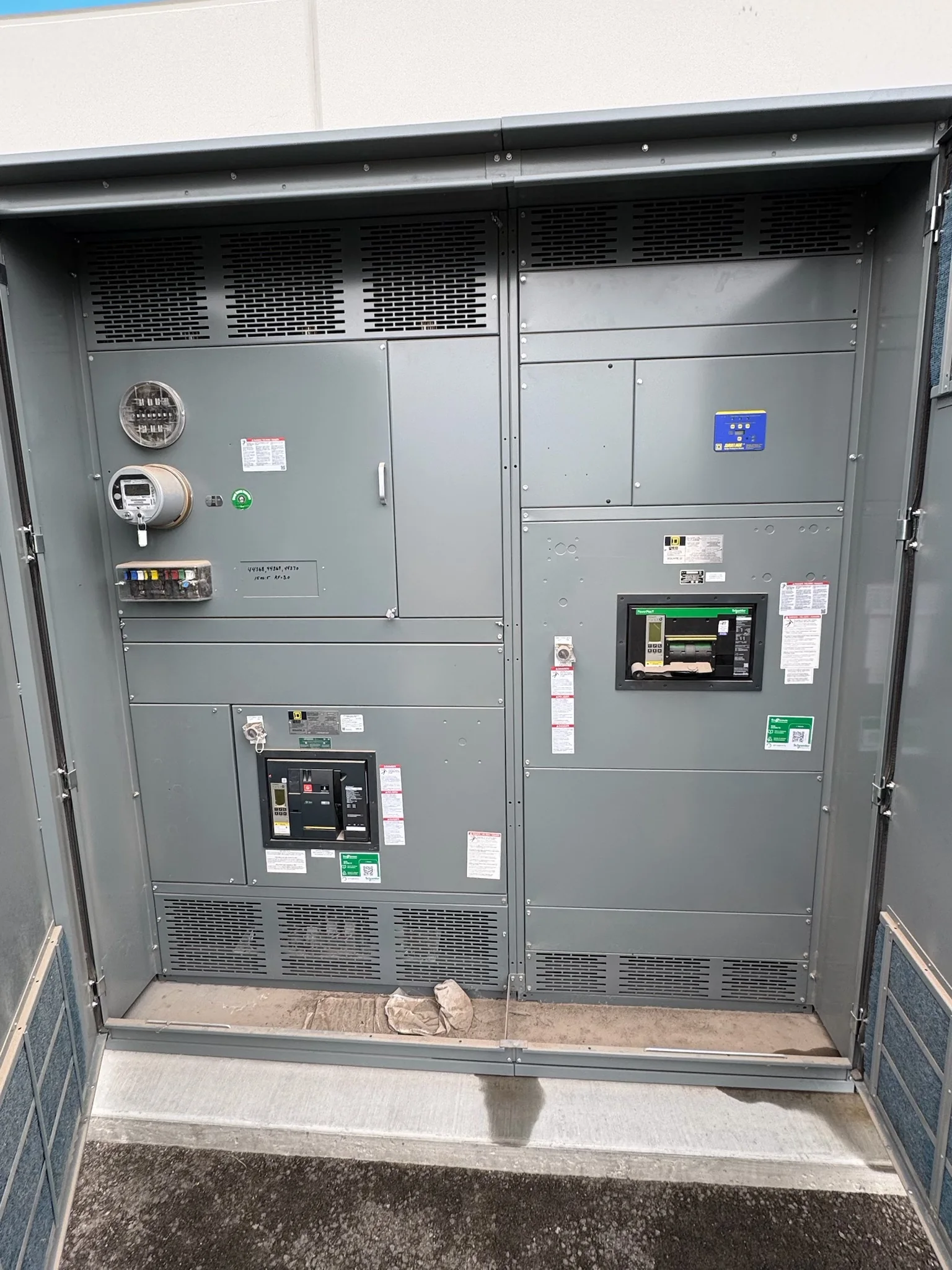
Define the Medium-Voltage Duty Before Selecting Equipment
Start with the system data, not a catalog description. Confirm nominal voltage, maximum system voltage, frequency, available fault current, grounding method, and the expected operating sequence. Identify whether the lineup will serve utility service, a plant distribution bus, large motors, transformers, or a combination of loads; each duty can affect the switching arrangement and protective-device requirements. Galveston-area facilities may have process loads and utility interfaces that make continuity and isolation priorities especially important, but the correct arrangement depends on the actual one-line diagram and operating plan. Provide existing equipment information when this is a replacement, including bus connections, cable entry, termination space, and control interfaces. These details let engineers evaluate fit and function before a build is quoted.
Specify Protection, Switching, and Control Together
A medium-voltage lineup is a coordinated system, so breaker selection should not be separated from protection and control requirements. Share relay functions, instrument-transformer data, trip and close circuit voltages, interlocks, metering points, communications needs, and any transfer or tie logic. Protection settings and coordination remain project-specific and should be reviewed against the available fault study, upstream devices, downstream equipment, and operating philosophy. For motor or transformer feeders, explain starting, inrush, and load characteristics so the design review can address the intended application rather than assume a generic feeder. If the equipment must interface with an existing control system, provide drawings and signal lists early. Clear boundaries between manufacturer-supplied components and field wiring reduce ambiguity during procurement, installation, commissioning, and future troubleshooting.


Plan for Galveston’s Coastal Site Conditions
Salt-laden air, wind-driven rain, humidity, and storm exposure can influence enclosure construction, finishes, ventilation, and installation details at a Galveston site. These conditions do not establish a particular enclosure rating or coating requirement; the owner and engineering team should define the actual environment, whether equipment is indoors or outdoors, and any exposure to washdown, corrosive process chemicals, flooding, or standing water. Confirm the room’s temperature range, ventilation capacity, drainage, access restrictions, and distance from the shoreline or other exposure sources as relevant to the project. Providing those facts helps evaluate the specified construction without over- or under-designing it. Include site requirements in the inquiry, since environmental assumptions left unresolved can affect both equipment scope and later acceptance.
Check Room Layout, Cable Access, and Replacement Fit
A replacement project can be constrained by the room as much as by the electrical design. Measure the available footprint, ceiling height, door openings, turning space, floor loading limits, and the route from the unloading point to the final position. Record cable trench locations, conduit entry directions, phase spacing needs, and existing bus elevations; a lineup that meets electrical requirements may still be difficult to install if these interfaces are missed. In older Galveston facilities, drawings may not reflect later building or conduit changes, so field verification is valuable before the order is finalized. Identify nearby piping, HVAC equipment, fire protection, and required working clearances for the engineering review. Share current photos and marked-up plans alongside the one-line diagram to expose conflicts early.
Discuss Build Timing and Delivery Before Release
A U.S. manufacturer can discuss custom construction, American components, short lead times, and nationwide shipping, but a specific schedule depends on the approved scope, component availability, design review, and production requirements. Request a project-specific schedule with the quotation and clarify when submittals, approvals, and any owner-furnished information are due. For delivery to Galveston, coordinate the receiving window, truck access, unloading equipment, laydown area, weather protection, and whether the route includes restricted gates or limited turning space. Large electrical assemblies may require a planned sequence for unloading and movement into the building. Confirm packaging, shipment configuration, delivery terms, and who is responsible for rigging before release. Early logistics planning helps avoid storage exposure, site congestion, and installation delays.
Assemble Submittals and Acceptance Requirements Early
A complete procurement package gives reviewers a basis to confirm that the proposed lineup matches the project. Provide the current one-line diagram, equipment schedule, specifications, site layout, cable and bus interfaces, control schematics, and required testing or documentation criteria. State applicable standards and owner preferences explicitly; UL 891 applies to appropriately evaluated low-voltage switchboard assemblies, not as a blanket certification for medium-voltage switchgear. Any required listing, evaluation, or test documentation must be confirmed for the specific equipment and scope. Establish who reviews drawings, approves deviations, supplies relay settings, and witnesses any specified tests. Before shipment and installation, align the approved submittals with the site’s outage plan and commissioning responsibilities. That record helps procurement, engineering, and facility teams resolve scope questions before they affect energization.