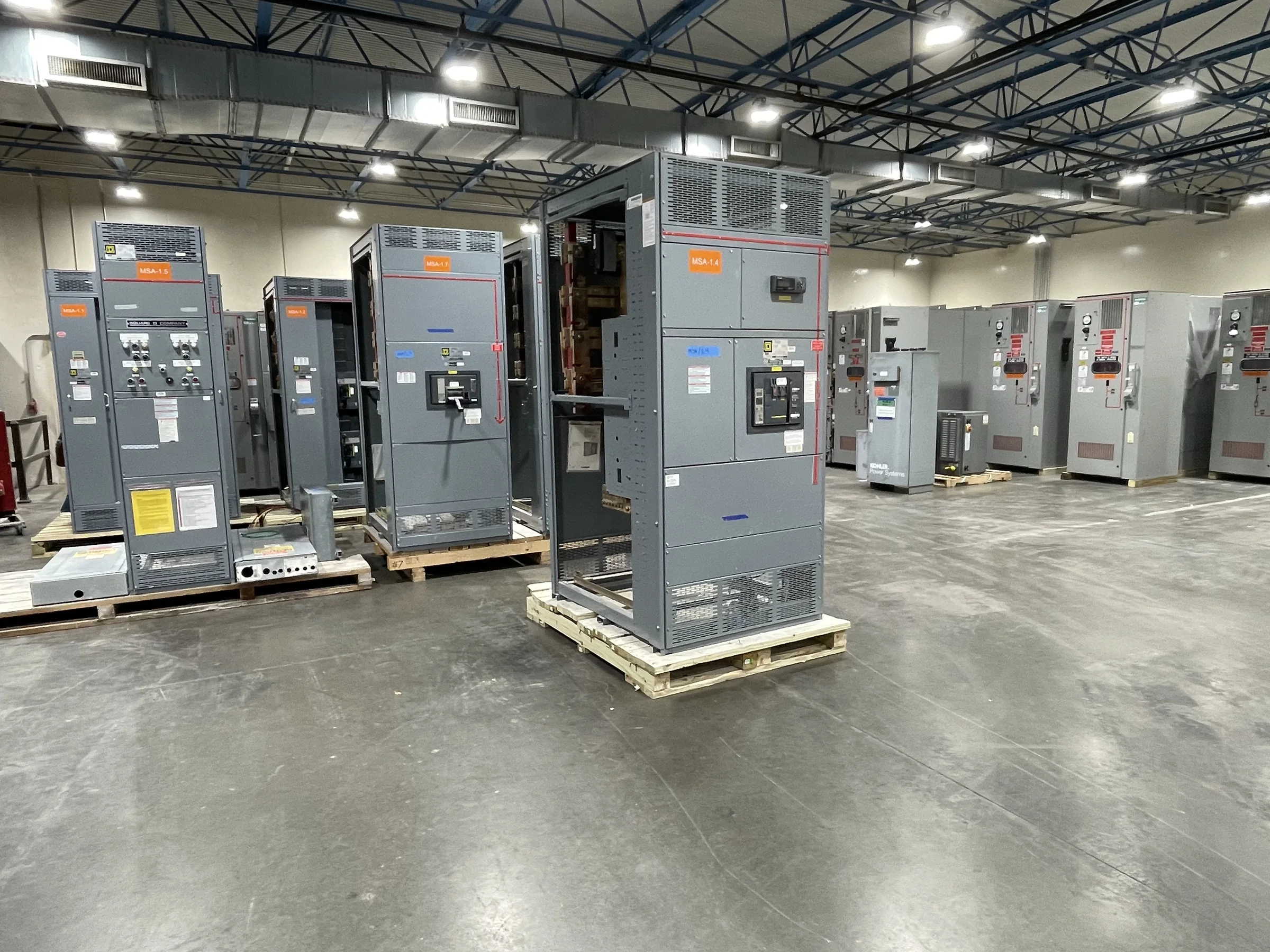
Define the Distribution Duty Before Selecting Equipment
For a Katy facility, start a medium-voltage switchgear specification with the electrical duty and operating goals, not a catalog lineup. Identify the system voltage, available fault current, grounding method, frequency, continuous load, and expected switching duties so an engineer can evaluate suitable equipment and protective devices. Clarify whether the lineup serves a utility service, a plant substation, a campus distribution loop, or a major process load; each arrangement creates different requirements for isolation, metering, protection, and future expansion. Ask the serving utility and project engineer to confirm interface requirements rather than assuming a standard configuration. These details matter because an incorrect duty assumption can affect equipment selection, coordination studies, and installation planning. Final ratings, construction, applicable standards, and availability must be confirmed for the specific project.
Choose a Configuration That Fits the Operating Plan
The right lineup depends on how the site needs to maintain service when equipment is inspected or a fault occurs. Discuss whether the project calls for metal-enclosed switchgear, a particular switching arrangement, feeder quantities, protective relays, instrument transformers, metering, and provisions for future circuits. For a Katy industrial or commercial site, process continuity may make selective isolation and a clear operating sequence especially important; a facility with simpler loads may prioritize a more compact arrangement. These are engineering decisions, not interchangeable options, and the approved one-line diagram should reflect them. Confirm who supplies the upstream and downstream connections, controls, and communication interfaces so responsibilities do not fall between contractors. The manufacturer can build to project requirements, but suitability, ratings, and compatibility need review against the actual system.


Coordinate Protection, Controls, and Project Documents
Protection settings and control interfaces should be resolved early enough to keep equipment drawings, studies, and field wiring aligned. Provide the latest one-line diagram, load information, utility fault-current data when available, grounding details, relay and metering requirements, control schematics, and any owner design criteria. The project team should identify who performs the short-circuit, protective-device coordination, and arc-flash studies, and who approves relay settings; these responsibilities should not be inferred from a switchgear quotation. Check requirements for remote indication, trip circuits, interlocks, communications, and alarm points against the facility’s controls architecture. A mismatch can delay checkout or leave an operator without needed status information. Review submittal drawings before release for construction, then track approved revisions so the delivered assembly and installation documents correspond to the design.
Plan for Katy Site Access and Installation Conditions
Delivery planning in Katy should account for the actual route from the public road to the electrical room, not just the freight destination. Confirm truck access, gate hours, turning space, overhead obstructions, unloading equipment, receiving hours, and whether a crane or other lifting method needs advance coordination. Establish the finished opening dimensions, clear working space, floor loading, housekeeping-pad details, conduit entry locations, and the route used to move sections indoors. Gulf Coast heat, humidity, heavy rain, and storm-season scheduling can affect outdoor staging and moisture protection, so agree on suitable storage and inspection arrangements with the project team. These checks matter because a lineup that fits its electrical design may still be difficult to unload or position. Shipping method, packaging, sequence, and delivery timing depend on the confirmed site plan and project schedule.
Match the Enclosure and Environment to the Installation
Indoor and outdoor installations create different enclosure, access, and maintenance questions. Identify the actual location, exposure to weather, dust, corrosive substances, washdown, temperature variation, and ventilation conditions instead of selecting an enclosure by habit. In the Houston-area climate, outdoor equipment may face heat, moisture, wind-driven rain, and periods of severe weather; indoor electrical rooms may still have cooling, condensation, or contamination concerns. Confirm the required enclosure construction, space-heating or ventilation approach if applicable, cable-entry direction, working clearances, and access for inspection. Also check whether the equipment room shares space with piping, drainage, or other systems that could affect serviceability or introduce water exposure. The design team must determine the applicable environmental requirements and verify the selected assembly against them; no generic enclosure choice guarantees suitability for every Katy site.
Clarify Scope, Timing, and Acceptance Requirements
A useful purchase specification makes boundaries visible: list the equipment included, project interfaces, required submittals, inspection or witness expectations, shipping destination, and documents needed at turnover. Discuss the target schedule with the manufacturer using the current drawing status, approval path, component requirements, and any owner-furnished devices; custom configurations and late revisions can affect the production plan. A U.S. manufacturer can discuss custom builds, American components, short lead times, and nationwide shipping, but the actual schedule, component availability, and delivery commitment must be confirmed for the specific order. For low-voltage switchboard assemblies, UL 891 may be relevant when applicable evaluation and project requirements support it; it is not a blanket certification for medium-voltage equipment. Before award, reconcile scope and acceptance criteria so engineering, procurement, installation, and commissioning teams share the same expectations.