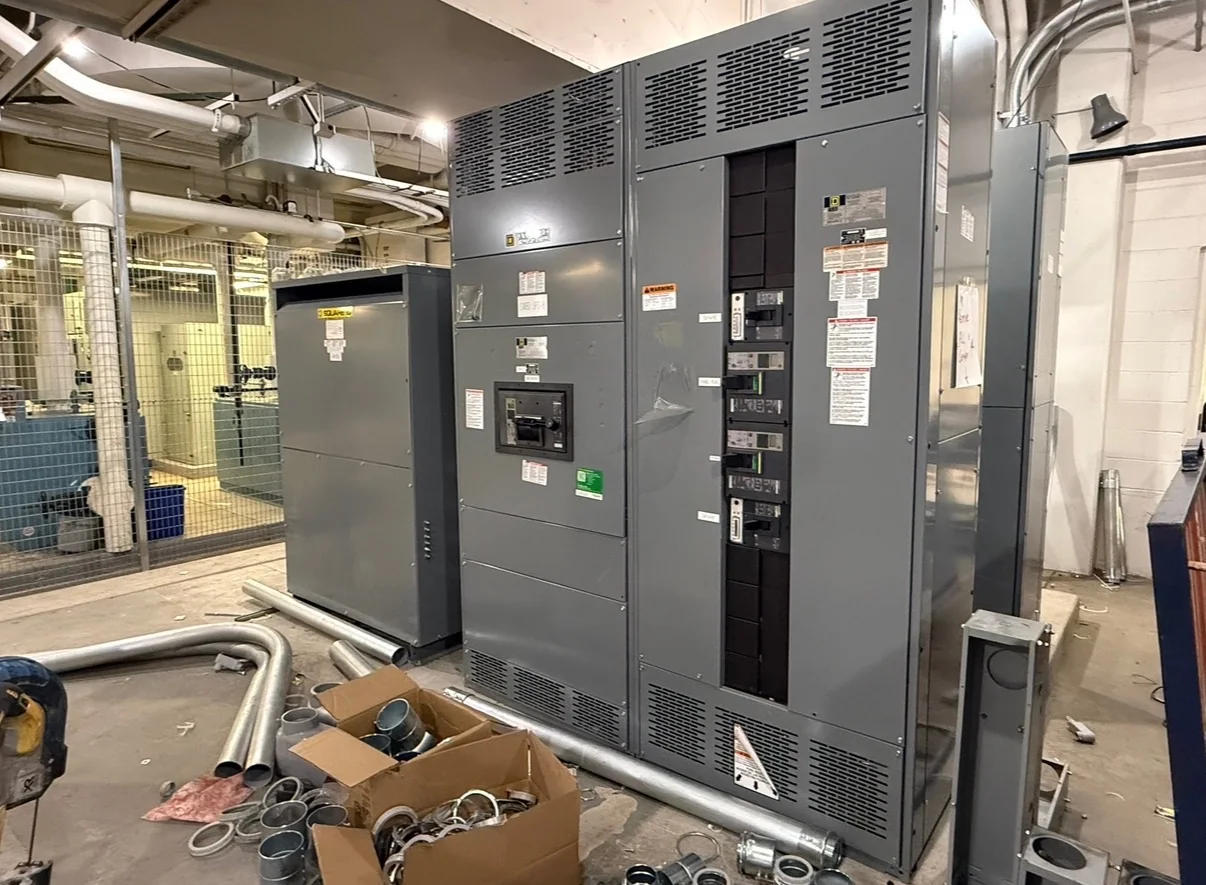
Define the Medium-Voltage Duty Before Comparing Equipment
For a Pearland project, begin with the electrical conditions the switchgear must serve—not a preferred lineup size or a catalog description. Confirm the system voltage, frequency, available fault current, grounding method, load profile, and the role of the equipment in the distribution network. Those inputs shape bus and interrupting requirements, protection coordination, metering, and whether the application calls for metal-clad or another arrangement. Document normal and alternate sources, transformer interfaces, and any planned expansion; an omitted tie or future feeder can affect layout and controls. The manufacturer can build new equipment around the project, but final ratings and construction depend on the approved design and applicable standards. Treat each requirement as a design input to verify, not an assumed feature.
Coordinate Protection, Controls, and Upstream Devices
Protection decisions deserve early review because a breaker that fits the lineup is not necessarily coordinated with the rest of the system. Gather the latest short-circuit and coordination studies, protective-device settings, transformer data, and one-line diagram for engineering review. Confirm whether relays must communicate with a plant control system, report alarms remotely, or support local operation, and identify the required protocols and points. In a Pearland facility with multiple sources or process-critical loads, transfer logic and selective tripping can affect both continuity and equipment protection. State who supplies instrument transformers, relays, control power, wiring, and programming, then define test documentation and interface responsibilities. Existing devices and settings must be checked for compatibility; neither interchangeability nor protection performance should be presumed from nominal voltage alone.


Resolve the Site Layout and Environmental Conditions
Physical conditions can constrain a medium-voltage lineup as much as the electrical design. Provide room plans, elevations, access-door dimensions, equipment clearances, cable entry direction, trench or duct-bank locations, and the route from the unloading point to the electrical room. In Pearland, site-specific exposure to heat, humidity, rain, and wind-driven moisture may influence enclosure selection, ventilation, corrosion protection, and installation planning; confirm actual indoor or outdoor conditions rather than relying on the city name. Check slab capacity, anchorage, working space, and whether the lineup can be moved through every turn and doorway. Cable bend space and termination access matter after installation, when maintenance is required. Resolve these constraints before releasing drawings so a workable arrangement does not become a field modification.
Build a Complete Submittal and Review Package
A clear purchasing package reduces ambiguity between the requested design and the equipment ultimately approved for construction. Include the one-line diagram, equipment schedule, load and feeder list, fault-duty basis, control narrative, communications requirements, site layout, and any project specifications or approved deviations. Ask for drawings that show lineup dimensions, sections, bus arrangement, cable spaces, terminal details, lifting provisions, and control schematics as applicable to the proposed design. Identify the responsible reviewer and the required review sequence; changes to feeder quantities, cable entry, or protection can affect both drawings and fabrication. For a Houston-area project, coordinate the equipment package with the electrical contractor, engineer of record, utility interface, and commissioning team where applicable. Review and approve the submittal before manufacture, and record open questions instead of treating silence as acceptance.
Plan Schedule Around Decisions, Not Assumptions
A manufacturer’s short-lead-time offering is useful only when the project scope and approval path support it; no delivery date should be treated as assured before requirements and availability are confirmed. For Pearland procurement, identify the needed-on-site date, specification release date, drawing review window, outage constraints, and dependencies such as foundations, cable procurement, and utility coordination. Ask which design choices or components affect the schedule, and distinguish quoted milestones from dates contingent on approvals or changes. Early decisions about breaker quantities, metering, relays, communications, and enclosure details can prevent avoidable redesign. If the project is phased, specify which sections are required for each phase and how future extensions will be accommodated. Keep a written change log and clarify how revisions affect pricing and delivery before authorizing them.
Coordinate Delivery, Installation, and Acceptance
Delivery planning should connect the factory configuration to real site access and installation readiness. Share the Pearland delivery address and receiving hours, truck and crane restrictions, unloading responsibility, laydown space, weather exposure, and the route to the final room; confirm shipping arrangement and packaging expectations in the quote. Before shipment, verify that the foundation, housekeeping pads, anchors, cable pathways, and room conditions match approved drawings. The contractor should follow the manufacturer’s installation instructions and project safety procedures, with all required electrical work performed de-energized under qualified supervision and applicable lockout/tagout practices. Agree on inspection records, equipment identification, available test reports, commissioning scope, and responsibility for field connections before delivery. Energization should wait until installation checks, protection settings, and required acceptance activities are complete and authorized.