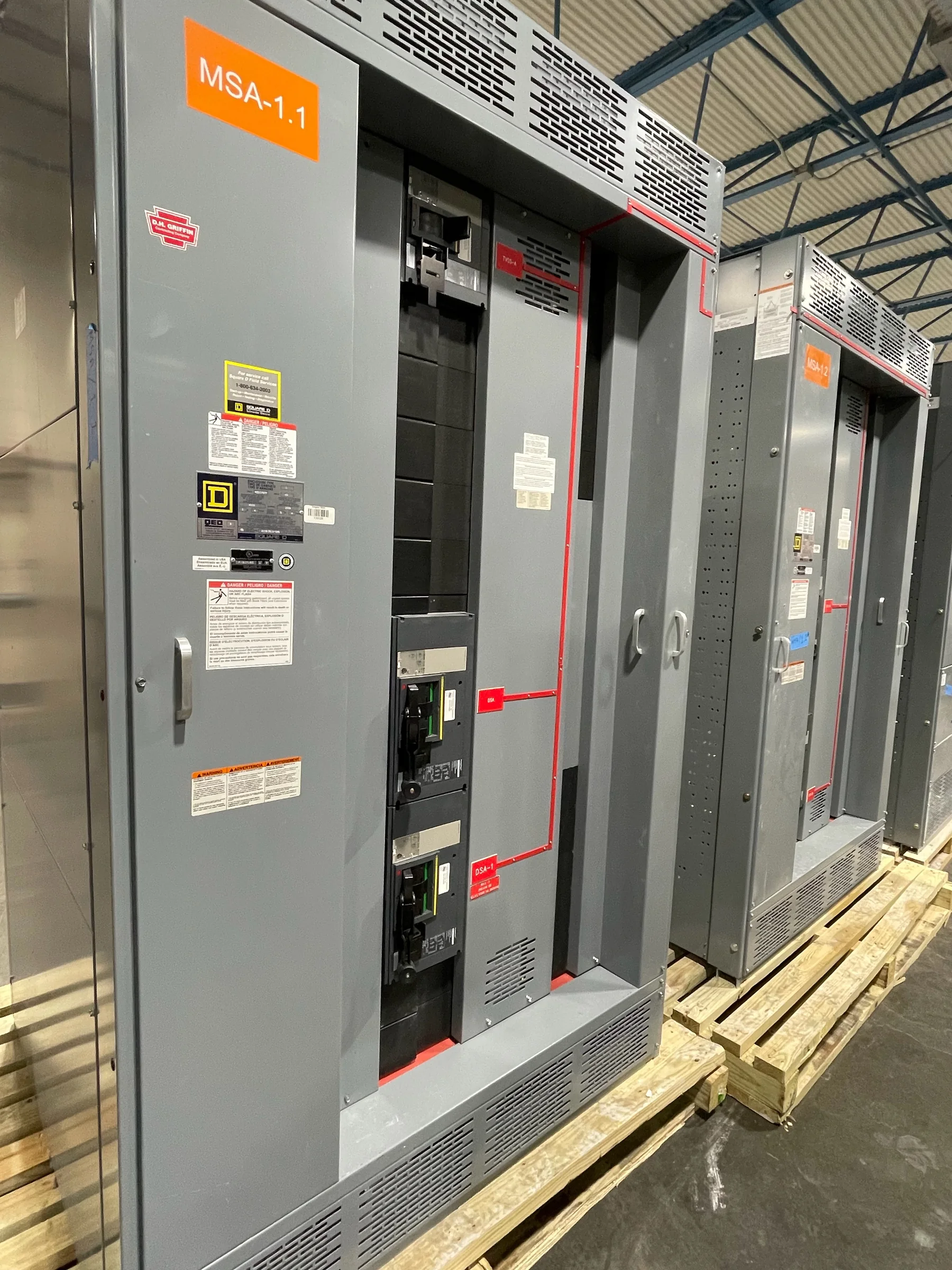
Define the Medium-Voltage Duty Before Requesting a Quote
Start with the system conditions the switchgear must serve, not a preferred catalog arrangement. Identify the nominal system voltage, frequency, available fault current, grounding method, and the protective devices or upstream equipment that affect coordination. Document the intended function—such as service entrance, feeder distribution, transformer protection, or connection to a generator—and note whether the installation is new or replaces existing gear. These details influence equipment configuration and help reveal issues that a voltage description alone will not resolve. In Sugar Land, a project may serve a commercial facility, industrial process, utility interface, or campus distribution system; those applications can have very different operating and protection needs. A manufacturer can develop a suitable proposal only after project-specific requirements and interfaces are reviewed.
Match the Configuration to Operations and Maintenance
Decide how the lineup will be operated and maintained, because access and switching practices affect its arrangement as much as electrical ratings do. Clarify the number and purpose of incoming, tie, metering, and feeder positions, along with the intended bus arrangement and any future expansion plans. Identify who will operate the equipment and what access restrictions apply during inspection or maintenance. If continuity of service is important, describe the loads that cannot tolerate an interruption and the approved operating strategy; do not assume a particular lineup automatically provides redundancy. Record required interlocks, remote indications, control power, and interfaces to protection or monitoring systems. These decisions help engineering distinguish essential functions from optional features, reduce late revisions, and keep the proposed equipment aligned with facility procedures.


Check the Existing Site Before Finalizing the Design
For replacement work, field-verify the installation rather than relying only on an old drawing or equipment label. Measure the available footprint, doorway and corridor clearances, access route, floor elevations, and working space around the intended location. Confirm cable entry direction, termination space, conduit or bus connections, grounding points, and any nearby piping or structural obstructions. Existing medium-voltage gear can have nonstandard dimensions or connections, so a replacement should not be assumed to fit simply because its electrical function is similar. In Sugar Land, occupied facilities may have limited laydown space and restricted access for large deliveries, making early coordination with the site team especially useful. A documented survey can identify building modifications, transition sections, or connection details that need engineering review before fabrication.
Prepare a Complete Specification and Review Package
A useful procurement package combines the electrical requirements with the information needed to evaluate interfaces and exceptions. Include one-line diagrams, site or arrangement drawings, equipment schedules, relay and metering requirements, control schematics, cable data, and applicable project standards when available. State required standards and any owner-specific provisions, then ask the manufacturer to identify deviations for review instead of treating silence as acceptance. For low-voltage switchboard assemblies, UL 891 may apply when the assembly is appropriately evaluated; it is not a blanket certification for medium-voltage switchgear. Confirm the applicable construction, evaluation, and documentation requirements for the actual equipment and project. Keep revision dates consistent across drawings and specifications, since conflicting versions can lead to incorrect assumptions about breaker functions, connection points, or protective-device interfaces.
Discuss Schedule, Submittals, and Delivery Together
Ask for a project-specific schedule after the manufacturer has reviewed the scope, required options, drawings, and approval process. Custom configurations and unresolved interfaces can affect engineering and production timing, so a general short-lead-time offering should not be treated as a guaranteed delivery date. Establish when submittals are needed, who will review them, how comments will be resolved, and what information must be approved before fabrication proceeds. For a Sugar Land site, coordinate the proposed shipping window with receiving hours, security procedures, unloading equipment, staging capacity, and the route from the delivery point to the electrical room. Nationwide shipping does not resolve these site constraints by itself. Agreeing on packaging, delivery access, and responsibility for unloading early helps prevent equipment arrival from becoming a facility or construction-schedule problem.
Plan Installation Interfaces and Commissioning Readiness
Before release, align the switchgear proposal with the installation and commissioning plan. Confirm who supplies and terminates incoming and feeder conductors, provides control wiring, verifies grounding, and integrates protective relays or facility monitoring. Request the drawings, manuals, connection details, and project-specific test documentation needed by the installing contractor and commissioning team. Review breaker and relay functions against the approved coordination study and operating requirements; equipment selection alone does not establish that system settings or protection are correct. Plan the outage, removal, installation, testing, and return-to-service sequence with qualified personnel, and perform electrical work only under the required de-energized and safety procedures. A clear responsibility matrix can expose missing scope—such as cabling, field adjustments, or control-system connections—while there is still time to resolve it before site work begins.