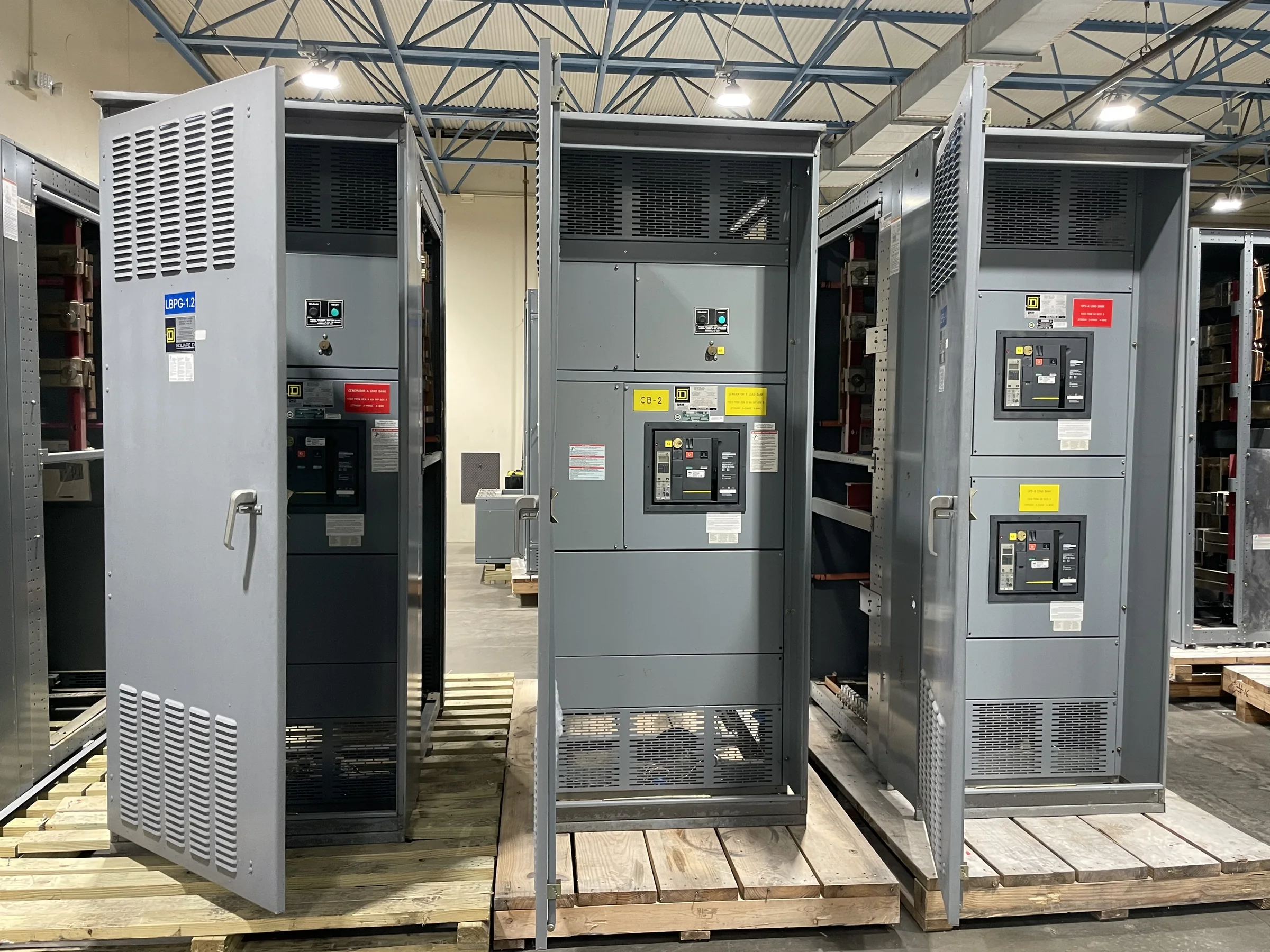
Define the Medium-Voltage Duty Before Selecting Equipment
Start with the electrical one-line diagram and the function each lineup must perform: utility service entrance, transformer primary, feeder distribution, motor supply, or a combination of these duties. In Texas City, an industrial site may need to coordinate utility service, process loads, and existing distribution, so a lineup that appears similar by voltage alone may not be interchangeable. Establish nominal system voltage, maximum operating voltage, frequency, available fault current, grounding method, continuous current, and required interrupting duty with the engineer and serving utility. Confirm whether the project calls for metal-clad or metal-enclosed construction and identify the required switching and protection functions. These choices affect compartment arrangement, footprint, controls, and interfaces. Final ratings and equipment suitability depend on project conditions and engineering review.
Coordinate Protection, Controls, and Existing Gear
Protection design has to reflect the actual system, not simply the ratings printed on adjacent equipment. Relay functions, current and voltage transformer requirements, breaker control voltage, trip-circuit supervision, and communications protocols should be settled with the protection engineer before a purchase order is released. If the new lineup will connect to existing switchgear or transformers, document bus arrangement, phase sequence, cable termination details, grounding provisions, and control wiring at both ends. A mismatch can delay commissioning or require field changes in a constrained electrical room. Provide available drawings and equipment nameplates for review, while treating measurements and legacy records as items to verify. The final coordination study determines protective settings; a manufacturer should not infer settings from a general equipment description or promise compatibility without reviewing the interface.


Account for Texas City’s Coastal Industrial Environment
Texas City’s Gulf Coast location makes environmental conditions an important part of equipment selection and room planning. Heat, humidity, salt-laden air, and process-area contaminants can affect enclosure finishes, ventilation, insulation surfaces, and maintenance intervals, depending on where the lineup will be installed. Tell the manufacturer whether equipment is indoors or outdoors, whether the room is air-conditioned, and whether corrosive vapors, washdown, dust, or flooding exposure are credible site conditions. Specify the required enclosure and environmental provisions through the project engineer rather than assuming a standard construction will suit every area. Also check the room’s drainage, elevation, ventilation path, and access for inspection. Addressing these conditions during design can reduce premature deterioration and avoid expensive changes after the switchgear is placed.
Plan the Layout, Cable Entries, and Installation Path
A switchgear lineup can fit on a drawing and still be impossible to install or maintain in the field. Verify room dimensions, working clearances, door swings, overhead obstructions, slab capacity, cable trench locations, and the route from the receiving point to the final position. For Texas City facilities with active process operations, delivery and rigging may need coordination around restricted access, operating equipment, security procedures, or limited shutdown windows. Confirm whether incoming and outgoing conductors enter from above or below, and provide cable size, quantity, bending constraints, and termination preferences for engineering review. Identify any need for split shipping sections or special handling, subject to the final design. A documented access survey helps prevent clashes with piping and supports safe placement without assuming a particular site layout.
Build a Complete Specification and Quote Package
A useful request for quotation gives the manufacturer enough information to evaluate the application without treating unknowns as settled. Include the one-line diagram, equipment schedule, voltage and current requirements, fault-duty information, protection and control narrative, site conditions, cable data, and applicable project specifications. Identify the requested standards, documentation, witness or inspection requirements, and any required interfaces with utility or plant systems. For low-voltage switchboard assemblies, UL 891 may be relevant when the assembly is appropriately evaluated; it is not a blanket certification for medium-voltage switchgear. State the required delivery destination and any receiving constraints, but confirm timing and shipping arrangements with the quote because they depend on scope and availability. A U.S. manufacturer can discuss custom construction, American components, and nationwide shipping against the project’s actual requirements.
Review Submittals, Timing, and Commissioning Responsibilities
Before fabrication, review the approved drawings for lineup dimensions, ratings, device arrangement, cable access, control circuits, nameplate data, and connection points. Resolve comments through the project’s formal approval process; an unchecked discrepancy can surface later as a field wiring or fit-up problem. Discuss schedule early, including drawing review, release for production, required inspections, freight coordination, and the date equipment must be available for installation. Short lead times may be offered, but actual timing is project-specific and should be confirmed in writing rather than assumed. Clarify which parties provide foundations, cable terminations, relay settings, testing, and startup support. Before energization, qualified personnel must complete the approved installation, inspection, and commissioning procedures, with the equipment de-energized whenever required by the applicable safety program. Accurate responsibility boundaries help protect both schedule and personnel.