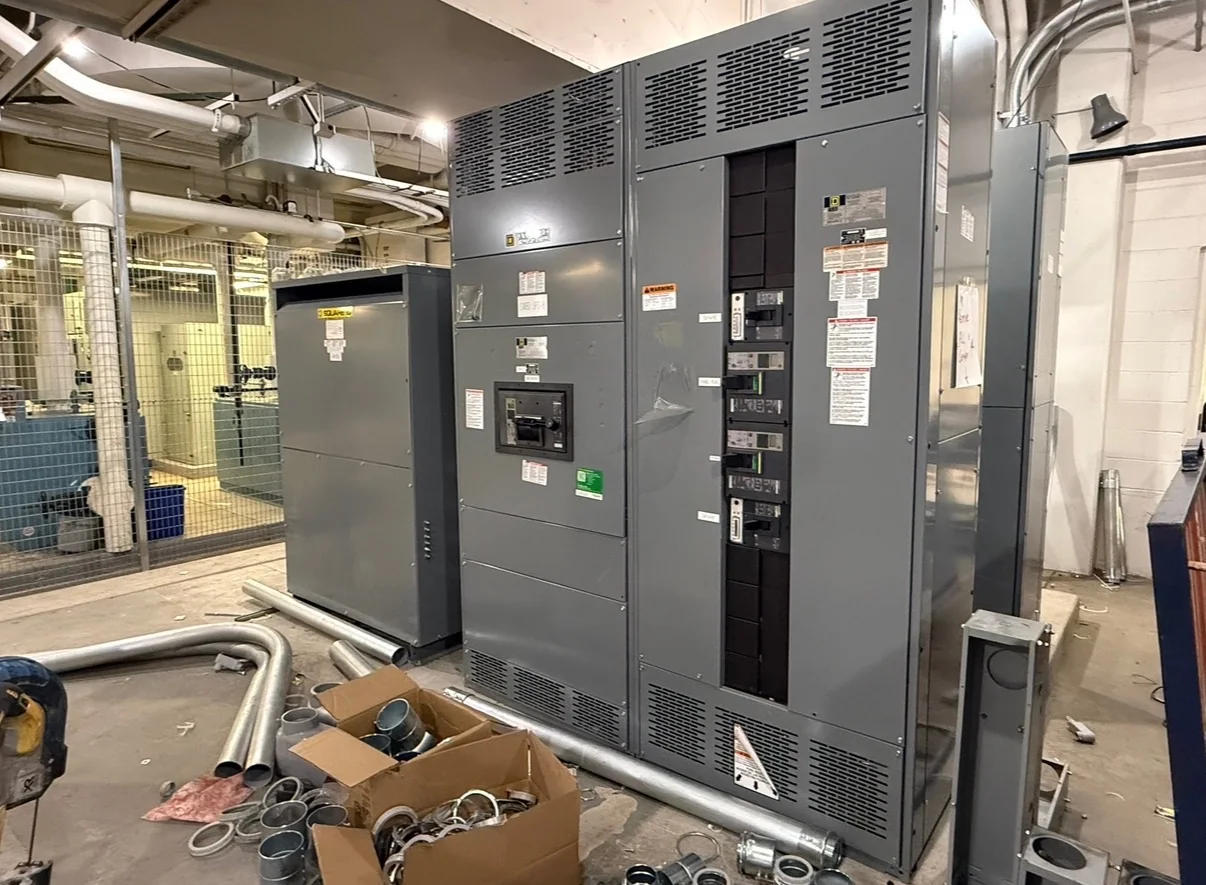
Define the MCC Around the Loads It Will Serve
Start the Baytown motor control center (MCC) specification with a verified motor and load schedule, not a catalog lineup. Document each motor’s horsepower, voltage, full-load current, starting method, duty, and required control functions; include spare and future circuits as identified needs rather than assumed capacity. Process pumps, fans, conveyors, and packaged equipment can impose different starting, coordination, and operating requirements, so a single assumed starter arrangement may not fit the project. Identify whether operators need local controls, remote commands, interlocks, alarms, or connection to a plant control system. These details affect unit selection, enclosure arrangement, wiring interfaces, and review time. Confirm the final design against the project’s electrical study, applicable codes, and equipment requirements before release.
Coordinate Fault Ratings and Upstream Protection
An MCC’s short-circuit rating and protective-device arrangement must be coordinated with the available fault current and upstream equipment at the intended installation point. For a Baytown facility, that means obtaining current utility or facility fault-current information for the actual service configuration—not relying on a rating from an unrelated project or an old one-line diagram. The engineer should identify the required interrupting and withstand ratings, protective-device type, coordination objectives, and any arc-flash study inputs. Changes to transformers, feeders, or utility service can change the basis of design. Provide the manufacturer with the governing documents and flag unresolved study data early. Final suitability, ratings, and any required evaluation depend on the specific assembly and project review; do not assume one rating or listing applies to every lineup.


Resolve Site Conditions Before Choosing the Enclosure
Plant conditions can influence MCC enclosure and installation decisions, especially at Gulf Coast industrial sites where heat, humidity, airborne contaminants, washdown, or corrosive exposure may be concerns. Baytown project teams should describe the actual electrical-room or outdoor location, including ambient conditions, ventilation, nearby process hazards, and expected cleaning practices. Specify an enclosure type only after matching its intended environment and access requirements to the installation; a general-purpose enclosure should not be presumed suitable for every process area. Room temperature and heat dissipation also matter because tightly grouped starters and drives can affect equipment operating limits. Confirm equipment-room dimensions, working access, overhead obstructions, cable entry direction, and floor conditions during layout review. Environmental suitability and any required protective features are project-specific and need engineering confirmation.
Check Drives, Controls, and Interface Responsibilities
Variable-frequency drives, soft starters, and across-the-line starters each affect the MCC’s electrical, thermal, and control design in different ways. For every driven load, state the intended speed range, operating profile, bypass needs, control source, and any process or safety interlocks. Drive-related harmonic, heat, motor-cable, and electromagnetic-compatibility considerations may require coordination with the facility electrical design and connected equipment manufacturers. A controls narrative and input/output list help clarify who supplies sensors, network hardware, field wiring, and programming; assumptions left open can create commissioning delays or change requests. Identify required communications protocols and plant standards without presuming a particular platform is available. Confirm equipment compatibility, protective functions, and final arrangements during engineering review, since application details—not the device name alone—determine what is appropriate.
Prepare Submittals and Purchasing Information Early
A complete request for quotation helps the manufacturer assess scope and identify missing decisions before a purchase order is released. Include the one-line diagram, load schedule, specifications, control schematics or narrative, applicable electrical studies, room layout, cable-entry preferences, and requested documentation. Clarify whether the scope includes incoming equipment, feeder interfaces, metering, network connections, or field services, without assuming these are included in a standard MCC order. The submittal review should check unit arrangement, dimensions, electrical ratings, device selections, control interfaces, and deviations against the approved project documents. Establish who reviews comments and how revisions are authorized; conflicting drawing versions can lead to costly rework. UL 891 applies to appropriately evaluated low-voltage switchboard assemblies, not as a blanket certification for MCCs or higher-voltage equipment.
Plan Baytown Delivery and Installation Logistics
Delivery planning should begin with the route from the receiving point to the final electrical room, not end at the shipping dock. Baytown facilities may have active plant traffic, controlled gates, contractor check-in, limited unloading space, or restricted delivery windows; verify the actual site rules rather than assuming a standard truck can reach the installation area. Confirm lineup dimensions, shipping splits, handling points, lifting access, doorway and corridor clearances, and any temporary storage requirements before shipment coordination. Protect equipment from moisture, dust, impact, and unsuitable storage conditions while it awaits installation. Align delivery sequencing with foundation readiness, rigging plans, and the electrical contractor’s schedule. A U.S. manufacturer can discuss custom builds, timing, and nationwide shipping, but production dates, configuration, and delivery arrangements must be confirmed for the specific order.