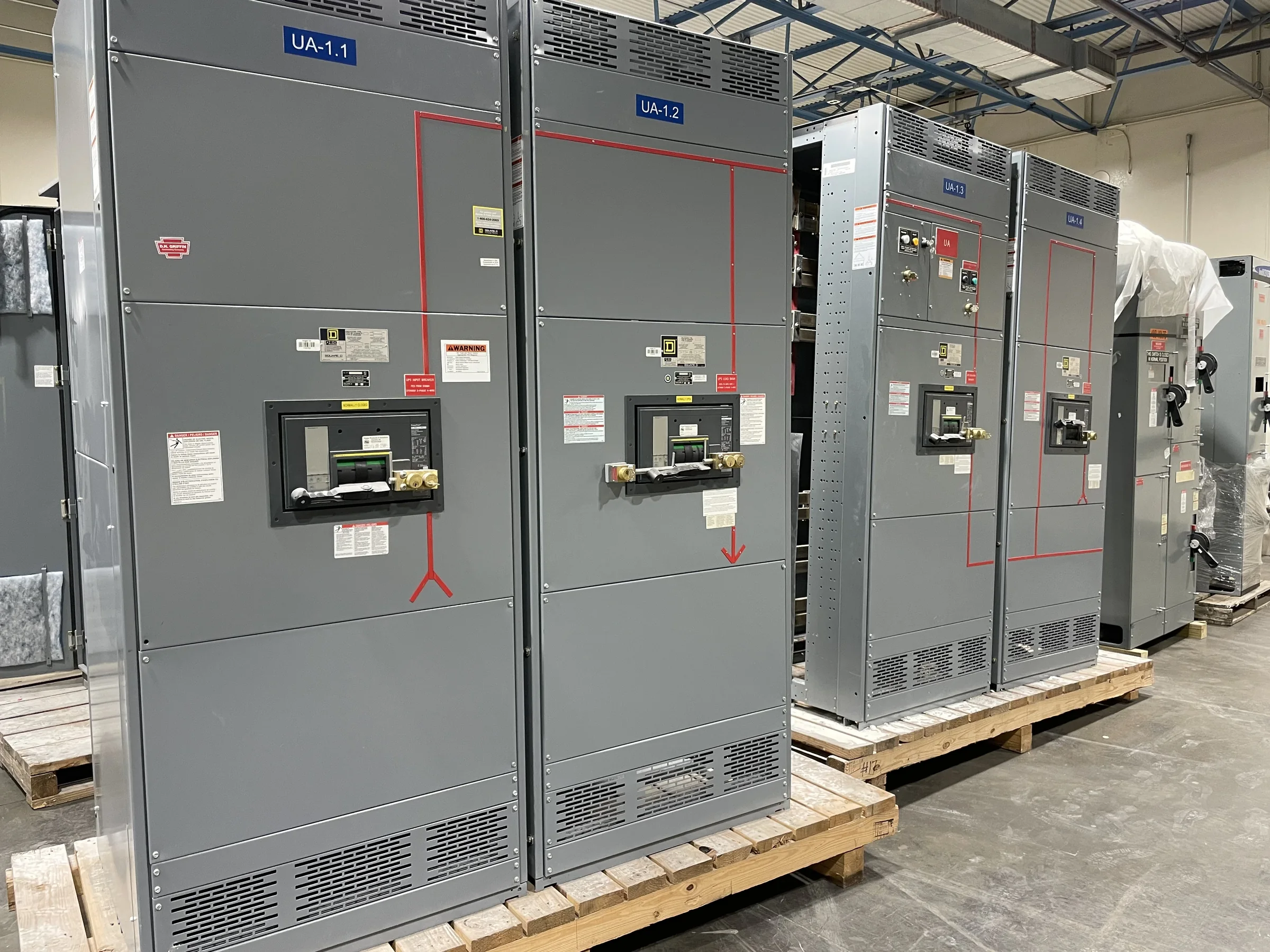
Define the Houston Process Loads Before Selecting an MCC
Start with the motor list, operating sequence, and process duty—not a catalog frame size. A Houston-area facility may need control for pumps, fans, conveyors, compressors, or treatment equipment, but the actual starting method, duty cycle, and coordination requirements depend on the process and connected system. Identify each motor’s nameplate data, expected starts per hour, required control functions, and any need for variable-speed operation or reduced-voltage starting. Also document which loads must remain available during maintenance or a process upset. These details shape feeder and starter arrangements, control-power needs, and the space reserved for future units. A complete load schedule gives the manufacturer a defensible basis for developing a project-specific MCC proposal and helps prevent late changes that disrupt procurement or installation.
Coordinate Electrical Ratings With the Available System
An MCC must suit the electrical system at the point where it will be installed. Provide the system voltage, frequency, grounding method, available fault-current information, and upstream protective-device details for engineering review. The assembly’s short-circuit rating and protective-device coordination cannot be selected reliably from motor horsepower alone; they depend on the source and the complete distribution arrangement. Confirm whether the project requires a particular bus configuration, incoming section, or connection to existing switchgear, and share the relevant one-line diagram. Houston facilities may expand or modify process areas over time, so note planned additions rather than assuming spare capacity can be added later without design consequences. Final ratings, component compatibility, and applicable evaluation requirements are project-specific and should be resolved before release for manufacture.


Match the Enclosure and Layout to the Installation Area
The physical environment can determine whether a proposed MCC is practical long after its electrical design is settled. Describe indoor or outdoor placement, ambient conditions, dust, moisture, corrosive exposure, washdown practices, and the room’s ventilation and access limitations. Houston’s heat and humidity make it especially important to evaluate the actual installation conditions, including whether the room is conditioned and how heat from operating equipment will be managed. Provide room plans that show doors, columns, overhead services, cable entry routes, working clearances, and any restrictions on moving sections into position. These inputs help establish enclosure construction, lineup dimensions, access direction, and installation approach. Do not assume a standard enclosure or layout will suit every site; environmental suitability and required clearances need project-specific confirmation.
Review Starter Functions, Controls, and Interfaces Early
A motor control center is both power equipment and a process-control interface. Specify the required starter type and control behavior for each motor, including local and remote operation, interlocks, alarms, permissives, and the intended response to loss of control power. If the facility uses a PLC or supervisory system, identify communication protocols, hardwired signals, network ownership, and responsibility for programming or integration. Clarify whether operators need local indication or emergency-stop interfaces and how these functions relate to the broader safety design. Early agreement on terminal points and control schematics reduces field wiring changes, commissioning delays, and confusion about who supplies interface devices. Provide the control narrative and current I/O information where available; unresolved assumptions should be listed for review instead of silently embedded in the build.
Make Submittals and Procurement Milestones Work Together
A realistic purchasing schedule begins with complete technical inputs and a clear review path. Assemble the one-line diagram, motor schedule, specifications, control requirements, room drawings, and preferred component information before requesting a project quote. Identify who will review drawings, how quickly comments can be consolidated, and which approvals are needed before construction documents are released. If the project has a shutdown window or phased installation, state those constraints at the outset; timing depends on final scope, component availability, engineering review, and approval status, so no delivery date should be assumed until confirmed for the specific order. The U.S. manufacturer can discuss custom-build options, American components, short lead times, and nationwide shipping as project offerings. Written milestones and documented exceptions help procurement compare proposals on scope, not just price.
Plan Houston Delivery, Receiving, and Installation Access
Delivery coordination deserves engineering attention because a finished lineup still has to reach its final room safely and in the intended sequence. Share the Houston-area site address, receiving hours, truck access, unloading equipment, laydown space, and any gate, dock, elevator, or street restrictions when planning shipment. Confirm the shipping configuration and dimensions against the route from the receiving point to the electrical room, including turns, thresholds, overhead obstructions, and floor loading limits. For projects with tight shutdowns, coordinate equipment arrival with contractor readiness and the approved installation plan rather than relying on storage at the site. Weather exposure during unloading and temporary storage should also be addressed. Nationwide shipping is available, but route, packaging, shipment configuration, and delivery timing must be confirmed for the specific project.