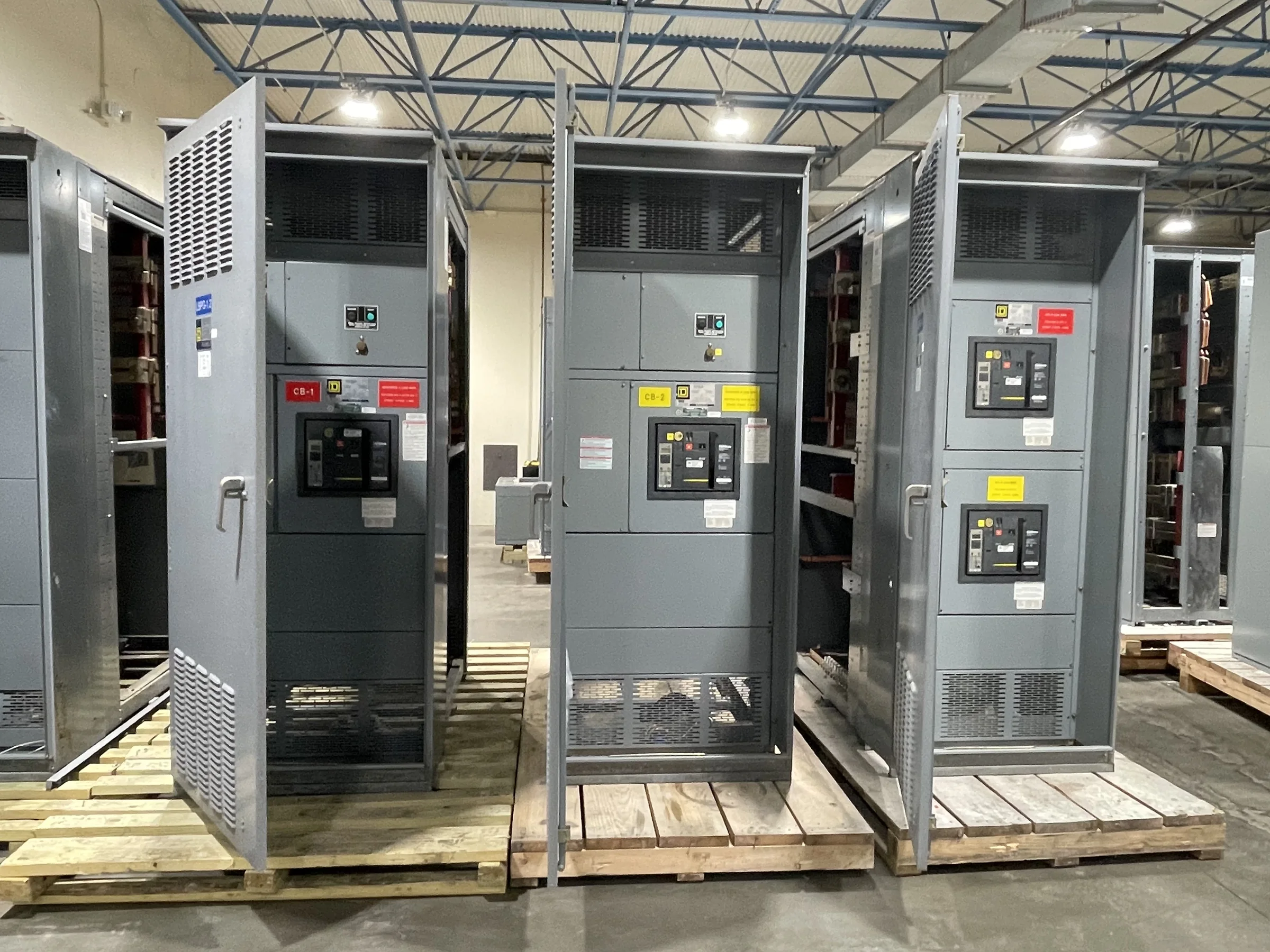
Define the Motor Control Center Around the Loads
For a League City facility, begin with the motors the lineup must serve, not a presumed standard arrangement. Provide a motor and load schedule that identifies each motor’s nameplate data, operating duty, starting method, control voltage, and required protective functions. Note which loads are continuous, intermittent, critical to operations, or expected to run together; those distinctions influence feeder and bus calculations, unit selection, and future capacity planning. Identify any variable-frequency drives, soft starters, reversing applications, or interlocks that affect unit construction and control coordination. A clear duty description helps the manufacturer develop a quote that reflects actual operating requirements rather than allowances that may not fit. Final ratings, equipment selection, and coordination require project-specific engineering and review.
Resolve Fault Duty, Feeder Protection, and Coordination
Available fault current at the proposed MCC location is a key input, not a detail to fill in after ordering. Ask the project engineer or utility team to establish the applicable value and system conditions, then provide the upstream protective-device information needed to evaluate the assembly and feeder coordination. The selected short-circuit rating and protective devices must suit the installation; do not assume that a rating from an existing lineup transfers to a replacement or expansion. Coordination goals also matter: a process that benefits from limiting the interruption to one motor may have different requirements from a system designed for broader isolation. Document the source, transformer data, upstream devices, and design criteria so proposed equipment can be reviewed against the facility’s electrical study.


Choose a Layout That Fits the Electrical Room
Room dimensions and access can determine whether a technically suitable lineup is practical to install. For the League City site, verify the route from unloading point to electrical room, including door openings, turns, floor transitions, overhead obstructions, and any limits on moving assembled sections. Share available room dimensions, ceiling height, aisle requirements, wall conditions, and the locations of conduits or cable trenches before the layout is finalized. Consider where operators will stand, how unit doors and sections will be accessed, and whether heat, moisture, dust, or corrosive exposure calls for a particular enclosure or room strategy. These conditions affect configuration and serviceability; site review and applicable clearances should be confirmed by the responsible design team.
Specify Controls, Communications, and Future Changes
MCC requirements extend beyond motor starters when loads must exchange status or commands with a plant control system. Identify the intended control architecture, communication protocol, network interface, signal list, and responsibility for programming, field wiring, and commissioning. Confirm which functions belong in the MCC and which remain in external controls, especially for permissives, emergency stops, alarms, and process interlocks. If expansion is anticipated, describe the expected additions and whether future space should be configured as usable units or simply reserved. A blank section is not automatically a ready-to-use future feeder. Clear boundaries prevent gaps between equipment supply and site integration, while a documented points list gives the controls contractor and facility team a basis for planning connections and testing.
Prepare Submittals and Purchasing Information Early
A useful request for quotation includes the one-line diagram, motor schedule, equipment specifications, control schematics where available, and the project’s applicable standards and review requirements. Add the required lineup location, environmental conditions, preferred arrangement, incoming and outgoing cable details, and any specified labeling or documentation needs. State whether the scope includes unit-level controls, communications equipment, or other interfaces, and identify exclusions that should be priced separately. During submittal review, check the proposed lineup against the approved electrical design, fault-duty basis, physical layout, and control requirements rather than reviewing dimensions alone. Returning consolidated comments helps limit conflicting revisions. The manufacturer can discuss custom-build options, American components, project timing, and nationwide shipping; configuration, availability, and delivery commitments must be confirmed for the specific order.
Coordinate Delivery and Installation in League City
Delivery planning should account for the actual receiving conditions at the League City facility, whether equipment arrives at an industrial site, commercial property, or active campus. Confirm truck access, unloading equipment, receiving hours, staging space, security procedures, and who is authorized to inspect and accept the shipment. If the route to the final room requires special handling or sections must be moved in stages, establish those constraints before shipment arrangements are set. Protect the installation schedule by coordinating equipment arrival with room readiness, foundation or housekeeping-pad work, conduit completion, and the availability of qualified electrical contractors. Installation, connection, inspection, and commissioning plans should follow approved project documents and applicable requirements. All work on electrical equipment must be performed under appropriate safety procedures, including de-energization where required.