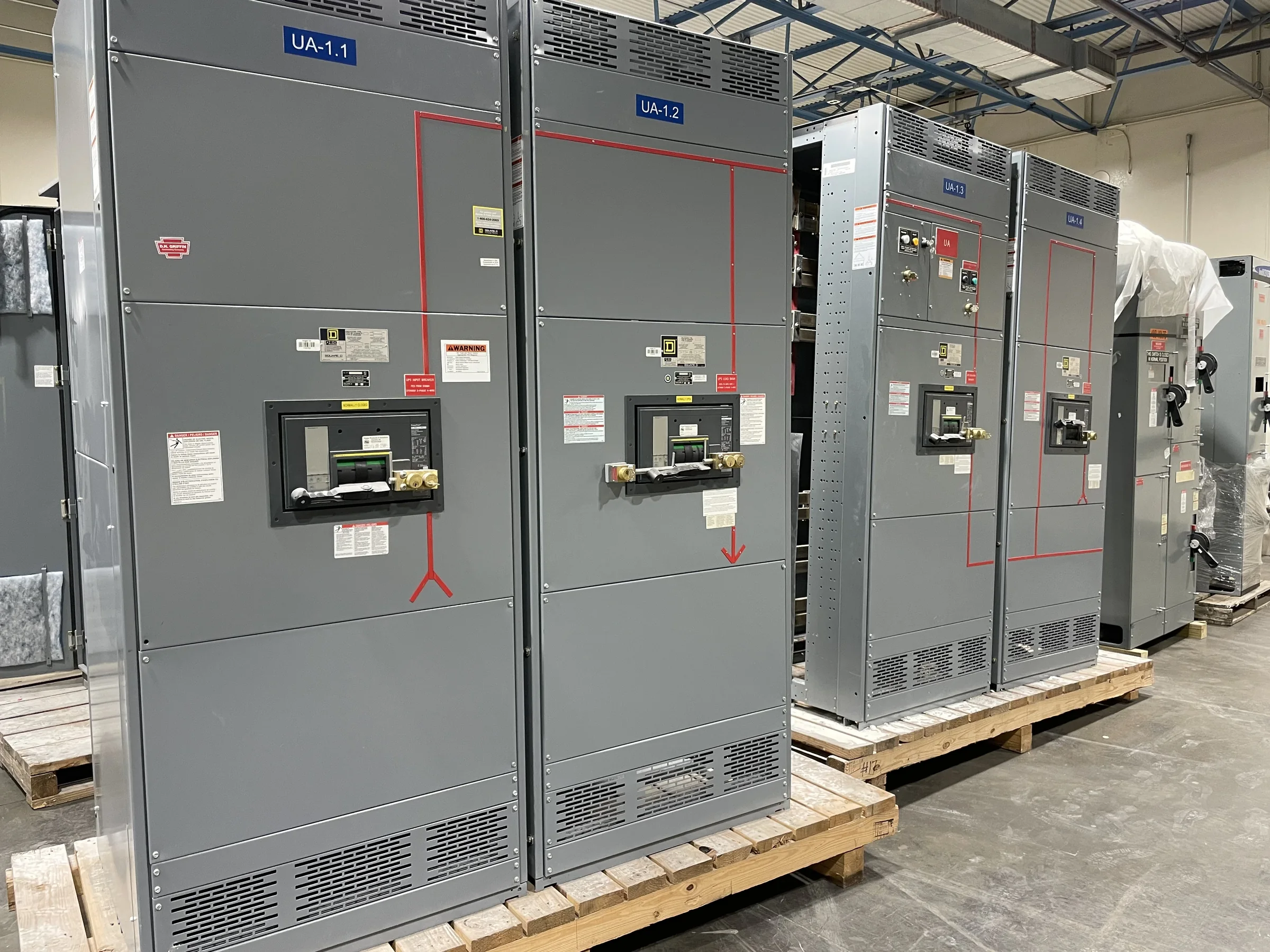
Define the Service Entrance Before Selecting the Switchboard
A service entrance switchboard is the point where utility power enters a facility’s distribution system, so its configuration affects both utility coordination and downstream protection. Before requesting a quote, establish the service voltage, phase, frequency, available fault current, and the utility’s metering and service-connection requirements. Confirm whether the project calls for a main service disconnect, multiple service disconnects, or a particular arrangement of service sections; applicable code requirements and the serving utility’s rules must be checked for the specific site. Also identify planned feeder loads, standby generation, photovoltaic sources, and future expansion. These details matter because a switchboard that fits the present load but conflicts with the utility interface or planned sources can require costly redesign. The manufacturer can develop a new assembly around documented project requirements.
Coordinate Ratings, Protection, and Downstream Equipment
Switchboard ratings must be considered as a system, not selected from load current alone. The engineer’s one-line diagram and fault-current study help establish the required bus rating, interrupting ratings, protective-device coordination, and available fault-duty requirements. Confirm that breakers or other specified protective devices align with downstream equipment and the project’s selective-coordination or arc-energy goals, where applicable. For a replacement, document the existing service configuration, feeder destinations, conductor arrangements, and equipment interfaces rather than assuming the new board can duplicate the old one without changes. These checks matter because mismatched interrupting capability, physical terminations, or protection settings can compromise the design and delay approval. The appropriate ratings, device types, and standards depend on the application and must be verified for the actual assembly; they should not be presumed from a product category.


Build the Specification Package Around Review and Approval
A clear procurement package reduces back-and-forth between the owner, electrical engineer, contractor, utility, and manufacturer. Include the one-line diagram, load schedule, site and room drawings, equipment schedule, specification sections, utility service criteria, and any required metering details. Identify the requested enclosure conditions, cable entry and exit directions, bus arrangement, finish, accessories, and documentation submittals, while marking items that remain open for engineering review. If the project requires a UL 891 low-voltage switchboard assembly, state that requirement explicitly and confirm the scope of evaluation and labeling for the proposed configuration; it is not a blanket certification for medium- or high-voltage equipment. This level of definition matters because an omitted interface or ambiguous note can lead to a technically compliant but unsuitable proposal. Review the returned drawings against the contract documents before releasing the equipment for manufacture.
Plan for League City Conditions and Room Fit
In League City, project teams may need to account for coastal Gulf humidity, wind-driven rain, and exposure to salt-laden air, especially where electrical equipment is near an exterior wall, loading area, or partially open structure. Describe the actual installation environment rather than relying on a city name to determine an enclosure or finish. The electrical room also needs a dimensional review: verify the switchboard footprint, working clearances, door swing, ceiling height, floor loading, and the route from the delivery point to the final position. Existing buildings can present narrow corridors, low overhead obstructions, or limited staging space that affect section size and installation sequencing. These checks matter before drawings are approved because equipment that meets electrical requirements may still be difficult to receive, move, or maintain at the site. Confirm environmental and access conditions with the project team.
Discuss Build Timing and Delivery Before Committing
Schedule discussions are most useful when they start with a defined equipment scope, drawing-review dates, and the project’s required-on-site milestone. A U.S. manufacturer can discuss custom-build timing and nationwide shipping, but the actual production and transit schedule depends on the approved design, component availability, scope changes, and freight coordination. Treat quoted timing as project-specific, and ask which submittal approvals, deposits, or other release conditions control the manufacturing start. For League City delivery, confirm the site’s receiving hours, truck access, unloading responsibility, staging area, and whether equipment needs to arrive in sections for the available route. These details matter because a delivery appointment without a prepared crew or suitable unloading plan can disrupt construction even when the equipment is ready. Coordinate the carrier, electrical contractor, and site contact before shipment, and keep schedule assumptions visible in procurement records.
Prepare Installation, Verification, and Future Service Records
Before installation, align the approved shop drawings with the final construction documents and verify that the foundation, conduits, conductor routes, grounding provisions, and clearances match the equipment arrangement. At turnover, retain the final drawings, equipment schedules, component documentation, and any project-specific test or inspection records supplied for the assembly. The installing contractor and qualified personnel should follow applicable codes, manufacturer instructions, and site safety procedures; equipment must be de-energized and verified safe before work on it. For later additions or replacement planning, preserve the final feeder directory, protective-device information, and records of approved changes. This documentation matters because service personnel need an accurate picture of the installed configuration before assessing capacity, coordination, or compatibility. When requesting a new switchboard or retrofit-related replacement, provide the existing equipment data and interface constraints so the proposed work can be evaluated for the specific facility.